

SBI PO 2017 Prelims Previous Year Paper

SBI PO 2017 Prelims

Section

Questions

Marks

English

30 Questions (1 – 30)

30

Logical Reasoning

35 Questions (31 – 65)

35

Quantitative Aptitude

25 Questions

25

Data Interpretation

10 Questions

10

Q. 1 Which of the phrases given against the sentences should replace the word/phrase given in quotes in the sentence to make it grammatically correct? If the sentence is correct as it is given and no correction is required, select ‘No correction required’ as the answer. The presence of new players in the basketball team is “to additionally attract” for the audience.

A. with add attraction

B. for adding attractive

C. an added attraction

D. of adding attraction

E. No correction required


Q. 2 Which of the phrases given against the sentences should replace the word/phrase given in quotes in the sentence to make it grammatically correct? If the sentence is correct as it is given and no correction is required, select ‘No correction required’ as the answer. The dire need of amusement “to escaping boredom” made him cultivate various hobbies.

A. to escape boredom

B. as escaping boredom

C. escapes bored

D. for escape being bored

E. No correction required


Q. 3 Which of the phrases given against the sentences should replace the word/phrase given in qoutes in the sentence to make it grammatically correct? If the sentence is correct as it is given and no correction is required, select ‘No correction required’ as the answer. We were credibly informed that the conman has “gave himself” to the police.

A. given over

B. given himself in

C. given himself over

D. given himself up

E. No correction required


Q. 4 Which of the phrases given against the sentences should replace the word/phrase given in qoutes in the sentence to make it grammatically correct? If the sentence is correct as it is given and no correction is required, select ‘No correction required’ as the answer. We tempted Karen with many promises but nothing would “worked her up”.

A. working with her

B. works her over

C. works upon her

D. work on her

E. No correction required


Q. 5 Which of the phrases given against the sentences should replace the word/phrase given in qoutes in the sentence to make it grammatically correct? If the sentence is correct as it is given and no correction is required, select ‘No correction required’ as the answer. The soil of India “saw growths” of one of the oldest cultures in the world that is the Harappan Civilisation.

A. seen the growth

B. saw the growth

C. had saw growing

D. see the growths

E. No correction required


Q. 6 Which of the phrases given against the sentences should replace the word/phrase given in qoutes in the sentence to make it grammatically correct? If the sentence is correct as it is given and no correction is required, select ‘No correction required’ as the answer. A renowned organisation has “recent appointed” a highly acclaimed scientist to head new research and development assistants.

A. recently appointed

B. a recent appointed

C. is to appoint

D. to recently appointed an

E. No correction required


Q. 7 Which of the phrases given against the sentences should replace the word/phrase given in qoutes in the sentence to make it grammatically correct? If the sentence is correct as it is given and no correction is required, select ‘No correction required’ as the answer. The serene lush green slope of the hill station “make it up ideal” venue for the meditation camp.

A. making so ideal

B. is ideal for

C. makes it an ideal

D. as of ideal

E. No correction required


Q. 8 Which of the phrases given against the sentences should replace the word/phrase given in qoutes in the sentence to make it grammatically correct? If the sentence is correct as it is given and no correction is required, select ‘No correction required’ as the answer. Taking good care of yourself is paramount “for succession” of your goals.

A. about being a success

B. to the success

C. about being successful

D. to succeed

E. No correction required


Q. 9 Which of the phrases given against the sentences should replace the word/phrase given in qoutes in the sentence to make it grammatically correct? If the sentence is correct as it is given and no correction is required, select ‘No correction required’ as the answer. The tambourine “to gain popularity” in the mid-18th century in Western Europe as an orchestral instrument.

A. was been popular

B. have popularity

C. has been popular

D. gained popularity

E. No correction required


Q. 10 Which of the phrases given against the sentences should replace the word/phrase given in qoutes in the sentence to make it grammatically correct? If the sentence is correct as it is given and no correction is required, select ‘No correction required’ as the answer. Varun advised Aman that “give off” wrong pleasure is not self-sacrifice but self-culture.

A. gave up

B. gives away

C. giving through

D. giving up

E. No correction required


Questions: 11 – 20

Read the following passage and answer the given questions. Certain words/phrases are given in quotes to help you locate them while answering some of the questions. There is a market failure in cyber security. Solutions being suggested or “tried” include increasing transparency about data losses, helping consumers and firms to make more informed decisions about cyber security; shedding more light on how Internet Service Providers (ISPs) tackle malware infections they spot on customers’ computers; and using liability laws to force software companies to produce safer code. In transparency, America has led the way. Almost all American states now have data-breach laws that require firms to reveal any loss of sensitive customer information. In Europe telecom firms have been obliged to notify customers of breaches for some time now, and there are plans to extend reporting to a wider range of industries. Breach laws have ecouraged insurance companies to offer coverage against potential losses. This is helpful because they are in a position to gather and share information about best practices across a wide range of companies. A cyberinsurer advises companies on defensive tactics, and also in how to minimise the damage if something goes wrong. The American government should create a cyber-equivalent of the National Transportation Safety Board, which investigates serious accidents and shares information about them. Such a body could look into all breaches that cost over $50m and make sure the lessons are shared widely. But insurers are likely to remain wary of taking on “broader” risks because the costs associated with a “serious” cyber-incident could be astronomic. Insurers can deal with acts of God, but not with acts of Anonymous (hacking groups or acts of state-sponsored hacking). This explains why the overall cyber-insurance market is still small. Governments are weighing in too, not least by supporting private-sector efforts to clean up ‘botnets’, or networks of compromised computers controlled by hackers. These networks, which are prevalent in countries such as America and China, can be used to launch attacks and spread malware. In Germany an initiative called Bot-Frei, which helps people clean up heir infected computers, received government support to get started, though it is now self-financing. The American government has also worked closely with private firms to bring down large botnets. Another strategy involves issuing standards to encourage improved security. America’s National Institute of Standards and Technology published a set of voluntary guidelines for companies in critical infrastructure sectors such as energy and transport. Britain has also launched a scheme called ‘cyber-essentials’ under which firms can apply for a certificate showing they comply with certain minimum security standards. Applicants undergo an external audit and, if successful, are awarded a badge which they can use on marketing materials. Whether governments are best placed to set minimum standards is debatable, but they have certainly raised awarenes of cyber security as an issue that needs attention. They could also help to get more information into the public domain. Researchers have argued persuasively that collecting and publishing data about the quantity of spam and other bad traffic handled by ISPs could encourage the worst performers to do more to tackle the problem, thus improving overall security. Another debate has revolved around getting software companies to produce code with fewer flaws in it. One idea is to make them liable for damage caused when, say, hackers exploit a weakness in a software program. Most software companies currently insist customers accept end-user licensing agreements that specifically protect firms from legal claims unless local laws prohibit such exclusions. The snag is that imposing blanket liability could have a “chilling” effect on innovation. Companies that are selling millions of copies of programmes might take fright at the potential exposure and leave the business. Strict liability be applied only to firms which produce software that cannot be patched if a security flaw is found. There is quite a lot of that sort of code around.


Q. 11 Which of the following is the SAME in meaning as the word BROADER as used in the passage?

A. spacious

B. subtle

C. weaker

D. comprehensive

E. approximate


Q. 12 Which of the following is/are the argument(s) in favour of cyber-essentials?

A) It boosts transparency and promotion of firms.

B) The certification is given by hackers which makes it authentic.

C) Firms benefit from paying attention to cyber-security and so do users.

A. Only (A)

B. Only (B)

C. Only (A) & (C)

D. Only (B) & (C)

E. All (A), (B) & (C)


Q. 13 Which of the following is the SAME in meaning as the word TRIED as used in the passage?

A. convicted

B. accused

C. attempted

D. exasperated

E. None of the given options


Q. 14 Which of the following is the OPPOSITE of the word SERIOUS as used in the passage?

A. genuine

B. witty

C. noisy

D. insignificant

E. irresistible


Q. 15 Which of the following is the OPPOSITE of the word CHILLING as used in the passage?

A. promoting

B. reassuring

C. encouraging

D. fostering

E. All the given options


Q. 16 Which of the following best describes the author’s view of liability laws?

A. These will act as incentives for computer firms to produce more secure software.

B. These are pointless as they cannot be uniformly or strictly implemented.

C. These will not greatly impact computer firms as the financial profits from software are huge.

D. These are not an appropriate approach to cyber security.

E. None of the given options.


Q. 17 Which of the following can be said about government’s efforts with regards to cyber security?

A) Government’s efforts have been coupled with private sector co-operation.

B) Government’s efforts have been focused on destroying botnet infrastructure.

C) These are not worthwhile and too small in magnitude.

A. Only (A)

B. Only (B)

C. Only (B) and (C)

D. Only (C)

E. Only (A) and (B)


Q. 18 Why has the author mentioned the National Transportation Safety Board in the passage?

A) To urge America to set up a body to share data in cyber-related instances.

B) To monitor cyber security episodes whose losses are over a certain sum.

C) To publish and enforce standards for cyber security for sectors like energy.

A. Only (A)

B. Only (A) and (B)

C. Only (B)

D. Only (B) and (C)

E. All (A), (B) and (C)


Q. 19 Which of the following is/are (the) theme(s) of the passage?

A. Holding cyber firms accountable for flaws in their products

B. Cyber-crime infrastructure in certain countries

C. Ways to secure cyber-space

D. Limits of cyber-insurance

E. All the given options are themes


Q. 20 Which of the following is/are true in the context of the passage?

A. Breach laws can be helpful for organisations.

B. America is leading the way in terms of laws for disclosure of cyber-beaches

C. Pressure is increasing in software companies to produce safer products

D. Varied efforts are being made to create a market which values cyber-security

E. All the given options are true in the context of the passage


Questions: 21 – 30

In the given passage there are words highlighted in quotes. You have to decide if the word is correct (in terms of grammar and context). If not, find out the appropriate word/group of words from the given options. In case, the suggested word is correct, mark the option ‘The given word is correct’ as your answer. Everyone knows that (1) “sustenance” brainboxes is good for the economy. In Thailand, school reformers have an extra incentive to narrow (2) “contrasting” between rich people in cities and their poorer rural cousins, which have (3) “fulfilled” to a decade of political tension and occasional eruption of violence. For years shoddy teaching has favored urban children whose parents can afford to send them to cramming schools or to study abroad. Dismal instruction in the countryside has made it easier for city slickers from posh colleges to paint their political opponents as pliable bumpkins. The dangerous social divide is all the more reason to (4) “worry” about Thailand’s poor rating in an educational league table published in December. Thailand limped into the bottom quarter of 70 countries whose pupils participated in the mathematics, reading and science tests organised under the Programme for International Student Assessment (PISA). It’s scores have (5) “crushed” since a previous assessment in 2012, which researchers found that almost one-third of the country’s 15-year-olds were ‘functionally illiterate’, including almost half of those studying in rural schools. Thailan d’s (6) “error” performance is not dramatically out of step with countries of similar incomes. But it is strange given its usually generous (7) “allocation” on education, which in some years have hoovered up more than a quarter of the  budget. Rote learning is common. There is a shortage of maths and science teachers, but a (8) “overflow” of physical-education instructors. Many head teachers lack the authority to hire or fire their own staff. A big problem is that Thailand spends too much money propping up small schools, where teaching is the poorest. Almost half of Thai schools have fewer than 120 students, and most of those have less than one teacher per class. Opening lots of village schools once helped Thailand (9) “achieve” impressive attendance rates, but road-building and other improvements in infrastructure mean most schools are now within 20 minutes of another. Over the next ten years falling birth rates will reduce school rolls by more than 1m, making it even more (10) “fulfilled” for tiny institutions to provide adequate instruction at a reasonable cost.


Q. 21 Which of the following words should be used to correct the quoted words in the passage?

A. diluting

B. nurturing

C. alleviating

D. ornamental

E. The given word is correct


Q. 22 Which of the following words should be used to correct the quoted words in the passage?

A. contracts

B. characteristic

C. distinct

D. differences

E. The given word is correct


Q. 23 Which of the following words should be used to correct the quoted words in the passage?

A. preceded

B. managed

C. compelled

D. led

E. The given word is correct


Q. 24 Which of the following words should be used to correct the quoted words in the passage?

A. concern

B. apprehension

C. fearful

D. distress

E. The given word is correct


Q. 25 Which of the following words should be used to correct the quoted words in the passage?

A. deteriorated

B. sink

C. decomposed

D. declining

E. The given word is correct


Q. 26 Which of the following words should be used to correct the quoted words in the passage?

A. extreme

B. cheerful

C. dismal

D. inauspicious

E. The given word is correct


Q. 27 Which of the following words should be used to correct the quoted words in the passage?

A. employed

B. investing

C. spending

D. setting

E. The given word is correct


Q. 28 Which of the following words should be used to correct the quoted words in the passage?

A. satiety

B. surplus with

C. saturated

D. surfeit

E. The given word is correct


Q. 29 Which of the following words should be used to correct the quoted words in the passage?

A. complete

B. conclude

C. acquired

D. adhere

E. The given word is correct


Q. 30 Which of the following words should be used to correct the quoted words in the passage?

A. difficult

B. ambition

C. troubling

D. doubtful

E. The given word is correct


Q. 31 Five movies D, E, F, G and H are released on five different days of the same week starting from Monday and ending on Friday, but not necessarily in the same order. F is released on one of the days before Thursday. Only two movies are released between F and G. H is released immediately before G. D is released on one of the days after H. Which movie is released on Wednesday?

A. E

B. Either G or D

C. G

D. H

E. F


Q. 32 Four cartons A, B, Y and Z are placed above one another but not necessarily in the same order. Each carton contains a different drink – Pepsi, Coffee, Frooti and Milkshake – but not necessarily in the same order. Only carton B is kept between the cartons of Pepsi and Frooti. The carton of Coffee is kept immediately below carton of Frooti. The carton of Coffee is kept at one position below Z. What is the position of the carton of Milkshake in the stack?

A. Cannot be determined

B. Immediately below the carton of Frooti

C. First from the bottom

D. First from the top

E. Immediately above the carton of Coffee


Questions: 33 – 35

Study the following information and answer the given questions.

Each of the six stores P, Q, R, S, T and U sold different number of books in one day. Only three stores sold less books than U. P sold more books than R. T did not sell the highest number of books. S sold more books than R and P but less than U. The store which sold the second highest number of books sold 72 books.


Q. 33 How many books did Q probably sell?

A. 43

B. 58

C. 71

D. 65

E. 89


Q. 34 Which of the following stores sold the second lowest number of books?

A. T

B. P

C. S

D. R

E. Q


Q. 35 If the total number of books sold by P and T is 125, then how many books did P sell?

A. 51

B. 76

C. 68

D. 45

E. 53


Q. 36 In a vertical queue of 13 people, all facing north, K stands exactly at the centre of the queue. No one stands between K and W. Only five people stand between W and P. L stands at one of the positions before P but not at the beginning of the queue. How many people stood after W?

A. Three

B. None

C. Five

D. Can’t be determined

E. Seven


Q. 37 In which of the following expressions, does the expression ‘ C

A. P ≥ A ≥ L ≤ E ; C < L ≥ O > N

B. P < A ≤ L ≥ E ; C ≥ L ≤ O < N

C. P = A > L = E ; C = L > O < N

D. P > A > L > E ; C < L < O < N

E. P = A ≥ L < E ; C < L ≥ O ≥ N


Q. 38 A person starts from Point A, walks 30m towards south and reaches Point B. He then takes a right turn and walks 7m, he takes a right turn, and walks for 6m. He then takes a right turn and walks 7m. He takes a final left turn, walks a certain distance and reaches Point R. Point R is 17m to the north of Point B. What is the distance between Point A and Point R?

A. 18m

B. 23m

C. 21m

D. 27m

E. 13m


Q. 39 S is the only son of V. V is married to R. M is daughter of R. R is grandmother of A. How is S definitely related to A?

A. Uncle

B. Cannot be determined

C. Father

D. Son-in-law

E. Father-in-law


Q. 40 What should come in place of S and # respectively in the expression :

P > A$R < O < T;S < L < A#M, so that the expression T>M definitely holds true?

A. >,<

B. <,=

C. <,<

D. <, ≤

E. >,>


Questions: 41 – 45

Study the following information and answer the given questions.

C, D, E, F, W, X, Y and Z have to attend a wedding in January, April, September and December of the same year. In each month the wedding is on either the 11th or on 24th of the month. Not more than two of the given people have to attend a wedding in the same month. W has to attend a wedding on 11th of the month which has only 30 days. Only three people have to attend a wedding between W and Y. C and Y have to attend a wedding neither on the same date nor in the same month. C does not have to attend a wedding in April. Only two people have to attend a wedding between C and F. X and F have to attend a wedding on the same date. D has to attend a wedding in one of the days before X. Only one person has to attend a wedding between D and E. Less than four people have to attend a wedding between E and Z.


Q. 41 How many people have to attend a wedding between F and Z?

A. Two

B. Three

C. None

D. More than three

E. One


Q. 42 When does X have to attend a wedding?

A. 24th April

B. Cannot be determined

C. 11th January

D. 24th September

E. 11th December


Q. 43 If so the people are made to attend the wedding in alphabetical order starting from 11th January and ending in 24th December, then the schedule of how many people will remain unchanged?

A. One

B. Two

C. Five

D. None

E. Three


Q. 44 Who among the following has/have to attend a wedding before Y?

A. Both C and X

B. Only W

C. None

D. Both F and W

E. Only F


Q. 45 As per the given arrangement, four of the following five are alike in a certain way and so form a group. Which of the following does not belong to the group?

A. W

B. F

C. Z

D. Y

E. X


Q. 46 In the question, relationship between different elements is shown in the statements. The statements are followed by two conclusions. Study the conclusions based on the given statements and select the appropriate answer.

Statement:

M < O < U ≤ R≤ T

P ≥ R ≤ I ≤ C < L

Conclusions:

I. L > M

II. O ≤ C

A. Either conclusion I or II is true

B. Neither conclusion I nor II is true

C. Only conclusion II is true

D. Both conclusion I and II are true

E. Only conclusion I is true


Q. 47 In the question, relationship between different elements is shown in the statements. The statements are followed by two conclusions. Study the conclusions based on the given statements and select the appropriate answer.

Statements:

C < L = I ≤ N > G

I < M ≥ O > R > T

Conclusions:

I. C < O

II. G > T

A. Neither conclusion I nor II is true

B. Only conclusion I is true

C. Both conclusion I and II are true

D. Only conclusion II is true

E. Either conclusion I or II is true


Q. 48 In the question, relationship between different elements is shown in the statements. The statements are followed by two conclusions. Study the conclusions based on the given statements and select the appropriate answer.

Statements:

M < O ≤ U ≤ R ≥ T

P ≥ R ≤ I ≤ C < L

Conclusions:

I. P > T

II. P = T

A. Only conclusion I is true

B. Neither conclusion I nor II is true

C. Both conclusion I and II are true

D. Only conclusion II is true

E. Either conclusion I or II is true


Questions: 49 – 53

Read the given information to answer the given questions.

Eight people X, G, T, C, P, J, A and M live on different floors of a building. The ground floor of the building is numbered one, the one above that is numbered two and so on till the topmost floor is numbered eight. All of them can perform a different form of dance- Kathak, Garba, Dandiya, Bhangra, Lavani, Odissi, Mohiniyattam and Sattriya.

(Note: None of the given information is necessarily in the same order.)

T lives on an even numbered floor below floor number five. Only three people live between T and the one who performs Garba. As many people live below T as above the ones who perform Lavani. The number of people living between the ones who perform Garba and Lavani is equal to the number of people living between C and P. C lives on an even-numbered floor above P. Neither C nor P performs Garba or Lavani. The one who performs Kathak lives on an oddnumbered floor below floor number four. P does not perform Kathak. The number of people between T and the one who performs Kathak is same as the number of people living between X and the one who performs Lavani. X lives on  one of the floors above the one who performs Lavani. X lives on one of the floors above the one who performs Lavani. The number of people living between C and X equal to the number of people living between T and M. The one who performs Odissi lives on an even-numbered floor immediately above the one who performs Bhangra. Only three people live between G and J. G lives in one of the floors above J. The one who performs Dandiya lives immediately above the one who Orient’s Sattriya.


Q. 49 Which of the following is true as per the given arrangement?

A. C performs Odissi.

B. The one who performs Garba lives on floor number six.

C. T lives immediately above J.

D. None of the given statements is true.

E. Only two people live betweeen M and G.


Q. 50 Four of the following five are alike in a certain way based on the given arrangement and thus form a group. Which of the following does not belong to the group?

A. M-Bhangra

B. C-Dandiya

C. P-Odissi

D. G-Floor number eight

E. J-Floor number two


Q. 51 How many people live between the ones who perform Lavani and Bhangra?

A. More than three

B. Three

C. None

D. One

E. Two


Q. 52 Who performs Sattriya?

A. G

B. A

C. P

D. T

E. C


Q. 53 Which dance does M perform?

A. Bhangra

B. Lavani

C. Odissi

D. Mohiniyattam

E. Kathak


Questions: 54 – 58

Study the given information carefully to answer the given questions.

Eight people A, B, C, D, E, F, G and H were born in different years, viz, 1961, 1970, 1974, 1980, 1983, 1987, 1996 and 2000 but not necessarily in the same order.

Note: (A) All calculations are done with respect to the present year, 2017, assuming the month and date to be the same as that of the years of birth as mentioned above.

(B) Each person is assumed to be born on the same date and same month of the respective years. D was born after 1983 but not in the year 2000. The sum of the present ages of A and D is 64. The difference between the present ages of A and G is less than 5. B was born in an odd-numbered year. B is older than G. The sum of the present ages of F and C is 68. F is younger than C. H is not the youngest.


Q. 54 Four of the following five are alike in a certain way as per the given arrangement and hence form a group. Which of the following does not belong to the group?

A. E

B. B

C. C

D. F

E. G


Q. 55 How many persons are younger than E?

A. Two

B. More than three

C. None

D. Three

E. One


Q. 56 Who amongst the following was born in the year 1996?

A. E

B. C

C. A

D. G

E. None of these


Q. 57 If A’s uncle is 21 years older than A, then how old is A’s uncle at present (in years)?

A. 77

B. 68

C. 89

D. 64

E. 55


Q. 58 Which of the following represents the difference between the present ages of B and H (in years)?

A. 22

B. 9

C. 25

D. 32

E. 13


Q. 59 In the number 7853921, one is added to each digit exactly divisible by two. Two is subtracted from each digit exactly divisible by three. All other digits are kept unchanged. In the new number thus formed, which if the following digits will appear twice?

A. None

B. Only 5

C. Both 2 and 3

D. Only 3

E. Both 1 and 7


Q. 60 In a certain code language, ‘job requires expertise’ is written as ‘la nu si’, ‘expertise in area’ is written as ‘li bo la’ and ‘requires area inspection’ written as ‘si dm bo’. How is ‘inspection’ written in that code language? (All the given codes are two-letter codes only)

A. si

B. Either ‘nu’ or ‘si’

C. Either ‘bo’ or ‘si’

D. dm

E. bo


Questions: 61 – 65

Study the following information to answer the given questions.

Eight persons F, G, H, I, O, P, Q and R are seated in a straight line facing north. Each of them works on a different floor of an office building, viz, 7th, 16th, 18th, 23rd, 31st, 35th, 44th and 47th. None of the given information is necessarily in the same order.

● O sits fourth to the right of the one who works on the 31st floor. The one who works on the 23rd floor sits second to the right of O.

● Q sits third to the left of I. I is not an immediate neighbor of O. Q does not sit at any of the extreme ends of the line.

● Only two people sit between Q and P. The one who works on the 44th floor sits on the immediate right of the H. H is not an immediate neighbor of P.

● The difference between the numerical values of the floor numbers on which P and the one on the immediate right of P work is 13.

● Only one person sits between F and the one who works on the 35th floor. F is not an immediate neighbor of I.

● More than two people sit between R and the one who works on the 16th floor. O does not work on the 16th floor.

● H works on a floor lower than O.


Q. 61 Which of the following pairs represents the persons seated at the two extreme ends of the line?

A. G and the one working on the 7th floor

B. I, R

C. The ones working on the 18th and 44th floors

D. G, R

E. The one working on 23rd floor and P


Q. 62 What is the difference between the floor numbers on which P and R work?

A. 31

B. 4

C. 3

D. 16

E. 15


Q. 63 F is related to the one who works on the 47th floor following a certain pattern based on the given arrangement. In the same pattern, P is related to the one who works on the 44th floor. Who amongst the following is H related to following the same pattern?

A. The one who works on the 35th floor

B. The one who is on the immediate left of R

C. The one who is sitting second to the left of O

D. The one who works on the 16th floor

E. O


Q. 64 Fill in the blanks (respectively in the same order) in order to make the statement correct based on the given arrangement.

G __________ and Q __________.

A. works on the 47th floor, sits to the immediate left of Q.

B. works in one of the floors above H, works in one of the floors below F.

C. sits on the immediate left of I, works on the 44th floor.

D. sits second to the right of O, work three floors above O.

E. Other than those given as options


Q. 65 How many people sit on the left of the one who works on the 35th floor?

A. One

B. Two

C. None

D. Four

E. Three


Q. 66 What approximate value will come in place of X in the following equation?

X² – 137.99 ÷ 6 = 21.99 × 23.01

A. 23

B. 50

C. 42

D. 29

E. 35


Q. 67 What approximate value will come in place of X in the following equation?

X% of 400.02 + 12.93² = 285

A. 18

B. 15

C. 24

D. 34

E. 29


Q. 68 What approximate value will come in place of X in the following equation?

(3327.99 – 27.93) ÷ X = 110 × 5.99

A. 9

B. 1

C. 19

D. 15

E. 5


Q. 69 What approximate value will come in place of X in the following equation?

5520 ÷ 12.01 + √226 × 5.99 = X

A. 350

B. 550

C. 500

D. 450

E. 250


Q. 70 What approximate value will come in place of X in the following equation?

160.01 + 40 ÷ (16.5 ÷ 33) = ?

A. 310

B. 290

C. 250

D. 350

E. 240


Questions: 71 – 75

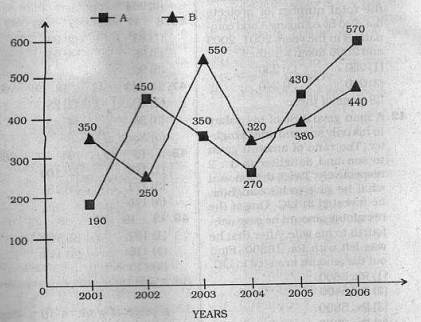
Refer to the graph and answer the given questions.


Q. 71 The number of students who opted for Course B in 2013 was what percent more than who opted for course A in 2013?

A. 45+1/6

B. 42+4/9

C. 38+8/9

D. 56+7/9

E. 62+1/9


Q. 72 What is the difference between the total number of students who opted for Courses A and B together in 2012 and that who opted for both the courses together in 2014?

A. 50

B. 30

C. 60

D. 40

E. None of these


Q. 73 In 2014, if ‘X’ students passed Course A and B each and the ratio of the number of students who failed in Courses A and B respective was 5 : 2, what is the value of ‘X’?

A. 190

B. 220

C. 160

D. 150

E. 180


Q. 74 What is the average number of students who opted for Course A in 2010, 2011 and 2012?

A. 225

B. 250

C. 230

D. 240

E. 260


Q. 75 The number of students who opted for Courses A and B in 2011 was respectively 25% more and 35% less than that in 2009. What was the total number of students who opted for Courses A and B together in 2009?

A. 600

B. 540

C. 575

D. 560

E. 650


Q. 76 The ratio of the numerical values of curved surface area to the volume of the right circular cylinder is 1:7. If the ratio of the diameter to the height of the cylinder is 7:5, then what is the total surface area of the cylinder? (in m²)

A. 2992

B. 3172

C. 2882

D. 3576

E. 3992


Q. 77 The time taken by a boat to cover a distance of ‘D-56’ km upstream is half of that taken by it to cover a distance of ‘D’ km downstream. The ratio of the speed of the boat downstream to that upstream is 5 : 3. If the time taken to cover ‘D-32’ km upstream is 4 hours, what is the speed of water current? (in km/h)

A. 5

B. 3

C. 4

D. 16

E. 8


Q. 78 Poona invests ₹4200 in Scheme A, which offers 12% p.a. simple interest. She also invested ₹(4200 – P) in Scheme B offering 10% p.a. compound interest (compounded annually). The difference between the interests Poona earned from both the schemes at the end of 2 years is ₹294. What is the value of P?

A. 1500

B. 800

C. 600

D. 1000

E. Other than those given as options


Q. 79 A man sold two articles – A (at a profit of 40%) and B (at a loss of 20%). He earned a total profit of ₹8 in the whole deal. If article A costs ₹140 less than article B, what is the price of article B?

A. ₹380

B. ₹280

C. ₹340

D. ₹375

E. ₹300


Q. 80 B is eighteen years younger than A. The ratio of B’s age six years hence to C’s present age is 3 : 2. If at present A’s age is twice the age of C, then what was B’s age 4 years ago?

A. 24 years

B. 28 years

C. 26 years

D. 20 years

E. 16 years


Q. 81 The time taken by A alone to finish a piece of work is 60% more than that taken by A and B together to finish the same piece of work. C is twice as efficient as B. If B and together can complete the same piece of work in 13+1/3 days, in how many days can A alone finish the same piece of work?

A. 32

B. 24

C. 16

D. 28

E. Other than those given as options


Q. 82 Out of her monthly salary, Ridhi spends 34% on various expenses. From the remaining, she gives 1/6th to her brother, 2/3 to her sister and the remaining she keeps as savings. If the difference between the amounts she gave to her sister and brother was ₹10,560, what was Ridhi’s savings?

A. ₹3740

B. ₹3420

C. ₹4230

D. ₹3230

E. Other than those given as options


Q. 83 A bag contains 63 cards (numbered 1,2,3…63). Two cards are picked at random from the bag (one after another and without replacement). What is the probability that the sum of the numbers of both the cards drawn is even?

A. 11/21

B. 34/63

C. 7/11

D. 11/63

E. Other than those given as options


Q. 84 A, B and C started a business and invested in the ratio of 3 : 4 : 5. After 4 months A withdrew 1/12 of the amount of what B and C had invested. If the annual income was ₹9200 then what was the share of B?

A. ₹4200

B. ₹3800

C. ₹3600

D. ₹2800

E. Other than the given options


Q. 85 In each question, two equations numbered I and II are given. You have to solve both the equations and mark the appropriate answer.

I. 3x² – 4x + 1 = 0

II. 15y² – 8y + 1 = 0

A. x > y

B. x ≤ y

C. x = y or relation can’t be established

D. x ≥ y

E. x < y


Q. 86 In each question, two equations numbered I and II are given. You have to solve both the equations and mark the appropriate answer.

I. x² + 14x + 45 = 0

II. y² + 19y + 88 = 0

A. x ≥ y

B. x < y

C. x ≤ y

D. x = y or relation can’t be established

E. x > y


Q. 87 In each question, two equations numbered I and II are given. You have to solve both the equations and mark the appropriate answer.

I. x² – 2x – 8 = 0

II. y² + 15y + 54 = 0

A. x = y or relation can’t be established

B. x ≤ y

C. x > y

D. x ≥ y

E. x < y


Q. 88 In each question, two equations numbered I and II are given. You have to solve both the equations and mark the appropriate answer.

I. 2x² – 9x +9 = 0

II. y² – 7y + 12 = 0

A. x < y

B. x ≤ y

C. x > y

D. x = y or relation can’t be established

E. x ≥ y


Q. 89 In each question, two equations numbered I and II are given. You have to solve both the equations and mark the appropriate answer.

I. x² = 121

II. y² – 23y + 132 = 0

A. x > y

B. x ≥ y

C. x < y

D. x ≤ y

E. x = y or relation can’t be established


Q. 90 A jar contains a mixture of milk and water in the ratio of 3:1. Now, 1/25 of the mixture is taken out and 24 litres water is added to it. If the resultant ratio of milk to water in the jar was 2:1, what was the initial quantity of mixture in the jar? (in litres)

A. 160

B. 180

C. 200

D. 250

E. Other than the given options


Q. 91 What will come in place of X in the then number series?

“17”, “9”, “10”, “16.5”, “X”, “90”

A. 44

B. 35

C. 48

D. 38

E. 33


Q. 92 What will come in place of X in the then number series?

“7”, “6”, “10”, “27”, “X”, “515”

A. 112

B. 104

C. 114

D. 96

E. 108


Q. 93 What will come in place of X in the then number series?

“33”, “40”, “29”, “42”, “25”, “X”

A. 40

B. 44

C. 52

D. 48

E. 46


Q. 94 What will come in place of X in the then number series?

“316”, “307”, “282”, “233”, “152”, “X”

A. 35

B. 25

C. 31

D. 41

E. 47


Q. 95 What will come in place of X in the then number series?

“5”, “9”, “33”, “72”, “121”, “X”

A. 169

B. 163

C. 171

D. 184

E. Other than those given as options


Questions: 96 – 100

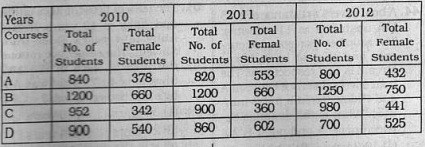
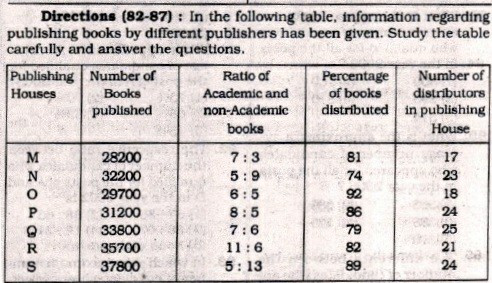
Study the table and answer the given questions.


Q. 96 What is the average number of people who voted at centres B, D and E?

A. 1700

B. 1628

C. 1720

D. 1740

E. 1560


Q. 97 What percent of the total number of registered voters cast invalid votes at Centre D, if the number of invalid votes cast at Centre D was 10% of the number of votes cast?

A. 5.5

B. 8.5

C. 7.6

D. 6.5

E. Other than those given as options


Q. 98 At centres F, the total number of registered voters was 25% less than that at Centre C. At Centre F, the number of people who voted was 450 less than that at Centre C and 150 votes cast were declared invalid. What was the ratio of the number of valid votes cast to the total number of registered voters at Centre F?

A. 4 : 5

B. 3 : 4

C. 2 : 3

D. 6 : 1

E. 5 : 8


Q. 99 The number of people who did not vote at Centre D was what percent more than that who did not vote at Centre A?

A. 42+6/7

B. 35+2/3

C. 37+1/7

D. 43+5/8

E. Other than those given as options


Q. 100 What is the difference between the total number of people who did not vote at Centres A and B together and that who did not vote at Centre D and E together?

A. 80

B. 60

C. 50

D. 70

E. 116


Answer Sheet
Question 1 2 3 4 5 6 7 8 9 10
Answer C A B D C A C B D D
Question 11 12 13 14 15 16 17 18 19 20
Answer D C C D E D E B E E
Question 21 22 23 24 25 26 27 28 29 30
Answer B D D E A C C D B A
Question 31 32 33 34 35 36 37 38 39 40
Answer A A B E E B E C B D
Question 41 42 43 44 45 46 47 48 49 50
Answer E E C C E A E E D D
Question 51 52 53 54 55 56 57 58 59 60
Answer E D B C E E E E E D
Question 61 62 63 64 65 66 67 68 69 70
Answer B B D C C A E E B E
Question 71 72 73 74 75 76 77 78 79 80
Answer C E B D D A C B C C
Question 81 82 83 84 85 86 87 88 89 90
Answer B E E E D D C B D C
Question 91 92 93 94 95 96 97 98 99 100
Answer B B B C B C C C C E

SBI PO 2016 Prelims Previous Year Paper

SBI PO 2016 Prelims

Section

Questions

Marks

English

30 Questions (1 – 30)

30

Data Interpretation

10 Questions

10

Quantitative Aptitude

25 Questions

25

Logical Reasoning

35 Questions (66 – 100)

35

Q. 1 In the following questions, each sentence has two blanks, each blank indicating that something has been omitted. Choose the set of words for the blanks which best fits the meaning of the sentence as a whole.

By running liquid chocolate ___________ an electric field, researchers were able to make it ________ more easily.

A. across, gushing

B. during, stream

C. through, flow

D. among, move

E. in, tidal


Q. 2 In the following questions, each sentence has two blanks, each blank indicating that something has been omitted. Choose the set of words for the blanks which best fits the meaning of the sentence as a whole.

India is ________ a tea – drinking country, with coffee______ to the instant variety, except in the south.

A. essentially, only

B. most, confined

C. simply, limiting

D. predominantly, restricted

E. larger, constrained


Q. 3 In the following questions, each sentence has two blanks, each blank indicating that something has been omitted. Choose the set of words for the blanks which best fits the meaning of the sentence as a whole.

There is no______ of capital to finance massive infrastructure development provided involving huge investments are _______ with transparency.

A. dearth, handled

B. deny, managed

C. shortage, completely

D. paucity, direct

E. absent, persuaded


Q. 4 In the following questions, each sentence has two blanks, each blank indicating that something has been omitted. Choose the set of words for the blanks which best fits the meaning of the sentence as a whole.

Auto makers are likely to use the cash pool to ______ R&D capabilities as well as ________ new models.

A. restored, launch

B. strengthen, introduce

C. extent, offer

D. enhance, advanced

E. create, ushers


Q. 5 In the following questions, each sentence has two blanks, each blank indicating that something has been omitted. Choose the set of words for the blanks which best fits the meaning of the sentence as a whole.

As per the _________norms that remain unchanged firms will have to ________ the sourcing norms from the time of opening of the first store.

A. prevailing, adhere

B. existing, meet

C. recently, accomodate

D. current, abide

E. actually, fit


Questions: 6 – 10

Rearrange the given sentences / group of sentences (A), (B), (C), (D), (E) and (F) in proper sequence as to form a meaningful paragraph and then answer the given questions.

(A) It is evident from the fact that from shopping, ordering food, booking vacations to money transfers, everything is going digital.

(B) Technology today has seeped into every facet of our lives.

(C) This and a variety of problems now can be solved easily as healthcare providers can adopt technologies to improve, simplify and better manage the quality of their services.

(D) The first step in this direction would be capturing all patient health information at the point of care, especially hospitals and clinics.

(F) For instance, in medical emergency situations, the lack of readily available patient health information at the point of care still impacts millions of people each year leading to adverse health conditions and even death.


Q. 6 Which of the following should be the FIFTH sentence after the rearrangement?

A. E

B. D

C. A

D. F

E. C


Q. 7 Which of the following should be the SECOND sentence after the rearrangement?

A. A

B. B

C. F

D. D

E. C


Q. 8 Which of the following should be the SIXTH (LAST) sentence after the rearrangement?

A. E

B. D

C. A

D. B

E. F


Q. 9 Which of the following should be the FIRST sentence after the rearrangement?

A. A

B. C

C. B

D. F

E. E


Q. 10 Which of the following should be the FOURTH sentence after the rearrangement?

A. A

B. B

C. C

D. F

E. D


Questions: 11 – 20

Read the following passage carefully and answer the questions given below it. Certain words/phrases have been given in bold to help you locate them while answering some of the questions At first glance the patriarchy appears to be thriving. More than 90% of Presidents and Prime Ministers are male, as are all nearly big corporate bosses. Men dominate finance, technology, films, sports, music and even stand – up comedy. In much of the world they still enjoy social and legal privileges simply because they have a Y chromosome. So it might seem odd to worry about the plight of men. Yet there is plenty of cause for concern. Men cluster at the bottom as well at the top. Poorly educated men in rich countries have had difficulty coping with the enormous changes in the labour market and the home over the past half – century. As technology and trade have devalued brawn, less – educated men have struggled to find a role in the workplace. Women on the other hand, are surging into expanding sectors such as health care and education, helped by their superior skills. As education has become more important, boys have also fallen behind girls in school (except at the very top). Men who lose jobs in manufacturing often never work again. And men without work find it hard to support a family. The result for low – skilled men, is a poisonous combination of no job, no family and no prospects. Some tend to focus on economics. Shrinking job opportunities for men, they say, are entrenching poverty and destroying families. In America pay for men with only a high – school certificate fell by 21% in real terms between 1979 and 2013, for women with similar qualifications it raised by 3%. Around a fifth of working – age American men with only a high – school have no job. But both economic and social changes are to be blame and the two causes reinforce each other. Moreover, these problems are likely to get worse. Technology will disrupt more industries, creating benefits for society but rendering workers who fail to update their skills redundant. The OECD, a think – tank, predicts that the absolute number of single – parent house-holds will continue to rise in nearly all rich countries. Boys who grow up without fathers are more likely to have trouble forming lasting relationships, creating a cycle of male dysfunctional. What can be done? Part of the solution lies in a change in cultural attitudes. Over the past generation, men have learned that they need to help with child care and have changed their behavior. Women have learned that they can be surgeons and physicists not at the cost of motherhood. Policymakers also need to lend a hand, because foolish laws are making the problem worse. Governments need to recognize that boys underachievement is a serious problem and set about fixing it. Some sensible policies that are good for everybody are particularly good for boys. Early childhood education provides boys with more structure and a better chance of developing verbal and social skills. Countries with successful vocational systems such as Germany have done a better job motivating non – academic boys and guiding them into jobs, but policymakers need to reinvent vocational education for an age when trainers are more likely to get jobs in hospitals than factories. The growing equality of the genders is one of the biggest achievements of the post – war era people have greater oppurtunities than ever before to achieve their ambitions regardless of their gender. But some even have failed to cope with this new world. It is time to give them a hand.


Q. 11 What do the statistics in the passage with regard to America indicate?

A. Pay and employment for men with low skills has fallen.

B. Less than ten percent of American politicians are women.

C. Men dominate most high paying professions such as surgery etc.

D. Americans are protected from labour market disruptions by a strong social welfare system.

E. At both the top and bottom of the job pyramid women are losing out to men.


Q. 12 According to the passage, what can be said about families today?

A. It is difficult for families to survive on the earnings of one parent.

B. The size of the family is shrinking which will cause a problem of an ageing population soon.

C. Parents favour sons over daughters causing an unhealthy social mindset.

D. Poverty and lack of education among men is putting the family structure at risk.

E. None of the given options can be said.


Q. 13 Choose the word/group of words which is most nearly the same in meaning as the word ENJOY given in bold as used in the passage.

A. benefit from

B. laugh with

C. amused by

D. prefer to

E. liking to


Q. 14 Choose the word/group of words which is opposite in meaning as the word ENTRENCHING given in bold as used in the passage.

A. hastening

B. reducing

C. stablising

D. hesitating

E. digging


Q. 15 Which of the following best describes the author’s opinion about vocational education?

A. Germany’s model of vocational guidance need not be adopted by other countries.

B. There should be less focus on vocational skills.

C. Vocational education should equip men with better skills than they do at present.

D. Vocational education for women should be given more financial support.

E. Rather than obtaining an unaffordable university education, vocational education is a practical solution.


Q. 16 Choose the word/group of words which is most nearly the same in meaning as the word STRUCTURE given in bold as used in the passage.

A. building

B. order

C. assembly

D. layout

E. procedure


Q. 17 Which of the following is true in the context of the passage?

A. Underachievement of boys at school is a problem prevalent in Japan and America.

B. Most of the Government funds for vocational education are misused.

C. Women are still not well represented in high positions.

D. The number of children with learning disabilities is on the rise in rich countries.

E. None of the given statements is true in the context of the passage.


Q. 18 Which of the following is an appropriate title for the passage?

A. Flying Too High

B. Beyond Face Value : Men at Risk

C. The Fundamentals of Achievement

D. Poverty Misleading Figures

E. Health, Wealth and the Origins of Inequality


Q. 19 Which of the following factors has/have an impact on the current state of male Employment?

(A) Men’s failure to update their skills.

(B) Single parent households with an absent father

(C) Adoption of technological changes in low skill job.

A. Only (A)

B. Only (B)

C. All (A), (B) and (C)

D. Only (A) and (C)

E. Only (A) and (B)


Q. 20 Choose the word/group of words which is opposite in meaning as the word SURGING given in bold as used in the passage.

A. flowing

B. delaying

C. precipitating

D. hollowing

E. disappearing


Q. 21 Read each sentence to find out whether there is any grammatical error in it. The error, if any, will be in one part of the sentence. Select the part with the error as your answer. If there is no error, select ‘No error’ as your answer. (Ignore the errors of punctuation, if any).

A. The infection is commonly found

B. in pork eaters and is

C. also a result on unhygienic practices

D. like not cleaning vegetables properly.

E. No error


Q. 22 Read each sentence to find out whether there is any grammatical error in it. The error, if any, will be in one part of the sentence. Select the part with the error as your answer. If there is no error, select ‘No error’ as your answer. (Ignore the errors of punctuation, if any).

A. One of the greatest

B. surrealists of his time

C. as was the ultimate conquistador

D. in an art he alone perfected.

E. No error


Q. 23 Read each sentence to find out whether there is any grammatical error in it. The error, if any, will be in one part of the sentence. Select the part with the error as your answer. If there is no error, select ‘No error’ as your answer. (Ignore the errors of punctuation, if any).

A. In the

B. plush property – a

C. seat in power

D. or a political ill omen?

E. No error


Q. 24 Read each sentence to find out whether there is any grammatical error in it. The error, if any, will be in one part of the sentence. Select the part with the error as your answer. If there is no error, select ‘No error’ as your answer. (Ignore the errors of punctuation, if any).

A. A gang war inside

B. the high security jail resulted

C. in four under trials

D. being rushed for the hospital

E. No error


Q. 25 Read each sentence to find out whether there is any grammatical error in it. The error, if any, will be in one part of the sentence. Select the part with the error as your answer. If there is no error, select ‘No error’ as your answer. (Ignore the errors of punctuation, if any).

A. The museum suffered

B. severe damaged after

C. fire hydrants were

D. rendered useless.

E. No error


Questions: 26 – 30

In the following passage, there are blanks, each of which has been numbered. Against each, five words are suggested, one of which fits the blank appropriately. Find out the appropriate word in each case. Technology has changed society, There is no (26)……. that we live in a world of instant gratification which is driven by the latest advancement in technology and devices. With the Internet, social networks and cell phones the way people communicate has changed(27)…….. We would (28)………….. email than men and instead of talking on the phone we would prefer to text. (29)…….. technology has advanced the access of information and communication : our society has grown more (30)………….. by communicating using technologies, therefore our culture is losing the ability to socialise face to face.


Q. 26 ……….

A. doubts

B. denying

C. way

D. questions

E. alarm


Q. 27 ……….

A. drastically

B. whole

C. positively

D. cursorily

E. haltingly


Q. 28 ……….

A. prefer

B. besides

C. despite

D. instead

E. rather


Q. 29 ……….

A. But

B. Then

C. However

D. Although

E. When


Q. 30 ………

A. impersonal

B. contacts

C. engaging

D. knitted

E. warm


Questions: 31 – 35


Q. 31 What is the respective ratio between the total number of students who have enrolled for coaching institutes X and Y together from school R and the total number of students who have enrolled for the same coaching institutes together from school S?

A. 5 : 2

B. 5 : 4

C. 15 : 4

D. 25 : 8

E. 15 : 8


Q. 32 In coaching institute W, 40% of students are females. If 5/9 of the total females are from school R, what is the number of male students from school R who have enrolled for coaching institute W?

A. 15

B. 16

C. 14

D. 13

E. 12


Q. 33 What is the difference between the total number of students who have enrolled for coaching institute W from schools P and S together and the total number of students who have enrolled for coaching institute Y from the same schools togther?

A. 127

B. 126

C. 136

D. 116

E. None of these


Q. 34 What is the average number of students who have enrolled in coaching institutes X, Y and Z from school Q?

A. 63

B. 65

C. 62

D. 64

E. 61


Q. 35 In coaching institute Z, the total number of students who have enrolled from schools R and S together is what percent less than the total number of students enrolled from schools P and Q together?

A. 156/5

B. 161/5

C. 167/5

D. 100/3

E. 205/6


Q. 36 The respective ratio of radii of two right circular cylinders( A and B) is 4 : 5. The respective ratio of volume of cylinders A and B is 12 : 25. What is the respective ratio of the heights of cylinders A and B?

A. 2 : 3

B. 3 : 5

C. 5 : 8

D. 4 : 5

E. 3 : 4


Q. 37 Dhruva gave 35% of her monthly salary to her mother. From the remaining salary, she paid 18% towards rent and 42% she kept aside for her monthly expenses. The remaining amount she kept in bank account. The sum of the amount she kept in bank and that she gave to her mother was Rs. 43,290. What was her monthly salary?

A. Rs. 80,000

B. Rs. 75,000

C. Rs. 64,000

D. Rs. 76000

E. Rs. 72,000


Q. 38 18 litres of pure water was added to a vessel containing 80 liters of pure milk. 49 liters of the resultant mixture was then sold and some more quantity of pure milk and pure water was added to the vessel in the respective ratio 2 : 1. If the resultant respective ratio of milk and water in the vessel was 4 : 1, what was the quantity of pure milk added in the vessel? (in liters)

A. 4

B. 8

C. 10

D. 12

E. 2


Questions: 39 – 43


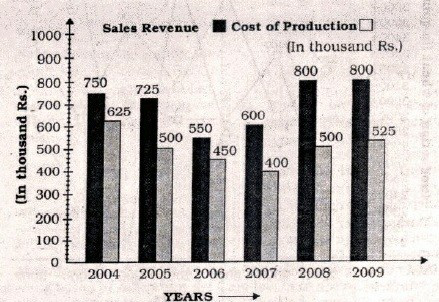
Q. 39 What is the total number of cars sold in the year 2013, if the growth rate in the total number of cars sold from 2012 to 2013 was the same as that of 2011 to 2012?

A. 23096

B. 210978

C. 24189

D. 26623

E. 24659


Q. 40 In which of the following years the ratio of number of Maruti cars sold to the total number of cars sold was lowest?

A. 2011

B. 2006

C. 2009

D. 2008

E. 2010


Q. 41 What was the approximate average number of cars sold (other than Maruthi cars) in a year, taking the data of all the years together?

A. 11231

B. 10317

C. 10919

D. 10121

E. 12117


Q. 42 The number of Maruthi cars sold in the years 2007, 2008 and 2009 is approximately what percent of total number of all the cars sold in the years 2006, 2007, 2009, 2011 and 2012?

A. 22%

B. 25%

C. 17%

D. 29%

E. 11%


Q. 43 What is the ratio between the number of cars sold other than that of Maruti in 2011 to the total number of cars sold in 2006?

A. 1.26

B. 1.17

C. 1.04

D. 1.23

E. 1.62


Q. 44 There are two motor cycles (A and B) of equal cost price. Motorcycle A was sold at a profit of 14% and motorcycle B was sold for Rs. 4290 more than its cost price. The net profit earned after selling both the motorcycles (A and B) is 20%. What is the cost price of each motorcycle.

A. Rs. 16,500

B. Rs. 16,000

C. Rs. 15,500

D. Rs. 17,500

E. Rs. 17,000


Q. 45 A bag contains 3 white balls and 2 black balls. Another bag contains 2 white and 4 black balls. A bag and a ball are picked at a random. What is the probability that the ball drawn is white?

A. 7/11

B. 7/30

C. 5/11

D. 7/15

E. 1/15


Questions: 46 – 50

What will come in place of the question mark (?) in the following series ?


Q. 46  16 17 21 30 46 ?

A. 82

B. 104

C. 71

D. 92

E. 84


Q. 47  2 2 4 12 48 ?

A. 180

B. 220

C. 240

D. 160

E. 210


Q. 48  10 14 23 37 56 ?

A. 74

B. 80

C. 118

D. 120

E. 94


Q. 49  4 7 13 25 49 ?

A. 118

B. 136

C. 86

D. 97

E. 124


Q. 50  50 59 41 68 32 ?

A. 77

B. 45

C. 20

D. 85

E. 60


Q. 51 A is thrice as efficient as B and takes 10 days less to do a piece of work than B takes to do the same work. In how many days, B alone can finish the whole work?

A. 15 days

B. 10 days

C. 9 days

D. 8 days

E. 7 days


Q. 52 The compound interest on a certain sum for 2 years at 10% per annum is Rs. 525. The simple interest on the same sum for double the time at half the rate percent per annum is

A. Rs. 400

B. Rs. 500

C. Rs. 600

D. Rs. 800

E. None of these


Questions: 53 – 57

What approximate value will come in place of the question mark (?) in the given questions? (You are not expected to calculate the exact value)


Q. 53  26.0003 – (154.001/6.995) = ?

A. 4

B. 18

C. 9

D. 10

E. 14


Q. 54  (17.995/3.01) + (104.001/12.999) + ?

A. 11

B. 20

C. 23

D. 14

E. 17


Q. 55  3/5 of 4/7 of 7/9 of 425 = ?

A. 121

B. 110

C. 118

D. 113

E. 124


Q. 56  124.001 x 14.001÷ 3.4999 + 2² = ?

A. 500

B. 450

C. 425

D. 475

E. 550


Q. 57  18.0009 ÷ √35.333 × (369 + ?) = 2040.05

A. 302

B. 298

C. 322

D. 319

E. 311


Q. 58 A, B and C started a business by investing Rs. 8400, Rs. 15600 and Rs. 13200 respectively. All of them invested for equal period of time. If A’s share of annual profit was Rs. 1960, what was the difference between B’s share in annual profit and C’s share in annual profit?

A. Rs. 560

B. Rs. 520

C. Rs. 540

D. Rs. 480

E. Rs. 600


Q. 59 Two pipes A and B can separately fill a cistern in 60 minutes and 75 minutes respectively. There is a third pipe in the bottom of the cistern to empty it. If all the three pipes are simultaneously opened, then the cistern is full in 50 minutes. In how much time the third pipe alone can empty the cistern.

A. 110 minutes

B. 100 minutes

C. 120 minutes

D. 90 minutes

E. 130 minutes


Questions: 60 – 64

In the following questions, two equations numbered I and II are given. You have to solve both the equations and – Give answer IF

(1) x < y

(2) x > y

(3) x ≤ y

(4) x ≥ y

(5) x = y or the relationship cannot be established


Q. 60 I. 15x² + 26x + 8 = 0

II. 25y² + 15y + 2 =0

A. x < y

B. x > y

C. x ≤ y

D. x ≥ y

E. x = y or the relationship cannot be established


Q. 61 I. 6x² – 19x + 15 = 0

II. 5y² – 22y + 24 = 0

A. x < y

B. x > y

C. x ≤ y

D. x ≥ y

E. x = y or the relationship cannot be established


Q. 62 I. 4x² – 12x + 5 = 0

II. 4y² – 8y + 3 = 0

A. x < y

B. x > y

C. x ≤ y

D. x ≥ y

E. x = y or the relationship cannot be established


Q. 63 I. 10x² + 21x + 8 = 0

II. 5y² + 19y + 18 = 0

A. x < y

B. x > y

C. x ≤ y

D. x ≥ y

E. x = y or the relationship cannot be established


Q. 64 I. 6x² – 5x + 1 = 0

II. 12y² – 23y + 10 = 0

A. x < y

B. x > y

C. x ≤ y

D. x ≥ y

E. x = y or the relationship cannot be established


Q. 65 The sum of the ages of a father and a son is 45 years. Five years ago, the product of their ages was four times the father’s age at that time. What are the present ages of father and son? (In years)

A. 34 and 11

B. 35 and 10

C. 36 and 9

D. 40 and 5

E. 42 and 12


Questions: 66 – 70

Study the following carefully and answer the questions given below :

Seven boxes – R, X, T, U, V, W, and X – are kept one above the other but not necessarily in the same order. Each box contains different elements – Chocolates, Accessories, Ribbons, Balloons, Keys , Pins and Nuts, but not necessarily in the same order. Only three boxes are kept between U and V, The ribbon box is kept immediately above U. Only one box is kept between the ribbon box and the nuts box. The nuts box is kept below the ribbon box. Only two boxes are kept between the nuts box and R. S is kept immediately below X. S is not kept immediately above V. Only two boxes are kept between X and the Balloon box. V does not contain balloons. The chocolate box is kept immediately above W. Only Three boxes are kept between the chocolates box are kept between the chocolates box and the accessories box. W does not contain keys.


Q. 66 How many boxes are kept between T and the nuts box?

A. None

B. Two

C. One

D. Three

E. More than three


Q. 67 Four of the following five are alike in a certain way and hence form a group. Which of the following does not belong to the group?

A. X – Ribbons

B. S – Pins

C. V – Balloons

D. U – keys

E. R – Chocolates


Q. 68 What is the position of S in the given stack of boxes?

A. Second from the top

B. Third from the bottom

C. Fifth from the top

D. Fourth from the top

E. First from the bottom


Q. 69 Which of the following boxes contains pins?

A. V

B. S

C. Other than those given as options

D. W

E. X


Q. 70 Which of the following boxes is kept immediately below R?

A. The Ribbon Box

B. X

C. W

D. V

E. The Accessories Box


Questions: 71 – 75

Study the following carefully and answer the questions given below :

Eight friends, J, K, L, M, S, T, U and V are seated in a straight line, nut not necessarily in the sane order. Some are them are facing north while some face south.

⇒ K sits second from the end of the line. U sits third to the left of K.

⇒ T faces south. V sits fourth to the left of T. T is not an immediate neighbor of U. T does not sit at any of the extreme ends of the line.

⇒ Both the immediate neighbors of J face north. J does not sit at any of the extreme ends of the line.

⇒ J faces a direction opposite to that of V (i.e if V faces north then J faces south and vice – versa).

⇒ L sits second to the left of J.

⇒ Immediate neighbors of K face opposite directions (i.e, if one neighbor faces north then the other faces south and vice versa.)

⇒ Persons sitting at extreme ends face opposite directions (i.e. if one neighbor faces north then the other also faces north and vice versa.)

⇒ Immediate neighbors of U face same direction (i.e. if one neighbour faces north then the other also faces north and vice – versa.)


Q. 71 Which of the following statements is true based on the given arrangement?

A. V sits at one of the extreme ends of the line.

B. L faces north

C. None of the given options is true.

D. Only three persons face north

E. S and U face the same directions


Q. 72 Who amongst the following faces North?

A. L

B. M

C. J

D. K

E. S


Q. 73 Who amongst the following sits third to the left of S?

A. K

B. J

C. V

D. L

E. No one as less than three persons sits to the left of S.


Q. 74 How many person(s) sit exactly between T and U?

A. Four

B. Three

C. Two

D. More than four

E. One


Q. 75 Who among the following represents the persons sitting at the extreme ends of the line?

A. M, L

B. M, S

C. L, V

D. M, V

E. S, V


Questions: 76 – 80

In these questions, relationship between different elements is shown in the statements. The statements are followed by two Conclusions numbered I and II. Study the Conclusions based on the statements and select the appropriate answer.

Give answer (1) if both the Conclusion I and II are true

Give answer (2) if only Conclusion I is true

Give answer (3) if neither Conclusion I nor II is true

Give answer (4) if only Conclusion II is true

Give answer (5) if either Conclusion I or Conclusion II is true


Q. 76 Statements :

C < O ≤ Z ≥ Y : N > Z < M

Conclusions :

I. N > Y

II. C < M

A. both the Conclusion I and II are true

B. only Conclusion I is true

C. neither Conclusion I nor II is true

D. only Conclusion II is true

E. either Conclusion I or Conclusion II is true


Q. 77 Statements :

P ≤ C < H = Q ≤ T > M ≤ N

Conclusions :

I. P < Q

II. Q > N

A. both the Conclusion I and II are true

B. only Conclusion I is true

C. neither Conclusion I nor II is true

D. only Conclusion II is true

E. either Conclusion I or Conclusion II is true


Q. 78 Statements :

P ≤ C < H = Q ≤ T > M ≤ N

Conclusions :

I. H > M

II. T > C

A. both the Conclusion I and II are true

B. only Conclusion I is true

C. neither Conclusion I nor II is true

D. only Conclusion II is true

E. either Conclusion I or Conclusion II is true


Q. 79 Statements :

J > K ≥ L < X : D ≥ U > K

Conclusions :

I. L >D

II. X > J

A. both the Conclusion I and II are true

B. only Conclusion I is true

C. neither Conclusion I nor II is true

D. only Conclusion II is true

E. either Conclusion I or Conclusion II is true


Q. 80 Statements :

N ≥ O = P ≥ B ≥ R

Conclusions :

I. R < N

II. R = N

A. both the Conclusion I and II are true

B. only Conclusion I is true

C. neither Conclusion I nor II is true

D. only Conclusion II is true

E. either Conclusion I or Conclusion II is true


Questions: 81 – 86

Study the following information carefully and answer the questions given below : Seven persons namely O, P, Q, R, S, T and U have to attend a practical but not necessarily in the same order, on seven different months (of the same year) namely, February, March, April, June, August, September and November. Each of them also likes a different subject namely, Chemistry, Biology, Psychology, Hindi, English, Geography and Account but not necessarily in the same order. The one who likes Hindi will attend a practical in a month which has 31 days. Only two persons will attend a practical between the one who likes Hindi and T. Only three persons will attend a practical between T and Q. Only one person will attend a practical between Q and the one who likes Accounts. The one who likes Chemistry will attend a practical in one of the months before the one who likes Accounts. The one who likes Chemistry will attend a practical in the month which has less than 30 days. Only two persons will attend a practical between the one who likes Chemistry and S. Only one person will attend a practical between S and the one who likes Psychology. The one who likes Psychology will attend a practical in one of the months after S. Only two persons will attend a practical between the on who likes Psychology and P. The one who likes Geography will attend a practical immediately before P. Only three persons will attend a practical between P and the one who likes English. Only one person will attend a practical between O and R. O will attend a practical in a month which has 31 days.


Q. 81 Who amongst the following likes Biology?

A. P

B. T

C. U

D. R

E. O


Q. 82 How many persons will attend a practical after P?

A. Three

B. One

C. Two

D. None

E. More than three


Q. 83 Which of the following represents the persons who will attend a practical immediately before and immediately after O?

A. T, P

B. P, Q

C. S, Q

D. S, P

E. U, P


Q. 84 As per the given arrangement February is related to T and March is related to P following a certain pattern, which of the following is August related to following the same pattern?

A. U

B. Q

C. R

D. S

E. O


Q. 85 Which of the following represents the month in which U will attend a practical?

A. November

B. February

C. April

D. June

E. Cannot be determined


Q. 86 Who amongst the following likes English?

A. S

B. T

C. U

D. R

E. Other than those given as options


Questions: 87 – 89

Study the following the information carefully and answer the questions given below :

Each of the six buildings, C, D, E, F, G and H has different number of floors. E has the second lowest number of floors. D has more number of floors than C and H but less than F. F does not have the maximum number of floors. H has less number of floors than both G and E. The building having second highest number of floors has 40 floors. C has 28 floors.


Q. 87 If the number of floors in buildings E + C is seven more than the number of floors in building F, how many floors are there in building E?

A. 47

B. 19

C. 34

D. 12

E. 15


Q. 88 How many floors does building H possibly have?

A. 56

B. 41

C. 30

D. 16

E. 35


Q. 89 Which of the following statements is true regarding the number of floors in building G?

A. The difference between number of floors in G and C is less than 12.

B. Only D has more number of floors than G.

C. G has more number of floors than only one building.

D. No other building has less than floors than G.

E. G possibly has 47 floors.


Questions: 90 – 95

Study the following information carefully and answer the questions given below:

Seven persons namely D, E, F, G, H, I, and J like seven different monuments namely, Taj Mahal, Red Fort, Charminar, India Gate, Qutub Minar, Victoria Memorial and Sanchi Stupa. Each of them works in either of the three fields viz. Economics, Management and Pharmacy with at least two of them in a field. (Note: None of the information given is necessarily in the same order.) The one who likes Qutub Minar works in field of Management only with G. The one who likes Charminar works with the one who likes Sanchi Stupa, J works with the one who likes India Gate. I neither works with G nor in the field of Pharmacy. J does not like Charminar. D likes Red Fort. D does not work with J. F works with only one person. F does not like Qutub Minar. H works with I. I does not like Charminar. Neither G nor F like Taj Mahal


Q. 90 Which of the following represents the combination of that persons who work in the field of Economics?

A. The ones who like Victoria Memorial, Taj Mahal and India Gate

B. The ones who like Charminar, Sanchi Stupa

C. The one who like charminar, Sanchi stupa and victoria memorial.

D. The ones who like Taj Mahal and India Gate

E. The ones who like Sanchi Stupa, Red Fort and Charminar


Q. 91 Which of the following is not true?

A. H likes Sanchi Stupa

B. E works only with G

C. All of the given statements are true

D. Both D and H work in the same field

E. Three persons work in the field of Economics


Q. 92 Which of the following combinations represent the field in which I works and the monument he likes?

A. Economics – Taj Mahal

B. Pharmacy – India Gate

C. Management – India Gate

D. Economics – Sanchi Stupa

E. Pharmacy – Charminar


Q. 93 Four of the following five are alike in a certain way as per the given arrangement and hence form a group. Which of the following does not belong to that group?

A. HI

B. JF

C. GE

D. EJ

E. ID


Q. 94 Which of the following monuments does E like?

A. Taj Mahal

B. Qutub Minar

C. Sanchi Stupa

D. Charminar

E. India Gate


Q. 95 Who amongst the following like Victoria Memorial?

A. H

B. J

C. G

D. F

E. I


Questions: 96 – 97

Point U is 35m to the west of Point W. Point W is 20m to the south of Point H. Point H is 25m to the east of Point S. Shubham is standing at point Z which is 40m to the south of Point S. He starts walking towards east and walks for 30m. He takes a left turn and stops at Point K after walking for 20m.


Q. 96 If Shubham walks for 15m towards west from his final position to reach Point V, how much distance will he have to cover in order to reach Point U

A. 30m

B. 15m

C. 35m

D. 25m

E. 20m


Q. 97 How far and in which direction is Point W with respect to Point K?

A. 10m towards North

B. 15m towards West

C. 5m towards East

D. 5m towards West

E. 15m towards East


Questions: 98 – 100

L is the mother if J. J is the only daughter of R. R is the son of D. D is the wife of K.

K is the father of T. T is the wife of Y.


Q. 98 If J is the sister of X, then how is X related to Y?

A. Son

B. Nephew

C. Daughter

D. Niece

E. Daughter-in-law


Q. 99 How is L related to T?

A. Niece

B. Sister

C. Daughter-in-law

D. Daughter

E. Sister-in-law


Q. 100 How is J related to K?

A. Daughter

B. Granddaughter

C. Daughter-in-law

D. Grandfather

E. Niece


Answer Sheet
Question 1 2 3 4 5 6 7 8 9 10
Answer C D A B B E A A C D
Question 11 12 13 14 15 16 17 18 19 20
Answer A D D B C C C B D E
Question 21 22 23 24 25 26 27 28 29 30
Answer C A A D B A A A D A
Question 31 32 33 34 35 36 37 38 39 40
Answer B B B C D E E A C B
Question 41 42 43 44 45 46 47 48 49 50
Answer D C C A D C C B D A
Question 51 52 53 54 55 56 57 58 59 60
Answer A B A D D A E A B C
Question 61 62 63 64 65 66 67 68 69 70
Answer A D B A C E B E D A
Question 71 72 73 74 75 76 77 78 79 80
Answer D B C E D A E C B B
Question 81 82 83 84 85 86 87 88 89 90
Answer A E C B B D B D E E
Question 91 92 93 94 95 96 97 98 99 100
Answer A D D B C D D B C B

SBI PO 2015 Prelims Previous Year Paper

SBI PO 2015 Prelims

Section

Questions

Marks

English

30 Questions (1 – 30)

30

Data Interpretation

16 Questions

16

Quantitative Aptitude

19 Questions (42 – 60)

19

Logical Reasoning

35 Questions (66 – 100)

35

Q. 1 Each sentence given below has two blanks. Each blanks indicates that something has been omitted. Choose the word that best fits in the meaning of the sentence as a whole. Realistically, however this disconnect cannot _______ itself very long, sooner rather than _______ the whole will no doubt converge.

A. sustain, later

B. sustained, later

C. submerge, latter

D. harmonize, lately

E. mend, lately


Q. 2 Each sentence given below has two blanks. Each blanks indicates that something has been omitted. Choose the word that best fits in the meaning of the sentence as a whole. Digitization will _______ a couple of billion dollars in pay revenues, bring more taxes choice and clean out black money ______ cable.

A. realize, from

B. replenish, off

C. release, from

D. revive, with

E. supply, with


Q. 3 Each sentence given below has two blanks. Each blanks indicates that something has been omitted. Choose the word that best fits in the meaning of the sentence as a whole. Public sector infrastructure financing companies could _______ of the ambitious smart cities citing _______ of guaranteed returns on investment.

A. opt for, crisis

B. opt out, lack

C. prefer, excess

D. select, lack

E. opt, cause


Q. 4 Each sentence given below has two blanks. Each blanks indicates that something has been omitted. Choose the word that best fits in the meaning of the sentence as a whole. Looks like the oil markets are not only showing ______ between the physical and the financial perspectives from time to time but also ______ between the short term view and the long term realities.

A. disconnect, convergence

B. disconnect, divergence

C. connection, difference

D. supply, demand

E. similarity, contrast


Q. 5 Each sentence given below has two blanks. Each blanks indicates that something has been omitted. Choose the word that best fits in the meaning of the sentence as a whole. Top global oil exporter Saudi Arabia ______ its crude production in April to a record high, _______ its flourishing Asian market share.

A. rose, feed

B. risen, collecting

C. raised, lead

D. raised, feeding

E. increased, healing


Questions: 6 – 15

Read the following passage carefully and answer the questions given below it.Certain words/phrases are given in CAPITAL to help you locate them while answering some of the questions:

Core competencies and focus are now the mantras of corporate strategists in Western economies. But while managers in the West have (DISMANTLED) many conglomerates assembled in the 1960s and 1970s, the large, diversified business group remains the dominant form of enterprise throughout most emerging markets. Some groups operate as holding companies with full ownership in many enterprises, others are collections of publicly traded companies, but all have some degree of central control. As emerging markets open up to global competition, consultants and foreign investors are increasingly pressuring these groups to (CONFORM TO) Western practice by scaling back the scope of their business activities. The conglomerate is the dinosaur of organizational design, they argue, too unwieldy and slow to compete in today’s fat paced markets. Already a number of executives have decided to break up their groups in order to show that they are focusing on only a few core businesses. There are reasons to worry abut this trend. Focus is good advice in New York or London, but something important gets lost in translation when that advice is given to groups in emerging markets. Western companies take for granted a range of institutions that support their business activities, bu many of these institutions are absent in other regions of the world. Without effective securities regulation and venture capital firms, for example, focused companies may be unable to raise adequate financing; and without strong educational institutions, they will struggle to hire skilled employees. Communicating with customers is difficult when the local infrastructure is poor, and unpredictable government behavior can stymie any operation. Although a focused strategy may enable a company to perform a few activities well, companies in emerging markets must take responsibility for a wide range of functions in order to do business effectively.

In the case of products markets, buyers and sellers usually suffer from a severe (DEARTH)of information for three reasons. First, the communications infrastructure in emerging markets is often under developed. Even as wireless communication spreads throughout the West, vast stretches in countries such as China and India remain without telephones. Power shortages often render the modes of communication that do exist ineffective. The postal service is typically inefficient, slow, or unreliable : and the private sector rarely provides efficient courier services. High rates of illiteracy make it difficult for marketers to communicate effectively with customers. Second, even when information about products does get around, there are no mechanisms to corroborate the claims made by sellers. Independent consumer – in – formation organizations are rare, and government watchdogs agencies are of little use. The few analysts who rate products are generally less sophisticated than their counter – parts in advanced economies. Third, consumers have no redress mechanisms if a product does not deliver on its promise. Law enforcement is often (CAPRICIOUS) and so slow that few who assign any value to time would resort to it. Unlike in advanced markets, there are few extra judicial arbitration mechanisms to which one can appeal. As a result of this lack of information, companies in emerging markets face much higher costs in building credible brands than their counterparts in advanced economies. In turn, established brands wield tremendous power. A conglomerate with a reputation for quality products and services can use its group name to enter new businesses, even if those businesses are completely unrelated to its current lines. Groups also have an advantage when they do try to build up a brand because they can spend the cost of maintaining it across multiple lines of business. Such groups then have a greater incentive not to damage brand quality in any one business because they will pay the price in their other businesses as well.


Q. 6 Which of the following sentences is/are correct in the context of the given passage?

I. Consultants and foreign investors argue that the conglomerate is the dinosaur of organizational design too unwieldy and slow to compete in today’s fast – paced markets.

II. Core competencies and focus are now the mantras of corporate strategists in western economies.

III. Due to lack of information required, companies in emerging markets face much higher costs in building credible brands in comparison to their counterparts in advanced economies.

A. Only I

B. Only II and III

C. Only I and III

D. Only I and II

E. All I, II and III


Q. 7 What suggestions have been cited by the writer in regard to raising adequate financing and hiring skilled employees?

A. Effective securities regulation

B. Effective securities regulation and venture capital firms

C. Effective securities regulation and venture capital firms and strong educational institutions

D. Both (1) and (3)

E. None of these


Q. 8 The writer has cited some hurdles in the case of product markets regarding shortage of information. Which of the following statements(s) in this regard is/are true?

I. Communications infrastructure in emerging markets is often under developed.

II. Postal service is typically inefficient, slow or unreliable.

III. High rates of illiteracy make it difficult for marketers to communicate effectively with customers

A. Only I

B. Only II and III

C. Only I and III

D. Only I and II

E. All I, II and III


Q. 9 Which of the following statements is correct in regard to the given passage?

A. The few analysts in emerging markets who rate products are generally less sophisticated than their counterparts in advanced economies.

B. Unlike in advanced markets there are few extra-judicial arbitration mechanisms in emerging markets to which one can appeal.

C. Even as wireless communication spreads throughout the West vast regions of China and India remain without telephones.

D. Unpredictable government behavior can stymie any operation.

E. All are correct


Q. 10 Established brands can wield tremendous power in emerging markets because

A. a conglomerate with a reputation for quality products and services can use its group name to enter new businesses.

B. they have much political nexus and strong man power.

C. they have excess of money and customers

D. they have greater incentive to damage brand quality in any one business

E. None of these


Q. 11 What should be the most appropriate title of this passage?

A. Hurdles in Emerging market

B. What is Emerging market

C. Lack of information in Emerging markets

D. Advanced Markets Eat Emerging markets


Q. 12 Choose the word/group of words which is most similar in meaning to the word/group of words printed in CAPITAL as used in the passage

CONFORM TO

A. comply

B. conflict between

C. confirm

D. confiscate

E. confine to


Q. 13 DISMANTLE.

A. take together

B. hold

C. take apart

D. disorder

E. dismount


Q. 14 CAPRICIOUS

A. unpredictable

B. predictable

C. changeable

D. captive

E. reasonable


Q. 15 DEARTH….

A. scarcity

B. shortage

C. paucity

D. abundance

E. debility


Questions: 16 – 20

Rearrange the following six sentences (A), (B), (C), (D), (E) and (F) in the proper sequence to form meaningful paragraph; then answer the questions given below them.

(A) Colony losses last year weren’t as dramatic as the declines associated with Colony Collapse Disorder (CCD), which was first identified in October 2006.

(B) Beekeepers tapped for the survey manage a total of 400,000 colonies, representing about 14.5% of the United States honeybee colonies.

(C) Overall, colony losses during the 12 – month period that ended in April reached 42.1% – the second highest annual loss to date.

(D) Summer colony losses reached 27.4% , exceeding winter losses that came in at 23.7%.

(E) For the first time, beekeepers watched more of their colonies disappear during the summer than in winter.

(F) A new survey outlining honeybee colony losses in the U.S has scientists scratching their heads


Q. 16 Which of the following should be the FIRST sentence after rearrangement?

A. A

B. B

C. F

D. E

E. D


Q. 17 Which of the following should be the SECOND sentence after the rearrangement?

A. E

B. F

C. A

D. B

E. C


Q. 18 Which of the following should be the SIXTH sentence after rearrangement?

A. A

B. B

C. C

D. D

E. E


Q. 19 Which of the following should be the FOURTH sentence after rearrangement?

A. A

B. B

C. C

D. D

E. E


Q. 20 Which of the following should be the FIFTH sentence after rearrangement?

A. A

B. B

C. C

D. D

E. E


Questions: 21 – 25

Read each sentence to find out whether there is any grammatical error or idiomatic error in it. The error, if any, will be in one part of the sentence. The number of that part is the answer. If there is no error, the answer is (5).


Q. 21 Profitability of fleet operators(1)/ have improved due to a decline(2)/ in fuel prices during(3)/ the last two months.(4)/ No error(5)

A. 1

B. 2

C. 3

D. 4

E. 5


Q. 22 We are a young country, (1)/ a brash country, a forward (2)/ looking country, and (3)/ true history interest us a lot. (4)/ No error(5)

A. 1

B. 2

C. 3

D. 4

E. 5


Q. 23 The joint statement included (1)/ just three lines on military (2)/ cooperation, restriction itself for (3)/ exercise and ship visits. (4)/ No error (5)

A. 1

B. 2

C. 3

D. 4

E. 5


Q. 24 In a country currently there is (1)/ absolute no shortage in fact(2)/ there is an abundance of pilots holding (3)/ a valid license but unable to find a job.(4)/ No error(5).

A. 1

B. 2

C. 3

D. 4

E. 5


Q. 25 WPI might have turned negative primarily(1)/ due to a steep decline in the prices (2)/ of non – food articles(3)/ raising vegetable prices keep food articles firm during this month.(4)/ No error(5)

A. 1

B. 2

C. 3

D. 4

E. 5


Questions: 26 – 30

In the following passage there are blanks, each of which has been numbered. These numbers are printed below the passage and against each, five words are suggested, one of which fits the blank appropriate word in each case. There are plenty written about the wealth divide in the U.S. economy. But there is another important divide the one between consumers and corporations. If you look at how U.S. households have been behaving (26) you’d think it was all blue skies. Consumers confidence is at five-year high, thanks to higher stock prices and a (27) in the housing market. Home prices have had their biggest jump since 2005. Consumers, finally feeling more (28) are buying that new car or electronic gadget and bolstering GDP growth a bit. The wealth gap between America’s high income group and everyone else has (29) record high levels since the economic recovery from the great recession of 2007-09, with a clear (30) of increasing wealth for the upper-income families and no wealth growth for the middlelower- income families.


Q. 26 Find out the appropriate word for the blank (26)

A. late

B. lately

C. uniformly

D. eager

E. earnestly


Q. 27 Find out the appropriate word for the blank (27)

A. discovering

B. growing

C. recovery

D. delivery

E. depletion


Q. 28 Find out the appropriate word for the blank (28)

A. flush

B. happy

C. satisfied

D. flung

E. flunk


Q. 29 Find out the appropriate word for the blank (29)

A. reach

B. reached

C. delivered

D. targeted

E. subjugated


Q. 30 Find out the appropriate word for the blank (30)

A. target

B. projection

C. trajectory

D. tarnation

E. temptation


Questions: 31 – 36

Study the following table which details the “Number of students enrolled in 4 different courses of a college during the given years” & answer the questions below:


Q. 31 What was the average number of boys studying in all four courses of the college in the year 2010?

A. 493

B. 480

C. 439

D. 468

E. none of these


Q. 32 What was the average number of females studying in all four courses of the college in the year 2012?

A. 573

B. 537

C. 437

D. 473

E. none of these


Q. 33 By what percentage approximately is the number of boys studying in all four courses of the college in the year 2011 less than that of the girl students studying in all four courses in the same year?

A. 32

B. 30

C. 26

D. 22

E. none of these


Q. 34 What is the difference between the number of girls studying number of girls studying in all four courses of the college in the year 2010 and that of boys studying in all four courses of the college in the year 2011?

A. 205

B. 215

C. 305

D. 315

E. none of these


Q. 35 What is the respective ratio between the total number of boys in courses B and D together in year 2010 and that of all students in courses A and D in 2012?

A. 3:5

B. 1:3

C. 3:7

D. 4:5

E. none of these


Q. 36 A dealer allowed a discount of 25% on the marked price of Rs 12000 on an article and incurred a loss 10%. What discount should be allow on the market price so that he gains Rs. 440 on the article ?

A. 11%

B. 13%

C. 19%

D. 15%

E. none of these


Questions: 37 – 41

Study the following table which details the “Number of projects handled by 6 companies during 6 years” & answer the questions below:


Q. 37 What is the average number of projects handled by company A during all given years ?

A. 1122/3

B. 1130/3

C. 1129/3

D. 1103/3

E. none of these


Q. 38 What is the respective ratio between the total number of projects handled by both companies in the year 2002 and 2003 ?

A. 4:5

B. 5:9

C. 7:9

D. 5:7

E. none of these


Q. 39 By what percent is the number of projects handled by company B in the year 2006 more than handled in the year 2002 by the same company ?

A. 84%

B. 86%

C. 72%

D. 76%

E. none of these


Q. 40 What is the average number of projects handled by company B during all given years ?

A. 1145/3

B. 1144/3

C. 956/3

D. 1129/3

E. none of these


Q. 41 What is the difference between the total number of projects handled by company A and company B in the year 2001, 2003 and 2006 taken together ?

A. 250

B. 230

C. 260

D. 240

E. none of these


Q. 42 A man gave 20% of his salary to his only son and to his only daughter. The ratio of amount given to son and daughter is 3:2 respectively. Twice the amount what her gave to his daughter, he invested in LIC. Out of the remaining amount he gave one fourth to his wife. After that he was left with Rs. 16800. Find out the amount invested in LIC ?

A. Rs. 5600

B. Rs. 5400

C. Rs. 5800

D. Rs. 6200

E. none of these


Q. 43 In a vessel there is 40 liters mixture of milk and water. There is 15% water in the mixture. The milkman sells 10 liters of mixture to the customer and thereafter adds 12.5 liters of water to the remaining mixture. What is the respective ratio of milk and water in the new mixture ?

A. 2:3

B. 3:2

C. 3:4

D. 4:3

E. none of these


Q. 44 A boat covers a distance of 2.75 km upstream in 11 minutes. The ratio between speed of current and the of boat downstream is 1:7 respectively, The boat overs distance between A and B downstream ion 52 minutes. What is the distance between point A and point B ?

A. 19.2 km

B. 17.2 km

C. 18.2 km

D. 16.5 km

E. none of these


Q. 45 What will come in the place of the question mark (?) in each of the following number series?
125 128 119 146 65 ?

A. 308

B. 316

C. 298

D. 294

E. none of these264


Q. 46 What will come in the place of the question mark (?) in each of the following number series?

8 17 30 47 68 ?

A. 83

B. 93

C. 98

D. 95

E. 96


Q. 47 What will come in the place of the question mark (?) in each of the following number series?

24 12 12 18 ? 90

A. 40

B. 38

C. 36

D. 45

E. none of these


Q. 48 What will come in the place of the question mark (?) in each of the following number series?

5 16 49 104 ? 280

A. 165

B. 160

C. 171

D. 181

E. 175


Q. 49 What will come in the place of the question mark (?) in each of the following number series?

13 19 30 48 75 ?

A. 107

B. 108

C. 116

D. 112

E. 113


Q. 50 A and B together can complete a piece of work in 19/7 days while B and C together can complete the same work in 40/3 days. B is 25% more efficient than C. In how many days will A and C together completer the same work ?

A. 45/4

B. 49/4

C. 34/3

D. 37/3

E. none of these


Q. 51 The sum of ages of Ria and Abby is 48 years. Today Abby is 4 years older than Shweta. There respective ratio of the present ages of Ria and Shweta is 4:7. What was the Abby’s age two years ago ?

A. 32 years

B. 30 years

C. 28 years

D. 34 years

E. none of these


Q. 52 What approximate value will come in place of the question mark (?) in the following questions ? ( You are not expected to calculate the exact value ).

52.02% of 749 + 45% of 419.98 – ? = 225

A. 354

B. 364

C. 370

D. 368

E. none of these


Q. 53 What approximate value will come in place of the question mark (?) in the following questions ? ( You are not expected to calculate the exact value ).

349.98 x 19.99 + ?^2 x 180.16 = 11500

A. 3

B. 5

C. 4

D. 9

E. 25


Q. 54 What approximate value will come in place of the question mark (?) in the following questions ? ( You are not expected to calculate the exact value ).

( 1800 / sqrt ( ? ) x 29.99 ) / 15.02 = 144

A. 12

B. 25

C. 625

D. 144

E. 169


Q. 55 What approximate value will come in place of the question mark (?) in the following questions ? ( You are not expected to calculate the exact value ).

( 52.02^2 – 34.01^2 ) / 17.99 x sqrt ( ? ) = 1720

A. 400

B. 20

C. 25

D. 625

E. ( 340 x 9.98 ) / 6.4001 / 1245.15 = ?


Q. 56 What approximate value will come in place of the question mark (?) in the following questions ? ( You are not expected to calculate the exact value ).

( 340 x 9.98 ) / 6.4001 / 1245.15 = ?

A. 1766

B. 1776

C. 1676

D. 1876

E. 1806


Q. 57 A, B and C together start a business. The ratio of the investments of A, B and C is 0.125 : 0.75 : 0.25 . After 8 months A adds thrice amount of his earlier investment and C withdraws half of his earlier investment. At the end of the year, they earn a total profit of Rs. 5800. What is B’s share in the profit ?

A. Rs. 3400

B. Rs. 3200

C. Rs. 3600

D. Rs. 3800

E. none of these


Q. 58 In a bag there are 4 white balls, 4 red, and 2 green balls. Two balls are drawn at random. What is the probability that at least one ball is green color ?

A. 4/5

B. 3/5

C. 1/5

D. 2/5

E. none of these


Q. 59 Equal amounts are invested in two schemes A and B for 6 years and 8 years respectively. Scheme A offers interest at the rate of 12% per annum and scheme B offers interest at the rate of *% per annum . The difference between the interests earned is Rs. 1280. What is the amount invested in each scheme ?

A. Rs. 16000

B. Rs. 16500

C. Rs. 17000

D. Rs. 18000

E. none of these


Q. 60 The area of rectangle is equal to the area of a square whose diagonal is 12 sqrt(6) meter. The difference between the length and the breadth of the rectangle of 6 meter. What is the perimeter of the rectangle ? ( in meter )

A. 160 meter

B. 80 meter

C. 82 meter

D. 84 meter

E. none of these


Questions: 61 – 65

Directions(61-65): In the following questions two equations numbered I and II are given. You have to solve both the equations


Q. 61 I. 3x² + 14x + 15 = 0

II. 6y² + 17y + 12 = 0

A. if x > y

B. if x ≥ y

C. if x < y

D. if x ≤ y

E. if x = y or the relationship cannot be established


Q. 62 I. 3x² – 17x + 24 = 0

II. 4y² – 15y + 14 = 0

A. if x > y

B. if x ≥ y

C. if x < y

D. if x ≤ y

E. if x = y or the relationship cannot be established


Q. 63 I. 2x² + 11x + 14 = 0

II. 2y² + 17y + 33 = 0

A. if x > y

B. if x ≥ y

C. if x < y

D. if x ≤ y

E. if x = y or the relationship cannot be established


Q. 64 I. 3x² + 13x + 12 =0

II. 2y² + 15y + 27 = 0

A. if x > y

B. if x ≥ y

C. if x < y

D. if x ≤ y

E. if x = y or the relationship cannot be established


Q. 65 I. x² – 22x + 121 = 0

II. y² = 121

A. if x > y

B. if x ≥ y

C. if x < y

D. if x ≤ y

E. if x = y or the relationship cannot be established


Questions: 66 – 70

REASONING

Directions (66-70) : Study the following information carefully and answer the questions given below :

Eight friends — C,D,E,F,N,O,P and Q — are sitting in a straight line facing north but not necessarily in the same order. O is sitting second to the right of P. E is sitting third to the left of Q. F is sitting fourth to the left of P. E does not sit on the extreme end of the line. D is immediate neighbor of neither F nor P. C is not an immediate neighbor of P.


Q. 66 Which of the following pairs represents the two persons sitting at the extreme ends of the line?

A. F,C

B. D,F

C. C,Q

D. N,D

E. O,F


Q. 67 Which of the following statements is definitely true as per the given arrangement?

A. F and E are immediate neighbors of P

B. C is sitting third to the right of Q

C. There are only three persons between D and E

D. N is sitting to the immediate left of P

E. All the given statements are true


Q. 68 Who among the following is sitting third to the right of N?

A. O

B. D

C. C

D. E

E. Q


Q. 69 What is the position of C with respect to Q?

A. Fourth to the right

B. Third to the right

C. Fourth to the left

D. Second to the right


Q. 70 Four of the following five are alike in a certain way based on the given arrangement and hence they form a group. Which one of the following does not belong to that group?

A. FN

B. PD

C. EQ

D. CP

E. NQ


Questions: 71 – 73

Directions (71 – 73 ) : Study the following information carefully and answer the questions given below:

S is the daughter of U. V has only two children – S and Y. Y is married to D. P is the brother of B. V has only two daughters. J is the mother of U. J is married to L. P is married to S. V is the son of T.


Q. 71 Who among the following is the sister-in- law of B?

A. Y

B. S

C. U

D. J

E. T


Q. 72 Who among the following is the father of U?

A. J

B. T

C. V

D. L

E. None of these


Q. 73 How is V related to P?

A. Father-in-law

B. Mother-in-law

C. Father

D. Mother

E. Brother


Q. 74 Point A is 30 meters to the east of point B. Point C is 10 metres to the south of Point A. Point D is 15 metres to the west of Point C. Point E is exactly in the middle of the Points D and F. Points D,E and F lie in a straight line. The length of the line DEF is 20 metres. Point F is to the north of point D. Point G is 15 metres to the east of point F. How far and in which direction is Point G from Point A?

A. 10 metres, South

B. 15 metres, North

C. 10 metres, North

D. 15 metres, South

E. 10 metres, East


Q. 75 A person starts from his house and moves towards the market. He walks 40 metres towards south and takes a right turn. After walking 30 metres he takes a left turn and walks 20 metres. Finally he takes a left turn and reach the market after walking 30 metres. How far and in which direction is his house from the market?

A. 60 metres, South

B. 60 metres, North

C. 70 metres, North

D. 70 metres, South

E. 90 metres, North


Questions: 76 – 80

Directions (76-80) : In each question given below two or three statements followed by two Conlclusions numbered I and II have been given. You have to take the given statements to be true even if they seem to be at variance from the commonly known facts and then decide which of the following Conclusions logically follows from the given statements, disregarding commonly known facts.

Give answer (1) if only Conclusion I follows

Give answer (2) if only Conclusion II follows

Give answer (3) if either Conclusion I or Conclusion II follows

Give answer (4) if neither Conclusion I nor Conclusion II follows

Give answer (5) if both Conclusion I and Conclusion II follow


Q. 76 Statements

All magazines are journals.

Some journals are periodicals.

All periodicals are bulletins.

Conclusions

I. Some periodicals are definitely not journals.

II. All periodicals being magazines is a possibility.

A. if only Conclusion I follows

B. if only Conclusion II follows

C. if either Conclusion I or Conclusion II follows

D. if neither Conclusion I nor Conclusion II follows

E. if both Conclusion I and Conclusion II follow


Q. 77 Statements

All magazines are journals.

Some journals are periodicals.

All periodicals are bulletins.

Conclusions:

I. At least some bulletins are journals.

II. No bulletin is a magazine.

A. if only Conclusion I follows

B. if only Conclusion II follows

C. if either Conclusion I or Conclusion II follows

D. if neither Conclusion I nor Conclusion II follows

E. Give answer (5) if both Conclusion I and Conclusion II follow


Q. 78 All turns are loops.

No loop is a bend.

Some bends are curves.

Conclusions:

I. At least some curves are loops.

II. No bend is a turn.

A. if only Conclusion I follows

B. if only Conclusion II follows

C. if either Conclusion I or Conclusion II follows

D. if neither Conclusion I nor Conclusion II follows

E. if both Conclusion I and Conclusion II follow


Q. 79 Statements:

No country is a village.

All villages are districts.

Conclusions:

I. All countries are districts.

II. All dristricts are villages.

A. if only Conclusion I follows

B. if only Conclusion II follows

C. if either Conclusion I or Conclusion II follows

D. if neither Conclusion I nor Conclusion II follows

E. if both Conclusion I and Conclusion II follow


Q. 80 Statements

All progress are growth.

All developments are growth.

No growth is an evolution.

Conclusions:

I. All developments being progress is a possibility.

II. No evolution is a progress.

A. Give answer (1) if only Conclusion I follows

B. Give answer (2) if only Conclusion II follows

C. Give answer (3) if either Conclusion I or Conclusion II follows

D. Give answer (4) if neither Conclusion I nor Conclusion II follows

E. Give answer (5) if both Conclusion I and Conclusion II follow


Questions: 81 – 85

Directions (81-85) : In each of the following questions, relationship between different elements is shown in the statements. The statements are followed by two Conclusions numbered I and II. Study the conlcusions based on the given statements and select the appropriate answer :

Give answer (1) if only Conclusion I true

Give answer (2) if only Conclusion II true

Give answer (3) if either Conclusion I or Conclusion II true

Give answer (4) if neither Conclusion I nor Conclusion II true

Give answer (5) if both Conclusion I and Conclusion II true


Q. 81 Statements

Y ≤ K < D = S ; D < V < O; G ≥ D < Q

Conclusions:

I. G > V

II. Y < Q

A. if only Conclusion I true

B. if only Conclusion II true

C. if either Conclusion I or Conclusion II true

D. if neither Conclusion I nor Conclusion II true

E. if both Conclusion I and Conclusion II true


Q. 82 Statements

Y ≤ K < D = S ; D < V < O; G ≥ D < Q

Conclusions :

I. K < O

II. G = V

A. if only Conclusion I true

B. if only Conclusion II true

C. if either Conclusion I or Conclusion II true

D. if neither Conclusion I nor Conclusion II true

E. if both Conclusion I and Conclusion II true


Q. 83 Statements :

D < L ≤ F = N ; L =A

Conclusions:

I. N > D

II. A ≤ F

A. if only Conclusion I true

B. if only Conclusion II true

C. if either Conclusion I or Conclusion II true

D. if neither Conclusion I nor Conclusion II true

E. if both Conclusion I and Conclusion II true


Q. 84 Statements

B > Z = R ≥ M < J ≤ H; J > P ; K < Z

Conclusions

I. H < P

II. B > M

A. if only Conclusion I true

B. if only Conclusion II true

C. if either Conclusion I or Conclusion II true

D. if neither Conclusion I nor Conclusion II true

E. if both Conclusion I and Conclusion II true


Q. 85 Statements

B > Z = R ≥ M < J ≤ H; J > P ; K < Z

Conclusions

I. K < J

II. R ≥ H

A. if only Conclusion I true

B. if only Conclusion II true

C. if either Conclusion I or Conclusion II true

D. if neither Conclusion I nor Conclusion II true

E. if both Conclusion I and Conclusion II true


Questions: 86 – 90

Directions (86-90) : Study the following information carefully and answer the questions given below :

In a certain code language,

‘ good time to buy ‘ is written as ‘ sy bo nj kw ‘.

‘invest money and time’ is written as ‘sy ta ge mr’.

‘only work and money’ is written as ‘ta fp mr ux’.

‘buy good stuff only’ is written as ‘kw bo rd fp’.


Q. 86 What is the code for “to” in the given code language ?

A. ge

B. kw

C. nj

D. sy

E. bo


Q. 87 What is the code for ” buy good” in the given code language?

A. bo kw

B. kw nj

C. rd bo

D. rd nj

E. Cannot be determined


Q. 88 What is the code for ” only time and money ” in the given code language ?

A. sy bo ux fp

B. fp ta rd kw

C. ge fp ta bo

D. mr ta sy fp

E. bo nj ta ge


Q. 89 what is the code for “stuff” in the given code language?

A. fp

B. rd

C. kw

D. bo

E. Either ‘bo’ or ‘rd’


Q. 90 What is the code for “invest time to work ” in the given code language?

A. sy bo mr fp

B. ta nj kw rd

C. ta fp ux nj

D. mr sy bo ta

E. ux ge nj sy


Questions: 91 – 95

Directions (91-95) : Study the following information carefully and answer the questions given below:

Eight persons – M,N,O,P,Q,R,S And T — are sitting around a circular table at equal distance between each other,but not necessarily in the same order. Some of them are facing the centre while some others are facing outside (i.e. in a direction opposite to the centre)

Note: Facing the same direction means if one faces the centre then the other also faces the centre and vice – versa. Facing opposite directions means if one person faces the centre then the other person faces outside and vice- versa. R is sitting second to the right of Q. Only three persons are sitting between R and S. T is sitting second to the right of R . T faces the centre. R and S face opposite directions.P and S face opposite Ddirections. N is sitting second to the left of P. P is not an immediate neighbour of Q. Only one person is sitting between P and O. O is not a n immediate neighbour of Q. M is sitting third to the left of T. The immediate neighbors of T face opposite directions . M and R face opposite directions. N faces the same direction as that of O.


Q. 91 Which of the following statements is true regarding T according to the given seating arrangement?

A. T is sitting second to the left of S.

B. T is sitting exactly between O and P.

C. T is sitting just opposite to N.

D. There are four persons between T and Q.

E. T faces the opposite direction as that of M.


Q. 92 How many persons in the given seating arrangement face outside?

A. Three

B. Four

C. Five

D. Six

E. Two


Q. 93 Four of the following five are alike in a certain way based on the given seating arrangement and hence they form a group. Which is the one that does not belong to that group?

A. O

B. S

C. M

D. Q

E. N


Q. 94 Who among the following sits exactly between S and Q when counted from the left of S?

A. None

B. O

C. M

D. N

E. T


Q. 95 What is the position of M with respect to R?

A. Other than those given as options

B. third to the right

C. Second to the left

D. Second to the right

E. Third to the left


Questions: 96 – 100

Directions (96-100) : Study the following information carefully and answer the questions given below:

Seven persons — M,N,O,P,Q,R And S — live on separate floors of a seven – sotreyed building, but not necessarily in the same order. The ground floor of the building is numbered 1, the floor above it 2 and so on until the topmost floor is numbered 7. Each person likes different cartoon characters,viz, Chipmunk, Flinstone , Jetson , Popeye , Scooby Doo, Simpson and Tweety , but not necessarily in the same order. The person who likes Popeye lives on floor numbered 4. Only two persons live between P and the one who likes Popeye . M does not live on the lowermost floor below the one who likes Popeye. S lives on an even numbered floor but neither immediately above nor immediately below the floor of M. Only two persons live between M and the person who likes Tweety. Only one person lives between N and R. R lives on an even numbered floor and does not like Popeye. Only three persons live between the persons who like Chipmunk and Jetson respectively. The person who likes Chipmunk does not live on the topmost floor. O does not like Chipmunk or Jetson. The person who likes Scooby Doo lives on the floor of the person who likes Simpson.


Q. 96 How many persons live between the floors on which S and P live?

A. Three

B. Two

C. Four

D. Five

E. No one


Q. 97 Which of the following statements is / are true according to the given information.

A. Q lives on floor numbered 5 and he doesnot like Popeye.

B. M likes Scooby Doo and he does not live on floor numbered 4.

C. O likes Flinstione and he lives on the topmost floor.

D. Only two persons live between the floors of Q and R.

E. All the statements are true.


Q. 98 Who among the following lives on the floor immediately above the floor of M?

A. N

B. R

C. S

D. O

E. No One


Q. 99 Who among the following lives exactly between the floors on which S and N live?

A. P

B. R

C. M

D. Q

E. No One


Q. 100 Who among the following does like cartoon character Jetson?

A. R

B. P

C. N

D. Q

E. S


Answer Sheet
Question 1 2 3 4 5 6 7 8 9 10
Answer A C B B D E C E E A
Question 11 12 13 14 15 16 17 18 19 20
Answer A A C B E C A A C B
Question 21 22 23 24 25 26 27 28 29 30
Answer B D B B D B C A B C
Question 31 32 33 34 35 36 37 38 39 40
Answer A B C D A B B C D A
Question 41 42 43 44 45 46 47 48 49 50
Answer B A B C A B C D E A
Question 51 52 53 54 55 56 57 58 59 60
Answer B A B C A B C D A D
Question 61 62 63 64 65 66 67 68 69 70
Answer A B B D D B D A C E
Question 71 72 73 74 75 76 77 78 79 80
Answer B D A C B B A B D E
Question 81 82 83 84 85 86 87 88 89 90
Answer B A E B D C A D B E
Question 91 92 93 94 95 96 97 98 99 100
Answer B A D C E C E A D B

SBI PO 2014 Prelims Previous Year Paper

SBI PO 2014 Prelims

Section

Question

Marks

Logical Reasoning

50 Question (1 – 50)

50

Data Interpretation

50 Question (51 – 100)

50

Questions: 1 – 2

Directions (1-2) :

Study the following information carefully and answer the questions given below. There are five statues – L, M, N, O and P – each of them having different height. Statue L is smaller than only statue M. Statue O is smaller than statue N. Statue O is longer than statue P. The height of the tallest statue is 20 feet. The height of the second smallest statue is 11 feet.


Q. 1 What will be the height of statue P?

A. 13 feet

B. 15 feet

C. 9 feet

D. 12 feet

E. 14 feet


Q. 2 What will be the height of the third tallest statue?

A. 13 feet

B. 10 feet

C. 19 feet

D. 9 feet

E. 11 feet


Q. 3 If the expressions S=T>O≥R and P≤O

A. T>O

B. R>S

C. Z>R

D. P>T

E. P<Z


Questions: 4 – 10

Directions (4-10) :

Study the following information carefully and answer the questions given below. Eight persons – H, I, J, K, L, M, N and O – are standing in a straight line at equidistant. Some of them are facing north while others are facing south. M is standing third to the right to H. M is standing at one of the extreme ends. L is standing third to the left of H. The immediate neighbours of J face north. N is not an immediate neighbour of H. The persons standing at the extreme ends face the same direction (Both are facing either north or south). The immediate neighbours of H face just opposite direction as that of M. The immediate neighbours of O face opposite directions with respect to each other. One of the immediate neighbours of L is K who is facing north. I is standing between J and M. Not more than four persons are facing north.


Q. 4 Who among the following is third to the left of N?

A. K

B. J

C. H

D. I

E. O


Q. 5 The immediate neighbours of L are :

A. M and N

B. N and O

C. K and N

D. N and H

E. J and H


Q. 6 How many persons are standing exactly between I and O?

A. Three

B. Four

C. One

D. Two

E. None


Q. 7 Who among the following is to the immediate left of H?

A. O

B. J

C. I

D. L

E. K


Q. 8 Four of the following five are alike in a certain way based on the above arrangement and hence form a group. Which one of the following does not belong to that group?

A. N

B. L

C. O

D. I

E. K


Q. 9 Who among the following is exactly between L and J?

A. N

B. O

C. H

D. I

E. None


Q. 10 Who among the following is fourth to the right of J?

A. N

B. I

C. H

D. L

E. K


Questions: 11 – 15

Direction (11-15) :

In these questions, relationship between different elements is shown in the statements.

The statements are followed by two conclusions. Select the answer based on the conclusions.


Q. 11 Statements :

B>C = D≥X; E≤X; Z≥D

Conclusions :

I. B>E

II. Z≥B

A. Conclusion I is true

B. Conclusion II is true

C. Either conclusion I or II is true

D. Neither conclusion I nor II is true

E. Both conclusions I and II are true


Q. 12 Statements :

E>F≥GConclusions :

I. G≤E

II. J≥F

A. Conclusion I is true

B. Conclusion II is true

C. Either conclusion I or II is true

D. Neither conclusion I nor II is true

E. Both conclusions I and II are true


Q. 13 Statements :

K≤LN≥O;T>M≤P

Conclusions :

I. T>K

II. P>O

A. Conclusion I is true

B. Conclusion II is true

C. Either conclusion I or II is true

D. Neither conclusion I nor II is true

E. Both conclusions I and II are true


Q. 14 Statements :

B>O = K≥L; D>K≥S

Conclusions :

I. OII. S≤L

A. Conclusion I is true

B. Conclusion II is true

C. Either conclusion I or II is true

D. Neither conclusion I nor II is true

E. Both conclusions I and II are true


Q. 15 Statements :

B>O = K≥L; D>K≥S

Conclusions :

I. L>D

II. B>S

A. Conclusion I is true

B. Conclusion II is true

C. Either conclusion I or II is true

D. Neither conclusion I nor II is true

E. Both conclusions I and II are true


Questions: 16 – 20

Directions (16-20) :

Each of the questions below consists of a question and two statements numbered I and II given below it. You have to decide whether the data provided in the statements are sufficient to answer the question.


Q. 16 What is the code of ‘shine’ in a certain code language?

I. In that code language ‘shine was peeled off’ is written as ‘&#@9’ and ‘no paint but shine’ is written as ‘75#8’.

II. In that code language ‘try the new shine’ is written as ‘13#0’ and ‘we try the new’ is written as ’6013’.

A. Statement I alone is sufficient to answer the question, while the data in statement II alone are not sufficient to answer the question

B. Statement II alone is sufficient to answer the question, while the data in statement I alone is not sufficient to answer the question.

C. Either statement I or II alone is sufficient to answer the question

D. Both the statements I and II together are not sufficient to answer the question

E. Both the statements I and II together are necessary to answer the questions


Q. 17 How C is related to H?

I. N is son of H. J is mother of Z. N and Z are cousins. C is husband of J.

II. L is father of C. A is mother of D. L is married to A. H is wife of D. J is wife of C.

A. Statement I alone is sufficient to answer the question, while the data in statement II alone are not sufficient to answer the question

B. Statement II alone is sufficient to answer the question, while the data in statement I alone is not sufficient to answer the question.

C. Either statement I or II alone is sufficient to answer the question

D. Both the statements I and II together are not sufficient to answer the question

E. Both the statements I and II together are necessary to answer the questions


Q. 18 In which direction point ‘A’ is located with respect to point ‘B’?

I. A man starts walking from point ‘A’ towards east after walking 3 metres reaches point ‘N’, he turns right and walks 7 metres to reach point ‘M’. Then he turns right and walks 6 metres to reach point ‘O’. He again turns right and walks 7 metres to reach point ‘P’. He then turns left and walks 2 metres to reach point ‘B’.

II. A man starts walking from point ‘A’ towards east and after walking 3 metres reaches

point ‘N’. From point ‘N’ he walks 7 metres towards south and reaches point ‘M’. From point ‘M’ he walks 6 metres towards west and reaches point ‘O’. From point ‘O’ he walks 7 metres towards north and reaches point ‘P’. From point ‘P’ he walks towards west and reaches point ‘B’. The distance between points A and B is 8 metres.

A. Statement I alone is sufficient to answer the question, while the data in statement II alone are not sufficient to answer the question

B. Statement II alone is sufficient to answer the question, while the data in statement I alone is not sufficient to answer the question.

C. Either statement I or II alone is sufficient to answer the question

D. Both the statements I and II together are not sufficient to answer the question

E. Both the statements I and II together are necessary to answer the questions


Q. 19 How many students scored more than B in a class of 25 students?

I. More than four but less than ten students scored more than that of B. B’s rank is an odd number. Seventeen students scored less than D.

II. The rank of C is 16th from the last. B got more marks than C. Only two students are there between B and C.

A. Statement I alone is sufficient to answer the question, while the data in statement II alone are not sufficient to answer the question

B. Statement II alone is sufficient to answer the question, while the data in statement I alone is not sufficient to answer the question.

C. Either statement I or II alone is sufficient to answer the question

D. Both the statements I and II together are not sufficient to answer the question

E. Both the statements I and II together are necessary to answer the questions


Q. 20 Five persons – A, B, C, D and E – are sitting around a circular table. Some of them are facing towards centre while others are facing outside.

Who is sitting second to the left of A?

I. B is facing outside. C is to the immediate left of B. D is the second to the right of C. A is to the immediate left of E.

II. D is to the immediate right of A. Both D and A are facing towards the centre. D and B are immediate neighbours of each other.

A. Statement I alone is sufficient to answer the question, while the data in statement II alone are not sufficient to answer the question

B. Statement II alone is sufficient to answer the question, while the data in statement I alone is not sufficient to answer the question.

C. Either statement I or II alone is sufficient to answer the question

D. Both the statements I and II together are not sufficient to answer the question

E. Both the statements I and II together are necessary to answer the questions


Questions: 21 – 27

Directions (21-27) :

Study the following information carefully and answer the questions given below. A word and number arrangement machine when given an input rearranges them following a particular rule in each step. The following is an illustration of input and various steps of rearrangement. (All the numbers are two digit numbers). Input : sweet 46 nice 36 friend 26 help 96 bright 76 kind 66

Step I : sweet 46 nice 36 friend 26 help bright 76 kind 66 96

Step II : sweet nice 46 36 friend 26 help bright kind 66 76 96

Step III : sweet nice kind 46 36 friend 26 help bright 66 76 96

Step IV : sweet nice kind help 36 friend 26 bright 46 66 76 96

Step V : sweet nice kind help friend 26 bright 36 46 66 76 96

Step VI : sweet nice kind help friend bright 26 36 46 66 76 96

And step VI is the last step of the rearrangement as the desired arrangement is obtained. As per rules followed in the above steps, find out in each of the questions the appropriate step for the given input. Input : arrow 98 paint 58 lamb 38 each 78 great 18 most 48 rent 88


Q. 21 Which word/number would be fifth to the left of the sixth element from the right in the step V?

A. Great

B. Arrow

C. Lamb

D. 38

E. 48


Q. 22 Which of the following represents the position of “58” in the step IV?

A. Eighth from left

B. Third from right

C. Ninth from left

D. Eleventh from left

E. Fifth from right


Q. 23 How many elements (words/numbers) are there between “most” and “78” as they appear in the step VI?

A. Eight

B. Seven

C. Nine

D. Five

E. Four


Q. 24 Which step number is the following output?

Rent paint most arrow 58 lamb 38 each great 18 48 78 88 98

A. There is no such step

B. Step II

C. Step V

D. Step VI

E. Step III


Q. 25 Which element (word/number) would be at the eleventh position from the right in the step III?

A. Lamb

B. Arrow

C. 58

D. 38

E. Each


Q. 26 Which element (word/number) would be at the sixth position from the left in the step VI?

A. 18

B. Arrow

C. Great

D. Each

E. 38


Q. 27 At which of the following positions “great” would appear from the left in the step V?

A. Fifth

B. Sixth

C. Fourth

D. Second

E. Third


Questions: 28 – 34

Directions (28-34) :

Study the following information carefully and answer the questions given below : Eight friends – R, S, T, U, V, W, X and Y – are sitting around a circular table facing the centre, but not necessarily in the same order. Each of them studies in the different standards viz, standard I to standard VIII, but not necessarily in the same order. T is second to the right of the person who studies in standard VIII. Only one person sits between T and the person who studies in standard V. X is sitting third to the left of the person who studies in standard VIII. The person studying in standard VIII is not an immediate neighbour of the person studying in standard VII. T does not study in standard VIII. The person studying in standard VI is to the left of U. U does not study in standard V or standard VIII. The person studying in standard VI and VII are immediate neighbours of each other. One of the immediate neighbours of the person studying in standard VIII, studies in standard II. S and Y are immediate neighbours to each other. There is one person between S and R. V does not study in standard I. R studies in standard V. Y does not study in standard II. W is sitting between the persons who study in standard VII and standard IV. X is second to the right of the person studying in standard I.


Q. 28 Who among the following is sitting third to the right of T?

A. The person studying in standard II

B. The person studying in standard V

C. Y

D. The person studying in standard I


Q. 29 Who among the following is sitting just opposite to R?

A. The person studying in standard VI

B. W

C. The person studying in standard V

D. S

E. The person studying in standard VII


Q. 30 Which of the following pairs represents the immediate neighbours of V?

A. R and the person studying in standard VIII

B. S and the person studying in standard III

C. The person studying in standard V and Y

D. Cannot be determined

E. None of these


Q. 31 What is the position of W with respect to S?

A. Fourth to the right

B. Fourth to the left

C. Third to the right

D. Fifth to the right

E. Sixth to the left


Q. 32 Starting from R, if all the persons are made to sit in the alphabetical order in clockwise direction, the positions of how many (excluding R) will remain unchanged?

A. Two

B. Three

C. Four

D. One

E. None


Q. 33 Who among the following is sitting fourth to the left of the person who studies in standard II?

A. U

B. W

C. X

D. S

E. Cannot be determined


Q. 34 Who among the following is sitting exactly between the person who studies in standard III and W?

A. T

B. U

C. R

D. V

E. Y


Questions: 35 – 40

Directions (35-40) :

Study the following information carefully and answer the questions given below. A college planned to conduct an education fair. The college asked foreign universities to participate in the education fair so that students could know about the foreign universities. Even foreign universities can tell which course is good in which university. The courses offered by these universities are Social Science, Psychology, Medicine, Commerce, Astronomy, Computer Science and Architecture. The fair will start on Monday and will end on Sunday of the same week. Social Science stall will be set up immediately before the Medicine stall. Medicine stall will not be set up on Tuesday or Thursday. There will be a gap of one day between the stalls of Astronomy and Medicine. Architecture stall will be set up immediately after Astronomy stall. Computer Science stall will be set up on Monday.


Q. 35 Which of the following stalls will be set up on Thursday?

A. Astronomy

B. Psychology

C. Medicine

D. Architecture

E. None of these


Q. 36 Which of the following stalls will be set up immediately after the Computer Science stall?

A. Medicine

B. Commerce

C. Psychology

D. Social Science

E. None of these


Q. 37 On which of the following days of the week the stall on architecture will be set up?

A. Saturday

B. Tuesday

C. Thursday

D. Friday

E. None of these


Q. 38 Which of the following pairs of stalls will be set up between the stalls on Computer Science and Psychology?

A. Social Science and Astronomy

B. Medicine and Astronomy

C. Social Science and Medicine

D. Medicine and Commerce

E. None of these


Q. 39 Which of the following stalls will be set up on Friday?

A. Commerce

B. Medicine

C. Psychology

D. Architecture

E. None of these


Q. 40 Which of the following stalls will be set up on Wednesday?

A. Medicine

B. Architecture

C. Psychology

D. Social Science

E. None of these


Questions: 41 – 45

Directions (41-45) :

Below in each question are given two statements (A) and (B). These statements may be either independent causes or may be effects of independent causes or a common cause. One of these statements may be the effect of the other statement. Read both the statements and decide which of the options correctly depicts the relationship between the two statements.


Q. 41 (A) A substantial increase in unhealthy competition has been observed among the

Students.

(B) A rise of 23% is reported every year in the cases of suicides after declaration of grade 10th and 12th examination results.

A. (A) is the cause and (B) is its effect

B. (B) is the cause and (A) is its effect

C. Both statement (A) and (B) are independent causes

D. Both (A) and (B) are effects of independent causes

E. Both (A) and (B) are effects of some common cause


Q. 42 (A) The glaciers at the poles of the earth are melting at a fast rate.

(B) In recent times there has been a substantial increase in the incidents of earthquakes

and volcanic eruptions.

A. (A) is the cause and (B) is its effect

B. (B) is the cause and (A) is its effect

C. Both statement (A) and (B) are independent causes

D. Both (A) and (B) are effects of independent causes

E. Both (A) and (B) are effects of some common cause


Q. 43 (A) Most of the shopkeepers in the locality closed their shops for the second continuous day.

(B) Two groups of people living in the locality have been fighting with each other with bricks and stones forcing people to stay indoors

A. (A) is the cause and (B) is its effect

B. (B) is the cause and (A) is its effect

C. Both statement (A) and (B) are independent causes

D. Both (A) and (B) are effects of independent causes

E. Both (A) and (B) are effects of some common cause


Q. 44 (A) The government has decided to increase the prices of LPG gas cylinders with immediate effect.

(B) The government has decided to increase the prices of kerosene with immediate effect.

A. (A) is the cause and (B) is its effect

B. (B) is the cause and (A) is its effect

C. Both statement (A) and (B) are independent causes

D. Both (A) and (B) are effects of independent causes

E. Both (A) and (B) are effects of some common cause


Q. 45 (A) The country ‘X’ has banned the import of fruit.

(B) The intake of that fruit causes disease.

A. (A) is the cause and (B) is its effect

B. (B) is the cause and (A) is its effect

C. Both statement (A) and (B) are independent causes

D. Both (A) and (B) are effects of independent causes

E. Both (A) and (B) are effects of some common cause


Questions: 46 – 50

Directions (46-50) :

In each questions below are given three statements followed by two conclusions I and II. You have to assume everything in the statements to be true even if they seem to be at variance from commonly known facts and then decide which of the conclusions logically follows from the information given in the statements.


Q. 46 Statements :

No star is a cone.

Some cones are triangles.

All kites are stars.

Conclusion :

I. All stars are kites

II. At least some triangles are stars.

A. Only conclusion I follows

B. Only conclusion II follows

C. Either conclusion I or conclusion II follows

D. There is possibility that some stars are triangles

E. Neither conclusion I nor conclusion II follows


Q. 47 Statements :

All drums are banjos.

Some drums are guitars.

No banjo is a flute.

Conclusions :

I. Some guitar are flutes

II. No guitar is flute.

A. Only conclusion I follows

B. Only conclusion II follows

C. There is possibility that some flutes are banjos

D. Either conclusion I or conclusion II follows

E. Neither conclusion I nor conclusion II follows


Q. 48 Statements :

Some pins are needles.

All needles are swords.

Some swords are knives.

Conclusions :

I. All swords being pins is a possibility.

II. No needle being knife is a possibility.

A. Only conclusion I follows

B. Only conclusion II follows

C. Either conclusion I or conclusion II follows

D. Neither conclusion I nor conclusion II follows

E. There is possibility that some pins are knives

Q. 49 Statements :

Some schemes are offers.

Some offers are discount.

No discount is a loan.

Conclusions :

I. Those offers which are discounts can never be loans.

II. Some loans are definitely schemes.

A. Only conclusion I follows

B. There is possibility that all schemes are loans

C. Only conclusion II follows

D. Either conclusion I or conclusion II follows

E. Neither conclusion I nor conclusion II follows


Q. 50 Statements :

No car is hotel.

All listed are hotels.

No lodge is house.

Conclusions :

I. Some houses are not lodges

II. No lodge is car

A. There is possibility that all houses are cars

B. Only conclusion I follows

C. Only conclusion II follows

D. Neither conclusion I nor conclusion II follows

E. Both conclusion I and conclusion II follows


Questions: 51 – 57

Directions (51-57) :

Study the following information carefully and answer the questions.

For a room, the rate of painting is Rs. 3200 per square metre. The rate of carpeting per square metre is 120% of that of tiling. The cost of decorating the room is 14 times to that of carpeting the floor. The cost of electrification is 75% of that of carpeting the floor. The rate of tiling on the floor is 125% of that of painting. The dimensions of the room are 6 m x 6 m x 5 m.


Q. 51 What is the ratio of the cost of painting the four walls of the room and that of decoration?

A. 10:63

B. 10:61

C. 10:21

D. 21:10

E. None of these


Q. 52 What will be the total cost of decorating the room and tiling the floor when the four walls have also been tiled to a height of 0.25 metre?

A. Rs. 5287200

B. Rs. 2587200

C. Rs. 2588200

D. Rs. 2577200

E. None of these


Q. 53 What will be the total cost of painting, carpeting, decoration and electrification of the room if the dimensions of the room be 21 m x 42 m x 27 m?

A. Rs. 30888000

B. Rs. 8388000

C. Rs. 80388000

D. Rs. 40888000

E. None of these


Q. 54 What will be the cost of tiling the floor of the room if the rate of tiling be increased by 75% and the dimensions of the room be 51 m x 59 m x 84 m?

A. Rs. 21163000

B. Rs. 1263000

C. Rs. 2163000

D. Rs. 21063000

E. None of these


Q. 55 If the length of the room be increased by 20%, breadth by 32% and height by 12%, then what will be the total cost of painting of the four walls of the room and tiling the floor?

A. Rs. 76996.80

B. Rs. 67996.80

C. Rs. 67796.80

D. Rs. 76796.80

E. None of these


Q. 56 What will be the total cost of carpeting, decoration, electrification and tiling the floor if the rate of painting be doubled?

A. Rs. 5771200

B. Rs. 5731200

C. Rs. 5371200

D. Rs. 7571200

E. None of these


Q. 57 What will be the cost of decoration of the room if it’s cost be increased by 25%?

A. Rs. 60480

B. Rs. 604800

C. Rs. 6048000

D. Rs. 6448000

E. None of these


Questions: 58 – 63

Directions (58-63) :

In the following multiple bar diagram, the data regarding cost of production and sales revenue of the company XYZ in the given years have been given. Study the bar diagram carefully and wander the questions.


Q. 58 By what percent is the amount received from the sales in the year 2005 of the company, more than the expenditure on production in the year 2008?

A. 45%

B. 40%

C. 48%

D. 49%

E. 50%


Q. 59 In how many years the cost of production is more than the average cost of production of the given years?

A. 1

B. 2

C. 3

D. 4

E. None of these


Q. 60 In how many years the sales revenue is less than the average sales revenue of the given years?

A. 1

B. 3

C. 2

D. 4

E. None of these


Q. 61 If the cost of production in 2004 and 2007 be increased by 25% and 30% respectively, then by what percent will the total cost in these both years be more than the sales revenue of the year 2008?

A. 62.7%

B. 65.7%

C. 67.7%

D. 68.5%

E. None of these


Q. 62 In which year the company had maximum profit percent?

A. 2008

B. 2007

C. 2006

D. 2005

E. 2004


Q. 63 If the sales revenues in the year 2005, 2006 and 2007 increased by 20%, 25% and 30% respectively and the costs of the production in the years 2007, 2008 and 2009 increased by 20%, 25% and 35% respectively what will be the difference between average sales revenue and average body of production?

A. Rs. 185.59 thousands

B. Rs. 188.59 thousands

C. Rs. 174.59 thousands

D. Rs. 200.59 thousands

E. None of these


Questions: 64 – 69

Directions (64-69) :

In the following multiple graphs, production of wheat (in quintals) by the states Bihar, Madhya Pradesh and Punjab have been given. Study the following graphs carefully to answer the questions.


Q. 64 If the production of wheat by Madhya Pradesh in the years 2003, 2004, 2005 and 2007 increase by 30%, 40%, 45% and 40% respectively, what will be the overall percentage increase in the production of wheat in the state in the given years?

A. 22%

B. 25%

C. 35%

D. 16%

E. 19%


Q. 65 What was the average production of wheat by all three states in the year 2005?(in quintals)

A. 2866+1/3

B. 2866+2/3

C. 2688+2/3

D. 2688+1/3

E. None of these


Q. 66 In the given years, what is the average production of wheat in Bihar? (in quintals)

A. 3068

B. 3076

C. 3086

D. 3088

E. None of these


Q. 67 If the productions of wheat in Bihar in the years 2001, 2002, 2003 and 2004 increase by 20%, 25%, 28% and 35% respectively; what will be the percentage increase in the average productions of the state for the given years?

A. 35.7%

B. 38.7%

C. 40.7%

D. 42 5%

E. None of these


Q. 68 By what percent is the total production of wheat by three states in the year 2002, 2003 and 2004 more or less than that in the year 2005, 2006 and 2007?

A. 2.5%

B. 2.6%

C. 1.9%

D. 1.09%

E. None of these


Q. 69 What was the total production of wheat by these three states in the year 2007? (in quintals)

A. 9900

B. 9700

C. 9989

D. 8800

E. None of these


Questions: 70 – 75

Directions (70-75) :

In the following bar diagram the number of engineers employed in various companies has been given. Study the bar diagram carefully to answer the questions.


Q. 70 The number of post graduate engineers employed in the company W is what percent of the total engineers employed in that company?

A. 33+1/3

B. 30+1/3

C. 25+1/3

D. 36+1/3

E. None of these


Q. 71 What is the average number of junior engineers employed in all the companies?

A. 150

B. 170

C. 160

D. 180

E. 190


Q. 72 What is the difference between the average number of junior engineers and assistant engineers taking all the companies together?

A. 18

B. 15

C. 10

D. 22

E. 25


Q. 73 If the number of assistant engineers employed in all the companies be increased by 37% and the number of post graduate engineers employed in all the companies be decreased by 20%, by what percent will the number of assistant engineers be less than that of post graduate engineers?

A. 5.6%

B. 7.8%

C. 8%

D. 9.3%

E. None of these


Q. 74 If the number of all the engineers in the company V, company X and company Y be increased by 30%, 35% and 40% respectively, what will be the overall percentage increase in the number of all the engineers of all the companies taken together?

A. 20%

B. 22%

C. 24%

D. 25%

E. None of these


Q. 75 What is the ratio between the number of assistant engineers employed in company V and company X?

A. 3:5

B. 3:4

C. 2:3

D. 3:2

E. None of these


Questions: 76 – 81

Directions (76-81) :

In the following pie charts the percentage of employees of a company working in 8 different countries had been given. Study these pie charts carefully to answer the questions.


Q. 76 What is the ratio between male employees working in the country I and country II

Respectively?

A. 3:4

B. 5:4

C. 5:3

D. 3:2

E. 2:3


Q. 77 What is the ratio between the number of male employees and female employees in country II?

A. 70:53

B. 70:31

C. 70:59

D. 53:70

E. None of these


Q. 78 What is the approximate average number of male employees in countries I, II and III?

A. 9670

B. 6970

C. 6907

D. 6977

E. None of these


Q. 79 What is the average number of female employees in the countries IV and VII?

A. 1370

B. 1070

C. 1570

D. 1470

E. None of these


Q. 80 If an increase of 40% is made in the average number of female employees, working countries III, IV and V, then their resulting average number will be what percent of the average number of female employees?

A. 83%

B. 85%

C. 65%

D. 68%

E. 69%


Q. 81 By what percent is the total number of employees in countries V, VI and VII more than the number of male employees working in the countries II, III and IV?

A. 50.2%

B. 53.6%

C. 55%

D. 48%

E. 49%


Questions: 82 – 87

Directions (82-87) :

In the following table, information regarding publishing books by different publishers has been given. Study the table carefully and answer the questions.


Q. 82 What is the difference between the number of academic books published by publishing houses M and P?

A. 450

B. 640

C. 540

D. 504

E. None of these


Q. 83 How many books were given to each distributor by publisher Q if each publisher gets equal number of books?

A. 1806

B. 1068

C. 1608

D. 1308

E. None of these


Q. 84 What is the average number of non-academic books published by publishers R and S?

A. 18750

B. 18850

C. 19950

D. 18950

E. 19990


Q. 85 What is the total number of books distributed by publishers O and Q?

A. 26702

B. 27324

C. 55026

D. 54026

E. None of these


Q. 86 If the total number of books published by publishers P, Q and R is increased by 30% and the total number of books published by remaining publishers decrease by 20%, what will be the new average of books published by an the publishers?

A. 33418

B. 33318

C. 32518

D. 33618

E. None of these


Q. 87 The ratio of the number of books published by publishers P and Q is

A. 156:139

B. 156:169

C. 3:5

D. 5:17

E. None of these


Questions: 88 – 95

Directions (88-95) :

In the following table the number of candidates appeared and qualified for different posts in an institute during various years has been given. Read the table carefully and answer the questions.


Q. 88 What is the approximate average number of candidates who qualified for all the posts in the year 2002?

A. 300

B. 280

C. 290

D. 310

E. 314


Q. 89 What is the approximate average number of candidates who appeared for all the posts in the year 2006?

A. 366

B. 389

C. 386

D. 375

E. 390


Q. 90 The difference between the number of candidates who appeared and qualified for the post D in the year 2001, 2002 and 2003 is

A. 615

B. 605

C. 601

D. 515

E. 505


Q. 91 What approximate percentage of candidates qualified for the post of A in the year 2003?

A. 73%

B. 70%

C. 68%

D. 69%

E. 75%


Q. 92 The respective ratio between the number of candidates who qualified for the posts of A and D in the year 2002 is

A. 67:38

B. 38:63

C. 38:67

D. 19:31

E. None of these


Q. 93 In which year maximum numbers of candidates were selected for the post of A?

A. 2003

B. 2004

C. 2005

D. 2006

E. 2002


Q. 94 In which year minimum numbers of candidates were qualified for the post of F?

A. 2002

B. 2003

C. 2004

D. 2006

E. 2005


Q. 95 The average number of candidates who qualified for all the posts in the year 2004 is

A. 300

B. 315

C. 328

D. 345

E. 360


Questions: 96 – 100

Directions (96-100) :

Study the pie charts carefully to answer the following questions.


Q. 96 Number of girls enrolled in dancing form what percent of total number of students in the school? (rounded off to two digits after decimal)

A. 12.35

B. 14.12

C. 11.67

D. 10.08

E. None of these


Q. 97 How many boys are enrolled in singing and craft together?

A. 505

B. 610

C. 485

D. 420

E. None of these


Q. 98 What is the respective ratio of number of girls enrolled in swimming to the number of boys enrolled in swimming?

A. 47:49

B. 23:29

C. 29:23

D. 49:47

E. None of these


Q. 99 What is the total number of girls enrolled in swimming and drawing together?

A. 480

B. 525

C. 505

D. 495

E. None of these


Q. 100 What is the approximate percentage of boys in the school?

A. 34

B. 56

C. 28

D. 50

E. None of these


Answer Sheet
Question 1 2 3 4 5 6 7 8 9 10
Answer C A D B C D A E B D
Question 11 12 13 14 15 16 17 18 19 20
Answer A D E A B C C C B E
Question 21 22 23 24 25 26 27 28 29 30
Answer C D A E B D A B E A
Question 31 32 33 34 35 36 37 38 39 40
Answer C D B A B D A C E A
Question 41 42 43 44 45 46 47 48 49 50
Answer A D B E B D D A D E
Question 51 52 53 54 55 56 57 58 59 60
Answer A B C D A B C A B C
Question 61 62 63 64 65 66 67 68 69 70
Answer A A C A B C B D A A
Question 71 72 73 74 75 76 77 78 79 80
Answer B C D B B B C C D A
Question 81 82 83 84 85 86 87 88 89 90
Answer B C B C D B B A C D
Question 91 92 93 94 95 96 97 98 99 100
Answer A B D C C C A D B E

SBI PO 2013 Mains Previous Year Paper

SBI PO 2013 Mains

Section

Logical Reasoning

Questions

50 Questions (1 – 50)

Marks

50

Data Interpretation

50 Questions (51 – 100)

50

General Knowledge

50 Questions (101 – 150)

50

English

50 Questions (151 – 200)

50

Q. 1 Which of the following expressions will be true if the expression R > O = A > S < T is definitely true?

A. O > T

B. S < R

C. T > A

D. S = O

E. T < R


Q. 2 Which of the following symbols should replace the question mark (?) in the given

expression in order to make the expressions P > A as well as T≤L definitely true? P > L ? A ≥ N = T

A. ≤

B. >

C. <

D. ≥

E. Either ≤ or <


Q. 3 Which of the following symbols should be placed in the blank spaces respectively (in the same order from left to right) in order to complete the given expression in such a manner that makes the expressions B > N as well as D ≤ L definitely true? B _ L _ O _ N _ D

A. =, =, ≥, ≥

B. >, ≥, =, >

C. >, <, =, ≤

D. >, =, =, ≥

E. >, =, ≥, >


Q. 4 Which of the following should be placed in the blank spaces respectively (in the same order from left to right) in order to complete the given expression in such a manner that makes the expression A < P definitely false? _ < _ < _ > _

A. L, N, P, A

B. L, A, P, N

C. A, L, P, N

D. N, A, P, L

E. P, N, A, L


Q. 5 Which of the following symbols should be placed in the blank spaces respectively (in the same order from left to right) in order to complete the given expression in such a manner that makes the expression F > N and U > D definitely false? F _ O _ U _ N _ D

A. <, <, >, =

B. <, =, =, >

C. <, =, =, <

D. ≥, =, =, ≥

E. >, >, =, <


Questions: 6 – 10

Directions (Q. 6 – 10): Study the following information and answer the following  questions:

A, B, C, D, E, G, and I are seven friends who study in three different standards, namely 5th, 6th, and 7th, such that not less than two friends study in the same standard. Each friend has a different favourite subject, namely History, Civics, English, Marathi, Hindi, Maths and Economics also but not necessarily in the same order. A likes Maths and studies in the 5th standard with only one other friend who likes Marathi. I studies with two other friends. Both the friends who study with I like languages (here languages include only Hindi, Marathi and English). D studies in the 6th standard with only one person and does not like Civics. E studies with only one friend. The one who likes History does not study in the 5th or 6th standard. E does not like languages. C does not like English, Hindi or Civics.


Q. 6 Which combination represents E’s favourite subject and the standard in which he studies?

A. Civics and 7th

B. Economics and 5th

C. Civics and 6th

D. History and 7th

E. Economics and 7th


Q. 7 Which of the following is I’s favourite subject?

A. History

B. Civics

C. Marathi

D. Either English or Marathi

E. Either English or Hindi


Q. 8 Who among the following studies in the 7th standard?

A. G

B. C

C. E

D. D

E. Either D or B


Q. 9 Which of the following combinations is definitely correct?

A. I and Hindi

B. G and English

C. C and Marath

D. B and Hindi

E. E and Economics


Q. 10 Which of the following subjects does G like?

A. Either Maths or Marathi

B. Either Hindi or English

C. Either Hindi or Civics

D. Either Hindi or Marathi

E. Either Civics or Economics


Questions: 11 – 15

Directions (Q. 11 – 15): Study the information and answer the following questions.

In a certain code language ‘economics is not money’ is written as ‘ka la ho ga’, ‘demand and supply economics’ is written as ‘mo ta pa ka’, ‘money makes only part’ is written as ‘zi la ne ki’ and ‘demand makes supply economics’ is written as ‘zi mo ka ta’.


Q. 11 What is the code for ‘money’ in the given code language?

A. ga

B. mo

C. pa

D. ta

E. la


Q. 12 What is the code for ‘supply’ in the given code language?

A. Only ta

B. Only mo

C. Either pa or mo

D. Only pa

E. Either mo or ta


Q. 13 What may be the possible code for ‘demand only more’ in the given code language?

A. xi ne mo

B. mo zi ne

C. ki ne mo

D. mo zi ki

E. xi ka ta


Q. 14 What may be the possible code for ‘work and money’ in the given code language?

A. pa ga la

B. pa la tu

C. pa la tu

D. tu la ga

E. pa la ne


Q. 15 What is the code for ‘makes’ in the given code language?

A. mo

B. pa

C. ne

D. zi

E. ho


Questions: 16 – 20

Study the given information and answer the following questions:

When a word and number arrangement machine is given an input line of words and numbers, it arranges them following a particular rule. The following is an illustration of input an rearrangement (All the numbers are two-digit numbers). Input: 40 made butter 23 37 cookies salt extra 52 86 92 fell now 19

Step I: butter 19 40 made 23 37 cookies salt extra 52 86 92 fell now

Step II: cookies 23 butter 19 40 made 37 salt extra 52 86 92 fell now

Step III: extra 37 cookies 23 butter 19 40 made salt 52 86 92 fell now.

Step IV:  ell 40 extra 37 cookies 23 butter 19 made salt 52 86 92 now.

Step V: made 52 fell 40 extra 37 cookies 23 butter 19 salt 86 92 now.

Step VI: now 86 made 52 fell 40 extra 37 cookies 23 butter 19 salt 92

Step VII: Salt 92 now 86 made 52 fell 40 extra 37 cookies 23 butter 19

Step VII is the last step of the above arrangement as the intended arrangement is obtained.

As per the rules followed in the given steps, find out the appropriate steps for the given input.

Input: 32 proud girl beautiful 48 55 97 rich family 61 72 17 nice life.


Q. 16 How many steps will be required to complete the given input?

A. Five

B. Six

C. Seven

D. Eight

E. Nine


Q. 17 Which of the following is the third element from the left end of step VI?

A. beautiful

B. life

C. 61

D. nice

E. 17


Q. 18 Which of the following is step III of the given input?

A. proud 72 girl 48 family 32 beautiful 17 55 97 rich 61 nice life. proud 72 girl 48 family 32 beautiful 17 55 97 rich 61 nice life. proud 72 girl 48 family 32 beautiful 17 55 97 rich 61 nice life.

B. Life 55 girl 48 family 32 beautiful 17 proud 97 rich 61 72 nice

C. girl 48 family 32 beautiful 17 proud 55 97 rich 61 72 nice life

D. family 32 beautiful 17 proud girl 48 55 97 rich 61 72 nice life

E. girl 48 life 55 family 32 beautiful 17 proud 97 rich 61 72 nice


Q. 19 What is the position of ‘nice’ from the left end in the final step?

A. Fifth

B. Sixth

C. Seventh

D. Eighth

E. Ninth


Q. 20 Which element is third to the right of ‘family’ in Step V?

A. beautiful

B. 17

C. proud

D. 97

E. 32


Questions: 21 – 25

Directions (Q. 21 – 25): Read the information carefully and answer the following questions:

If A + B means A is the father of B.

If A – B means A is the sister of B

If A $ B means A is the wife of B.

If A % B means A is the mother of B.

If A | B means A is the son of B.


Q. 21 What should come in place of question mark to establish that J is brother of T in the expression? J | P % H ? T % L

A. –

B. |

C. $

D. Either | or –

E. Either + or |


Q. 22 Which of the given expressions indicates that M is daughter of D?

A. L % R $ D + T – M

B. L + R $ D + M – T

C. L % R % D + T | M

D. D + L $ R + M – T

E. L $ D | R % M | T


Q. 23 Which of the following options is true if the expression ‘I + T % J – L | K’ is definitely true?

A. L is daughter of T

B. K is son-in-law of I

C. I is grandmother of L

D. T is father of J

E. J is brother of L


Q. 24 Which of the following expressions is true if Y is son of X is definitely false?

A. W % L – T – Y | X

B. W + L – T – Y | X

C. X + L – T – Y | W

D. W $ X + L + Y + T

E. W % X + T – Y | L


Q. 25 What should come in place of question mark to establish that T is sister-in-law of Q in the expression. R % T – P ? Q + V

A. |

B. %

C. –

D. $

E. Either $ or –


Questions: 26 – 30

Directions (Q. 26 – 30): Study the following information and answer the questions given below:

Eight people – E, F, G, H, J, K, L and M – are sitting around a circular table, facing the centre. Each of them is of a different profession – Chartered Accountant, Columnist, Doctor, Engineer, Financial Analyst, Lawyer, Professor and Scientist, but not necessarily in the same order. F is sitting second to the left of K. The Scientist is an immediate neighbour of K. There are only three people between the Scientist and E. Only one person sits between the Engineer and E. The Columnist is on the immediate right of the Engineer. M is second to the right of K. H is the Scientist. G and J are immediate neighbours of each other. Neither G nor J is an Engineer. The Financial Analyst is on the immediate left of F. The Lawyer is second to the right of the Columnist. The Professor is an immediate neighbour of the Engineer. G is second to the right of the Chartered Accountant.


Q. 26 Who is sitting second to the right of E?

A. The Lawyer

B. G

C. The Engineer

D. F

E. K


Q. 27 Who among the following is the Professor?

A. F

B. L

C. M

D. K

E. J


Q. 28 Four of the following five are alike in a certain way based on the given arrangement and hence form a group. Which of the following does not belong to that group?

A. Chartered Accountant – H

B. M – Doctor

C. J – Engineer

D. Financial Analyst – L

E. Lawyer – K


Q. 29 What is the position of L with respect to the Scientist?

A. Third to the left

B. Second to the right

C. Second to the left

D. Third to the right

E. Immediate right


Q. 30 Which of the following statements is true according to the given arrangement?

A. The Lawyer is second to the left of the Doctor

B. E is an immediate neighbour of the Financial Analyst.

C. H sits exactly between F and the Financial Analyst.

D. Only four people sit between the Columnist and F

E. All of the given statements are true.


Questions: 31 – 35

In each of the questions below, two/three statements are given followed by conclusions/ group of conclusions numbered I and II. You have to assume all the statements to be true even if they seem to be at variance with the commonly known facts and then decide which of the given two conclusions logically follows from the information given in the statements.

Give answer as:

Option 1: if only conclusion I follows.

Option 2: if only conclusion II follows.

Option 3: if either conclusion I or conclusion II follows.

Option 4: if neither conclusion I nor conclusion II follows.

Option 5: if both conclusion I and II follow


Q. 31 Statements:

I. Some squares are circles.

II. No circle is a triangle.

III. No line is a square.

Conclusions:

I. All squares can never be triangles.

II. Some lines are circles.

A. Option 1

B. Option 2

C. Option 3

D. Option 4

E. Option 5


Q. 32 Statements:

Some squares are circles.

No circle is a triangle.

No line is a square.

Conclusions:

I. No triangle is a suqare.

II. No line is a circle

A. Option 1

B. Option 2

C. Option 3

D. Option 4

E. Option 5


Q. 33 Statements:

All songs are poems.

All poems are rhymes.

No rhyme is paragraph

Conclusions:

I. No Song is a paragraph.

II. No poem is a paragraph

A. Option 1

B. Option 2

C. Option 3

D. Option 4

E. Option 5


Q. 34 Statements:

All songs are poems.

All poems are rhymes.

No rhyme is paragraph

Conclusions:

I. All rhymes are poems.

II. All Songs are rhymes.

A. Option 1

B. Option 2

C. Option 3

D. Option 4

E. Option 5


Q. 35 Statements:

Some dews are drops.

All drops are stones

Conclusions:

I. At least some dews are stones.

II. At least some stones are drops

A. Option 1

B. Option 2

C. Option 3

D. Option 4

E. Option 5


Questions: 36 – 38

Each of the questions below consists of a question and two statements numbered I and II given below it. You have to decide whether the data given in the statements are sufficient to answer the questions. Read both the statements and give answer

1) if the data in statement I alone are sufficient to answer the question, while the data in statement II alone are not sufficient to answer the question.

2) if the data in statement II alone are sufficient to answer the question, while the data in statement I alone are not sufficient to answer the question.

3) if the data either in statement I alone or statement II alone are sufficient to answer the question.

4) if the data in statement I and II together are not sufficient to answer the question.

5) if the data in both statements I and II together are necessary to answer the question.


Q. 36 Seventeen people are standing in a straight line facing south. What is Bhavna’s position from the left end of the line?

I. Sandeep is standing second to the left of Sheetal. Only five people stand between Sheetal and the one who is standing at the extreme right end of the line. Four people stand between Sandeep and Bhavna.

II. Anita is standing fourth to the left of Sheetal. Less than three people are standing

between Bhavna and Anita.

A. 1

B. 2

C. 3

D. 4

E. 5


Q. 37 Five letters – A, E, G, N and R – are arranged from left to right according to certain conditions. Which letter is placed third?

I. G is placed second to the right of A. E is on the immediate right of G. There are only two letters between R and G.

II. N is exactly between A and G. Neither A nor G is at the extreme and of the arrangement.

A. 1

B. 2

C. 3

D. 4

E. 5


Q. 38 Six people – S, T, U, V, W and X – are sitting around a circular table facing the centre. What is T’s position with respect to X?

I. Only two people sit between U and W. X is second to the left of W. V and T are immediate neighbours of each other.

II. T is to the immediate right of V. There are only two people between T and S. X is an

immediate neighbour of S but not of V

A. 1

B. 2

C. 3

D. 4

E. 5


Questions: 39 – 40

Read the following information carefully and answer the given questions.

The convenience of online shopping is what I like best about it. Where else can you shop even at midnight wearing your night suit? You do not have to wait in a line or wait till the shop assistant is ready to help you with your purchases. It is a much better experience as compared to going to a retail store. – A consumer’s view


Q. 39 Which of the following can be a strong argument in favour of retail store owners?

A. Online shopping portals offer a great deal of discounts which retail stores offer only during the sale season

B. One can compare a variety of products online which cannot be done at retail stores

C. Many online shopping portals offer the ‘cash on delivery’ feature which is for those who are sceptical about online payments

D. Many consumers prefer shopping at retail stores which are nearer to their houses.

E. In online shopping the customer may be deceived as he cannot touch the product he is paying for


Q. 40 Which of the following can be inferred from the given information? (An inference is something that is not directly stated but can be inferred from the given information)

A. One can shop online only at night

B. Those who are not comfortable using computers can never enjoy the experience of online shopping

C. All retail stores provide shopping assistants to each and every customer.

D. The consumer whose view is presented has shopped at retail stores as well as online.

E. The consumer whose view is presented does not have any retail stores in her vicinity


Question 41

Read the following information carefully and answer the given question:

Many manufacturing companies are now shifting base to the rural areas of the country as there is a scarcity of space in urban areas. Analysts say that this shift will not have a huge impact on the prices of the products manufactured by these companies as only about 30% consumers live in urban areas.


Q. 41 Which of the following may be a consequence of the given information?

A. The prices of such products will decrease drastically in the urban areas.

B. People living in urban areas will not be allowed to work in such manufacturing companies.

C. These manufacturing companies had set-ups in the urban areas before shifting base.

D. Those who had already migrated to the urban areas will not shift back to rural areas

E. The number of people migrating from rural to urban areas in search of jobs may reduce


Question 42

Read the following information carefully and answer the given question:

‘Pets are not allowed in the park premises.’ – a notice put up at the park entrance by the authority that is responsible for maintenance of the park.


Q. 42 Which of the following can be an assumption according to the given information? (An assumption is something that is supposed or taken for granted)

A. At least some people who visit the park have pets.

B. This is the only park which does not allow pets

C. People who ignored this notice were fined

D. There are more than one entrance to the park

E. Many people have now stopped visiting the park


Questions: 43 – 45

Read the following information carefully and answer the given questions:

Despite repeated announcements that mobile phones were not allowed in the examination hall, three students were caught with their mobile phones.

(A) Mobile phones nowadays have a lot of features and it is easy to cheat with their help.

(B) The invigilator must immediately confiscate the mobile phones and ask the students to leave the exam hall immediately.

(C) Mobile phones are very expensive and leaving them in bags outside the exam hall is not safe.

(D) There have been incidents where students who left the exam hall early stole the mobile phones kept in the bags of the students who were writing the exam.

(E) The school authorities must ask the students to leave their phones in the custody of the invigilator before the exam in order to avoid thefts of mobile phones.

(F) None of the other students were carrying their phones in the exam hall


Q. 43 Which of the following among (A), (B), (C) and (D) may be a strong argument in favour of the three students who were caught with their mobile phones?

A. Only (A)

B. Both (A) and (B)

C. Both (C) and (D)

D. Only (C)

E. Both (B) and (D)


Q. 44 Which of the following among (A), (B), (E) and (F) may be the reason behind the school making such announcements before the exam?

A. Only (B)

B. Both (B) and (E)

C. Only (F)

D. Only (A)

E. Both (E) and (F)


Q. 45 Which of the following among (A), (B), (D) and (F) can be in immediate course of action for the invigilator?

A. Only (B)

B. Both (A) and (D)

C. Only (A)

D. Both (D) and (F)

E. Only (F)


Questions: 46 – 50


Q. 46 In the figure (I) what should be the next figure in the sequence from the five options (1),(2), (3),(4),(5) given in figure (II)

A. 1

B. 2

C. 3

D. 4

E. 5


Q. 47 In the figure (III) what should be the next figure in the sequence from the five options (1),(2), (3),(4),(5) given in figure (IV)

A. 1

B. 2

C. 3

D. 4

E. 5


Q. 48 In the figure (V) what should be the next figure in the sequence from the five options (1),(2), (3),(4),(5) given in figure (VI)

A. 1

B. 2

C. 3

D. 4

E. 5


Q. 49 In the figure (VI) what should be the next figure in the sequence from the five options (1),(2), (3),(4),(5) given in figure (VIII)

A. 1

B. 2

C. 3

D. 4

E. 5


Q. 50 In the figure (IX) what should be the next figure in the sequence from the five options (1),(2), (3),(4),(5) given in figure (X)

A. 1

B. 2

C. 3

D. 4

E. 5


Questions: 51 – 55


Q. 51 Study the following graph carefully to answer the questions that follow:

In which city is the difference between the cost of 1 kg of apple and the cost of one kg of guava the second lowest?

A. Jalandhar

B. Delhi

C. Chandigarh

D. Hoshiarpur

E. Ropar


Q. 52 The cost of 1 kg of guava in Jalandhar is approximately What per cent of the cost of 2 kg of grapes in Chandigarh?

A. 66

B. 24

C. 28

D. 34

E. 58


Q. 53 What total amount will Ram pay to the Shopkeeper for purchasing 3 kg of apples and 2 Kg. of guavas in Delhi?

A. ..

B. ..

C. ..

D. 620

E. 490


Q. 54 Ravinder had to purchase 45 kg of grapes from Hoshiarpur. The Shopkeeper gave him a discount of 4% per kg. What amount did he pay to the Shopkeeper after the discount?

A. 8208

B. 8104

C. 8340

D. 8550

E. 8410


Q. 55 What is the ratio of the cost of 1kg of apples from Ropar to the cost of 1kg. of grapes from Chandigarh?

A. 3:2

B. 2:3

C. 2²:3²

D. 4²:9²

E. 9²:4²


Questions: 56 – 60


Q. 56 Study the following graph carefully and answer the questions that follow

What was the difference between the number of students in University-1 in the year 2010 and the number of students in University-2 in the year 2012?

A. Zero

B. 5000

C. 15000

D. 10000

E. 1000


Q. 57 What is the sum of the number of students in University-1 in the year 2007 and the number of students in University-2 in the year 2011 together?

A. 50000

B. 55000

C. 45000

D. 57000

E. 40000


Q. 58 If 25% of the students in univeristy-2 in the year 2010 were females, what was the number of male students in University-2 in the same year?

A. 11250

B. 12350

C. 12500

D. 11500

E. 11750


Q. 59 What was the percent increase in the number of students in University-1 in the year 2011 as compared to the previous year?

A. 135

B. 15

C. 115

D. 25

E. 35


Q. 60 In which year was the difference between the number of students in University1 and the number of students in University-2 the highest?

A. 2008

B. 2009

C. 2010

D. 2011

E. 2012


Questions: 61 – 65


Q. 61 Study the graph carefully to answer the questions that follow

What is the total number of players participating in Hockey from all the five schools together?

A. 324

B. 288

C. 342

D. 284

E. 248


Q. 62 What is the ratio of the number of players participating in Basketball from School-1 to the number of players participating in Kho-Kho from School-3?

A. .

B. .

C. .

D. .

E. .


Q. 63 In which school is the number of players participating in Hockey and Basketball together the second highest?

A. School-1

B. School-2

C. School-3

D. School-4

E. School-5


Q. 64 The number of players participating in Kho-Kho from School-4 is what percent of the number of players participating in Hockey from School-2?

A. 42

B. 48

C. 36

D. 40

E. 60


Q. 65 25% of the number of players participating in Hockey from School-5 are females. What is the number of the Hockey players who are males in School-5?

A. 15

B. 18

C. 30

D. 21

E. 27


Questions: 66 – 70


Q. 66 Study the following bar-graph careflly and answer the following questions

What is Gita’s average earning over all the days togehter?

A. 285

B. 290

C. 320

D. 310

E. 315


Q. 67 What is the total amount earned by Rahul and Naveen together on Tuesday and Thursday together?

A. 1040

B. 1020

C. 980

D. 940

E. 860


Q. 68 Gita donated her earnings of Wednesday to Naveen. What was Naveen’s total earning on Wednesday after Gita’s donation?

A. 520

B. 550

C. 540

D. 560

E. 620


Q. 69 What is the difference between Rahul’s earning on Monday and Gita’s earning on Tuesday?

A. 40

B. 20

C. 50

D. 30

E. 10


Q. 70 What is the ratio of Naveen’s earning on Monday, Wednesday and Thursday?

A. 7 : 3 : 5

B. 8 : 6 : 5

C. 8 : 7 : 4

D. 9: 5 : 4

E. 9: 5 : 4


Questions: 71 – 75


Q. 71 Study the following pie-chart and answer the following questions.

What is the difference between the total number of employees in teaching and medical profession together and the number of employees in management profession?

A. 6770

B. 7700

C. 6700

D. 7770

E. 7670


Q. 72 In management profession three fourths of the number of employees are females. What is the number of male employees in management profession?

A. 1239

B. 1143

C. 1156

D. 1289

E. 1139


Q. 73 25% of employees from film production profession went on a strike. What is the number of employees from film production who did not participate in the strike?

A. 3271

B. 3819

C. 3948

D. 1273

E. 1246


Q. 74 What is the total number of employees in engineering profession and industries together?

A. 5698

B. 5884

C. 5687

D. 5896

E. 5487


Q. 75 In teaching profession if three – fifths of the teachers are not permenent, what is the number of permanent teachers in the teaching profession?

A. 1608

B. 1640

C. 1764

D. 1704

E. 1686


Questions: 76 – 80


Q. 76 Study the table carefully to answer the questions that follow:

What is the total amount of bill paid by Dev. in the month of June for all the four commodities?

A. 608

B. 763

C. 731

D. 683

E. 674


Q. 77 What is the average electricity bill paid by Manu over all the five months together?

A. 183

B. 149

C. 159

D. 178

E. 164


Q. 78 What is the difference between the mobile phone bill paid by Ravi in the month of May and the laundry bill paid by Dev in the month of March?

A. 180

B. 176

C. 190

D. 167

E. 196


Q. 79 In which months respectively did Manu pay the second highest mobile phone bill and the lowest electricity bill?

A. April and June

B. April and May

C. March and June

D. March and May

E. July and May


Q. 80 What is the ratio of the electricity bill paid by Manu in the month of April to the mobile phone bill paid by Ravi in the month of June?

A. 27 : 49

B. 27 : 65

C. 34:49

D. 135 : 184

E. 13 : 24


Questions: 81 – 85


Q. 81 Study the following table carefully and answer the questions that follow:

What is the distance travelled by the train from Surat to Nadiad Junction?

A. 176 km

B. 188 km

C. 183 km

D. 193 km

E. 159 km


Q. 82 How much time does the train take to reach Ahmedabad after departing from Anand Junction (including the halt time)?

A. 1 hr 59 min

B. 1 hr 17 min

C. 1 hr 47 min

D. 1 hr 45 min

E. 1 hr 15 min


Q. 83 What is the ratio of the number of passengers boarding from Vasai Road to that from Ahmedabad in the train?

A. 21:17

B. 13:9

C. 21:19

D. 15:13

E. 13:15


Q. 84 If the halt time (stopping time) of the train at Vadodara is decreased by 2 minutes and increased by 23 minutes at Ahmedabad, at what time will the train reach Bhuj?

A. 6.10 am

B. 6.01 pm

C. 6.05 am

D. 6.05 am

E. 6.07 pm


Q. 85 The distance between which two stations is the second lowest?

A. Nadiad Jn to Ahmedabad

B. Anand Jn to Nadiad Jn

C. Dadar to Vasai Road

D. Anand Jn to Vadodara

E. Vasai Road to Surat


Questions: 86 – 90


Q. 86 Study the table carefully to answer the questions that follow.

What is the difference between the maximum temperature of Ontario on 1st November and the minimum temperature of Bhuj on 1st January?

A. 3°C

B. 18°C

C. 15°C

D. 9°C

E. 11°C


Q. 87 In which month respectively is the maximum temperature of Kabul the second highest and the minimum temperature of Sydney the highest?

A. 1st October and 1st January

B. 1st October and 1st November

C. 1st December and 1st January

D. 1st September and 1st January

E. 1st December and 1st September


Q. 88 In which month (on 1st day) is the difference between maximum temperature

A. 1st September

B. 1st October

C. 1st November

D. 1st December

E. 1st January


Q. 89 What is the average maximum temperature of Beijing over all the months together?

A. 8.4°C

B. 9.6°C

C. 7.6°C

D. 9.2°C

E. 8.6°C


Q. 90 What is the ratio of the minimum temperature of Beijing on 1st September to the

maximum temperature of Ontario on 1st October?

A. 3:4

B. 3:5

C. 4:5

D. 1:5

E. 1:4


Questions: 91 – 95


Q. 91 Study the following pie-chart and table carefully to answer the questions that follow:

What is the difference between the number of diesel engine cars in State-2 and the number of petrol engine cars in State-4?

A. 159

B. 21

C. 28

D. 34

E. 161


Q. 92 The number of petrol engine cars in State-3 is what per cent more than the number of diesel engine cars in State-1?

A. 100

B. 200

C. 300

D. 125

E. 225


Q. 93 If 95% of diesel engine cars in State-3 are AC and the remaining cars are nonAC, what is the number of diesel engine cars in State-3 which are non-AC?

A. 75

B. 45

C. 95

D. 105

E. 35


Q. 94 What is the difference between the total number of cars in State-3 and the number of petrol engine cars in State-2?

A. 96

B. 106

C. 112

D. 102

E. 98


Q. 95 What is the average number of petrol engine cars in all the states together?

A. 86.75

B. 89.25

C. 89.75

D. 86.25

E. 88.75


Q. 96 A bag contains 7 blue balls and 5 yellow balls. If two balls are selected at random, what is the probability that none is yellow?

A. 5/33

B. 5/22

C. 7/22

D. 7/33

E. 7/66


Q. 97 A die is thrown twice. What is the probability of getting a sum 7 from both the throws?

A. 5/18

B. 1/18

C. 1/9

D. 1/6

E. 5/36


Questions: 98 – 100

Study the information carefully to answer these questions.

In a team, there are 240 members (males and females). Two-thirds of them are males. Fifteen per cent of males are graduates. Remaining males are nongraduates. Three-fourths of the females are graduates. Remaining females are nongraduates.


Q. 98 What is the difference between the number of females who are non-graduates and the number of males who are graduates?

A. 2

B. 24

C. 4

D. 116

E. 36


Q. 99 What is the sum of the number of females who are graduates and the number of males who are non-graduates?

A. 184

B. 96

C. 156

D. 84

E. 196


Q. 100 What is the ratio of the total number of males to the number of females who are nongraduates?

A. 6:1

B. 8:1

C. 8:3

D. 5:2

E. 7:2


Q. 101 Who was the Captain of Australian Cricket Team which currently (March 2013) visited India?

A. Michael Clarke

B. Shane Watson

C. Shane Warne

D. Michael Hussey

E. Ricky Ponting


Q. 102 Government, as part of the recapitalisation plan, infused capital in State Bank of India recently. Indicate the approximate capital infusion

A. Rs.500 Cr

B. Rs.1,000 Cr

C. Rs.1,500 Cr.

D. Rs.2,000 cr

E. Rs.3,000 Cr


Q. 103 The NRIs while investing in the equity of a company cannot buy more than a prescribed percentage of the paid-up capital of that company. What is the prescribed percentage?

A. 2%

B. 3%

C. 4%

D. 5%

E. 6%


Q. 104 Every year March 20 is celebrated as what day?

A. World Sparrow Day

B. International Women’s Day

C. World Cuckoo Day

D. International Children’s Day

E. International Mother’s Day


Q. 105 One of the famous Indian sportspersons released his/her autobiography ‘Playing to Win’ in November 2012. Name the sportsperson correctly

A. Saina Nehwal

B. Mary Kom

C. Yuvraj Singh

D. Sachin Tendulkar

E. Sushil Kumar


Q. 106 Which of the following terms is associated with the game of Cricket?

A. Bouncer

B. Love

C. Goal

D. Mid Court

E. Collision


Q. 107 Who is the author of the book Women of Vision?

A. Ravinder Singh

B. Preeti Shenoy

C. Amish Tripathi

D. Durjoy Dutta

E. Alam Srinivas


Q. 108 Prof. Muhammad Yunus, the recipient of the Nobel Peace Prize 2006, is the exponent of which of the following concepts in the filed of banking?

A. Core Banking

B. Micro Credit

C. Retail Banking

D. Real Time Gross Settlement

E. Internet Banking


Q. 109 Invisible export means export of

A. Services

B. Prohibited goods

C. Restricted goods

D. Good as per OGL list

E. Other than those given as options


Q. 110 The European Union has adopted which of the following as a common currency?

A. Dollar

B. Dinar

C. Yen

D. Euro

E. Peso


Q. 111 Banks is India are required to maintain a portion on of their demand and time liabilities with the Reserve Bank of India. This portion is called

A. Reverse Repo

B. Cash Reserve Ratio

C. Bank Deposit

D. Statutory Liquidity Ratio Statutory Liquidity Ratio Statutory Liquidity Ratio

E. Government Securities


Q. 112 Pre-shipment finance is provided by the banks only to

A. Credit Card Holders

B. Students aspiring for further studies

C. Brokers in equity market

D. Village Artisans

E. Exporters


Q. 113 Banking Ombudsman is appointed by

A. Government of India

B. State Governments

C. RBI

D. ECGC

E. Exim Bank


Q. 114 The Holidays for the Banks are declared as per

A. Reserve Bank Act

B. Banking Regulation Act

C. Negotiable Instruments Act

D. Securities and Exchange Board of India Act

E. Companies Act


Q. 115 Interest on Savings deposit nowadays is

A. Fixed by the RBI

B. Fixed by the respective Banks

C. Fixed by the depositors

D. Fixed as per the contract between Bank and the Consumer Court

E. Not paid by he Bank


Q. 116 Interest below which a bank is not expected to lend to customers is known as

A. Deposit Rate

B. Base rate

C. bank rate

D. Prime Lending Rate

E. Discount Rate


Q. 117 The customers by opening and investing in the Tax Saver Deposit Account Scheme in a Bank would get benefit under

A. Sales Tax

B. Customs Duty

C. Excise Duty

D. Professional Tax

E. Income Tax


Q. 118 In Banking business, when the borrowers avail a Term Loan, initially they are given a repayment holiday and this is referred as

A. Subsidy

B. Interest waiver

C. Re-phasing

D. Moratorium

E. Interest concession


Q. 119 One of the IT companies from India has become the first Indian Company to trade on NYSE Euronext London and Paris markets from February 2013 onwards. Which is this company?

A. Wipro Infotech Ltd.

B. L&T Infotech

C. HCL Technologies Ltd.

D. Infosys Technologies Ltd

E. Polaris Financial Technology Ltd


Q. 120 BSE (Bombay Stock Exchange), the oldest stock exchange in Asia, has joined hands with one more international index in February 2013. This association has resulted in change of name of BSE index. What is the change of name effected?

A. Dow Jones BSE Index

B. NASDAQ BSE Index

C. S&P BSE Index

D. Euronext BSE Index

E. Other than those given as options


Q. 121 A non-performing asset is

A. Money at call and short notice

B. An asset at cease to generate income

C. Cash balance in till

D. Cash balance with the RBI

E. Balance with other banks


Q. 122 RBI released its guidelines for entry of new banks in the private sector in the month of Febraury 2013. One of the norms is at least a prescribed percentage of branches of a new bank should be set up in unbanked rural centres with a population upto 9,999. What is the percentage of such branches prescribed in the norms?

A. 10%

B. 15%

C. 18%

D. 25%

E. Other than those given as options


Q. 123 The Union Budget for 2013-14 proposed by the Finance Minister on 28 th February 2013 announced introduction of a new variety of bonds by the Government. What is the name of these bonds?

A. Deep Discount Bonds

B. Zero Coupon bonds

C. Bullet Bonds

D. Inflation Indexed Bonds

E. Inflation Variable Bonds


Q. 124 Government usually classifies its expenditure in terms of planned and non-planned expenditure. Identify which is the correct definition of planned expenditure.

A. It represent the expenditure of all the State Governments

B. It represents the total expenditure or the Central Government.

C. It is the expenditure which is spent through centrally sponsored programmes and flagship schemes of the Government.

D. It reprensents the expenditure incurred on Defence

E. Other than those given as options


Q. 125 Which of the following organisations is made specifically responsible for empowering Micro, Small and Medium enterprises in India?

A. NABARD

B. RBI

C. SIDBI

D. ECGC

E. SEBI


Q. 126 ‘C’ in CPU denotes

A. Central

B. Common

C. Convenient

D. computer

E. Circuitry


Q. 127 A joystick is primarily used to/for

A. Print Text

B. Computer gaming

C. Enter text

D. Draw pictures

E. Control sound on the screen


Q. 128 Which is not a storage device?

A. CD

B. DVD

C. Floppy disk

D. Printer

E. Hard disk


Q. 129 Which of the following uses a handheld operating system?

A. A Supercomputer

B. A Personal computer

C. A Laptop

D. A Mainframe

E. A PDA


Q. 130 To display the contents of a folder in Windows Explorer you should

A. click on it

B. collapse it

C. name it

D. give it a password

E. rename it


Q. 131 The CPU comprises of Control, Memory, and —— units

A. Micro processor

B. Arithmetic/Logic

C. Output

D. ROM

E. Input


Q. 132 ……………. is the most important/powerful computer in a typical network

A. Desktop

B. Network client

C. Network server

D. Network station

E. Network switch


Q. 133 A (n) ……………. appearing on a web page opens another document when clicked.

A. Anchor

B. URL

C. Hyperlink

D. reference

E. heading


Q. 134 Which of the following refers to the rectangular area for displaying information and running programmes?

A. Desktop

B. Dialog box

C. Menu

D. Window

E. Icon


Q. 135 . ……………. is a Windows utility programme that locates and eliminates unnecessary fragments and rearranges files and unused disk space to optimise operations.

A. Backup

B. Disk Cleanup

C. Disk Cleanup

D. Restore

E. Disk restorer


Q. 136 Which of the following refers to too much electricity and may cause a voltage surge?

A. Anomaly

B. Shock

C. Spike

D. virus

E. Splash


Q. 137 The software that is used to create text-based documents are referred to as

A. DBMS

B. Suites

C. Spreadsheets

D. Presentation software

E. Word processors


Q. 138 . ……………. devices convert human-understandable data and programmes into a form that the computer can process.

A. Printing

B. Output

C. Solid state

D. Monitor

E. Input


Q. 139 Effective Selling Skills depend on the

A. Number of Languages known to the DSA

B. Data on marketing staf

C. Information regarding IT market

D. Knowledge of related markets

E. Ability to talk fast


Q. 140 A Direct Selling Agent (DSA) is required to be adept in

A. Surrogate marketing

B. Training skills

C. Communication skills

D. Market Research

E. OTC Marketing


Q. 141 Leads can be best sourced from

A. Foreign Customers

B. Yellow paages

C. Dictionary

D. List of vendors

E. Local supply chains


Q. 142 A successful marketing person requires one of the following qualities:

A. Empathy

B. Sympathy

C. Insistence

D. Aggressiveness

E. Pride


Q. 143 Innovation in marketing is the same as

A. Abbreviation

B. Communication

C. Creativity

D. Aspiration

E. Research work


Q. 144 Market segmentation can be resorted to by dividing the target group as per

A. Income levels of customers

B. age of the employees

C. Needs of the salespersons

D. Marketing skills of the employees

E. Size of the organisation


Q. 145 Post-sales activities include

A. Sales presentation

B. Customer’s feedback

C. Customer identification

D. Customer’s apathy

E. Product design


Q. 146 The ‘USP’ of a product denotes the

A. Usefulness of the product

B. Drawbacks of a Product

C. Main Functions

D. Number of allied products available

E. High selling features of a product


Q. 147 The competitive position of a company can be improved by

A. Increasing the selling price

B. Reducing the margin

C. Ignoring competitors

D. Increasing the cost price

E. Understanding and fulfilling customers’ needs


Q. 148 Value-added services means

A. Low-cost products

B. High-cost products

C. At-par services

D. Additional services for the same cost

E. Giving discounts


Q. 149 The target market for Debit Cards is

A. All existing account-holders

B. All agriculturists

C. All DSAs

D. All vendors

E. All Outsourced agents


Q. 150 A good Brand can be built up by way of

A. Customer Grievances

B. Break-down of IT support

C. Old age

D. Large number of products

E. Consistent offering of good services


Questions: 151 – 160

Read the following passage carefully and answer the questions given below it.

Certain words have been printed in bold to help you locate them while answering some of the questions. Financial Inclusion (FI) is an emerging priority for banks that have nowhere else to go to achieve business growth. The viability of FI Business is under Question, because while banks and their delivery partners continue to make investments, they haven’t seen commensurate returns. In markets like India, most programmes are focused on customer on boarding, an expensive process which people often find difficult to afford, involving issuance of smart cards to the customers. However, large scale customer acquisition hasn’t translated into large-scale business, with many accounts lying dormant and therefore yielding no return on the bank’s investment. For the same reason. Business Correspondent Agents, who constitute the primary channel for financial inclusion, are unable to pursue their activity as a full-time job. One major reason for this state of events is that the customer on-boarding process is often delayed after the submission of documents (required to validate the details of the concerned applicant) by the applicant and might take as long as two weeks. By this time initial enthusiasm of applicants fades away. Moreover, the delivery partners don’t have the knowledge and skill to propose anything other than the most basic financial products to the customer and hence do not serve their banks’ goal to expanding the offering in unbanked markets. Contrary to popular perception, the inclusion segment is not a singular impoverished, undifferentiated mass and it is important to navigate its diversity to identify the right target customers for various programmes. Rural markets do have their share of rich people who do not use banking services simply because they are inconvenient to access or have low perceived value. At the same time, urban markets, despite a high branch density, have multitude of low wageearners outside the financial  net. Moreover, the branch timings of banks rarely coincide with the off-work hours of the labour class. Creating affordability is crucial in tapping the unbanked market. No doubt pricing is a tool, but banks also need to be innovative in right-sizing their proposition to convince customers that they can derive big value even from small amounts. One way ‘of’ doing this is to show the target audience that a bank account is actually a lifestyle enabler, a convenient and safe means to send money to family or make a variety of purchases. Once banks succeed in hooking customers with this value proposition they must sustain their interest by introducing a simple and intuitive user application, ubiquitous access over mobile and other touch points, and adopting a banking mechanism which is not only secure but also reassuring to the customer. Technology is the most important element of financial inclusion strategy and an enabler of all others. The choice of technology is therefore a crucial decision, which could make or mar the agenda. Of the various selection criteria, cost is perhaps the most important. This certainly does not mean buying the cheapest package, but rather choosing that solution which by scaling transactions to huge volumes reduces per unit operating cost. An optimal mix of these strategies would no doubt offer an innovative means of expansion in the unbanked market.


Q. 151 Which of the following facts is true as per the passage?

A. People from rural areas have high perceived value of banking services

B. Cost is not a valid Criterion for technological package selection for financial inclusion initiatives

C. The inclusion segment is a singular impoverieshed, undifferentiated mass.

D. The branch timings of banks generally do not coincide with the off-work hours of the labour class in urban markets.

E. All the given statements are true.


Q. 152 According to the passage, for which of the following reasons do the delivery partners fail to serve their bank’s goal to expand in the unbanked markets?

(A) They do not have adequate client base to sell their financial products.

(B) They do not have adequate knowledge and skills to explain anything beyond basic financial products to the customers.

(C) They do not have the skills to operate advanced technological aids that are a prerequisite to tap the unbanked market.

A. Only (B)

B. Only (C)

C. All (A), (B) & (C)

D. Only (A)

E. Both (B) and (C)


Q. 153 According to the passage, for which of the following reasons is the viability of financial inclusion under question?

A. Banks always prefer the cheapest package (to cust cost) while making a choice of technology to be used.

B. The Business Correspondent Agents are highly demotiviated to pursue their activity as a full-time job.

C. The investments made by banks and their delivery partners are not yielding equal amounts of returns

D. Banks do not have adequate number of delivery partners required to tap the unbanked market.

E. Banks do not have adequate manpower to explore the diversity of the unbanked market and thereby identify the right target customers for various programmes.


Q. 154 In the passage, the author has specified which of the following characteristics of the customer on-boarding process?

A. In the passage, the author has specified which of the following characteristics of the customer on-boarding process?

B. It involves issuance of smart cards to the customers

C. It suffers from latency as it takes a long time after submission of documents by the customer

D. It is an expensive process which people find difficult to afford

E. All of the given characteristics have been specified


Q. 155 What did the author try to highlight in the passage?

(A) The ailing condition of financial inclusion business at present

(B) Strategies that may help banks expand in the unbanked market

(C) Role of government in modifying the existing financial-inclusion policies

A. Both (A) and (B)

B. All (A), (B) and (C)

C. Only (C)

D. Only (A)

E. Only (B)


Q. 156 According to the passage, which of the following ways may help banks sustain the interest of their customers after hooking them?

(A) Adoption of a banking mechanism which is not only secure but reassuring to the customers

(B) Increasing the number of delivery partners in rural market.

(C) Introduction of a simple and intuitive user application

A. Only (A)

B. Only (C)

C. Only (B)

D. All (A), (B) and (C)

E. Both (A) and (C)


Q. 157 Choose the word which is MOST SIMILAR in meaning to the word printed in bold as used in the passage.

Multitude

A. Impoverished

B. Handful

C. Acknowledged

D. Plenty

E. Solitued


Q. 158 Ubiquitous

A. Quintessential

B. Popular

C. Omnipresent

D. Simplified

E. Abnormal


Q. 159 Choose the word which is MOST OPPOSITE in meaning to the word printed in bold as used in the passage

Dormant

A. Emaciated

B. Pertinent

C. Cornered

D. Rejected

E. Active


Q. 160 Choose the word which is MOST OPPOSITE in meaning to the word printed in bold as used in the passage

Delayed

A. Perturbed

B. Popularised

C. Expedited

D. Stabilised

E. Repressed


Questions: 161 – 170

Read the following passage carefully and answer the questions given below it.

Certain words have been printed in bold to help you locate them while answering some of the questions. The evolution of Bring your Own Device (BYOD) trend has been as profound as it has been rapid. It represents the more visible sign that the boundaries

Between personal life and work life are blurring. The 9 am – 5 pm model of working solely from office has become archaic and increasingly people are working extended hours from a range of locations. At the very heart of this evolution is the ability to access enterprise networks from anywhere and anytime. The concept of cloud computing serves effectively to extend the office out of office. The much heralded benefit of BYOD is greater productivity. However, recent research has suggested that this is the greatest myth of BYOD and the reality is that BYOD in practice poses new challenges that may outweigh the benefits. A worldwide survey commissioned by Fortinet chose to look at attitudes towards BYOD and security from the user’s point of view instead of the IT Managers’. Specifically the survey was conducted in 15 territories on a group of graduate employees in their early twenties because they represent the fist Generation  to enter the workplace with an expectation of own device use. Moreover, they also represent tomorrow’s influencers and decision makers. The survey findings reveal that for financial organisations, the decision to embrace BYOD is extremely Dangerous. Larger organisations will have mature IT strategies and policies in place. But what about smaller financial business? They might not have such well developed Strategies to protect confidential data.  rucially, within younger employee group, 55% of the people share an expectation that they should be allowed to use their own devices in the workplace or for work purposes. With this expectation comes the very real risk that employees may consider contravening company policy banning the use of own devices. The threats posed by this level of subversion cannot be overstated. The survey casts doubt on the idea of BYOD leading to greater productivity by revealing the real reason people want to use their own devices. Only 26% of people in this age group cite efficiency as the reason they want to use their own devices, while 63% admit that the main reason  is so they have access to their favourite applications. But with personal applications so close to hand the risks to the business must surely include distraction and time wasting. To support this assumption 46% of people poled acknowledged time wasting as the greatest threat to the organisation, while 42% citing greater exposure to theft or loss of confidential data. Clearly, from a user perspective there is great deal of Contradiction surroundnig BYOD and there exists an undercurrent of selfishness where users expect to use their own devices, but mostly for personal interest. They recognise the risks to the organisation but are adamant that those risks are worth taking.


Q. 161 According to the passage, for which of the following reasons did Fortinet conduct the survey on a group of graduate employees in their early twenties?

(A) As this group represents the future decision makers.

(B) As this group represents the first generation who entered the workforce with a better understanding of sophisticated gadgets.

(C) As this group represents the first generation to enter the workplace expecting that they can use their own devices for work purpose

A. All (A), (B) and (c)

B. Only (C)

C. Both (A) and (C)

D. Only (A)

E. Only (B)


Q. 162 Which of the following is not true BYOD?

A. BYOD enables employees to access enterprise network from anywhere and anytime

B. Due to evolution of BYOD trend the 9 am- 5 pm model of working solely from office has become outdated.

C. Recent research has confirmed that BYOD boosts organisational productivity

D. The concept of cloud computing facilitates the BYOD trend

E. The concept of cloud computing facilitates the BYOD trend


Q. 163 According to the passage, why would the decision to embrace BYOD prove dangerous to smaller financial businesses?

A. Their employers have poor knowledge about their devices, which in turn poses a threat the confidential data of the organisation.

B. Their employees are more vulnerable to misplacement of devices.

C. They may lack mature IT strategies and policies required to protect confidential data.

D. They cannot afford to deal with damage liability issues of employee-owned devices.

E. Their employees have a tendency to change jobs frequently.


Q. 164 According to the passage, the expectation of Younger employees that they should be allowed to use their own devices in the workplace, entails which of the following risks?

A) Younger employees may deliberately transfer confidential data of their companies to rivals if they are not allowed to use their own devices for work purpose.

B) Younger employees may strongly feel like leaving the company if it prevents usage of their own device and join some other company that does not have such stringent policies.

C) Younger employees may consider flouting company policy prohibiting usage of their own devices in the workplace or for work purposes.

A. Only (C)

B. Only (B)

C. Both (A), (C)

D. Both (A), (C)

E. All (A), (B) and (C)


Q. 165 According to the findings of the survey conducted by Fortinet, why do majority of employees prefer using their own devices for work purpose?

A. As they often find that the devices provided by the company lack quality.

B. As they often find that the devices provided by the company lack quality.

C. As majority of them believe that output doubles when they use their own devices for work purpose

D. As handling data from their own devices reinforces their sence of responsibility

E. As it helps them create a brand of their own


Q. 166 What is/are the author’s main objective(s) in writing the passage?

(A) To break the myth that BYOD promotes employee efficiency and organisational productivity

(B) To suggest ways to control subversion across levels of corporate chain of command

(C) To throw light upon the fact that employees, even after knowing the risks involved, prefer to use their own devices for work purpose, mostly for personal benefits

A. Both (A) and (C)

B. All (A), (B) and (C)

C. Only (C)

D. Only (A)

E. Only (B)


Q. 167 Choose the word which is most SIMILAR in meaning to the word printed in bold as used in the passage.

Heralded

A. Suspected

B. Publicised

C. Dragged

D. Objective

E. Benefit


Q. 168 Choose the word which is most SIMILAR in meaning to the word printed in bold as used in the passage.

Outweigh

A. Control

B. Venture

C. Perish

D. Determine

E. Surpass


Q. 169 Choose the word which is most OPPOSITE in meaning to the word printed in bold as used in the passage.

Embrace

A. Contradict

B. Disobey

C. Curtail

D. Reject

E. Surpass


Q. 170 Choose the word which is most OPPOSITE in meaning to the word printed in bold as used in the passage.

Subversion

A. Compliance

B. Sanity

C. Popularity

D. Destabilisation

E. Clarity


Questions: 171 – 175

Read each sentence to find out whether there is any grammatical mistake/ error in it. The error, if any, will be in one part of the sentence. Mark the number of that part with error as your answer. If there is ‘No error’ , mark 5)


Q. 171 1) There cannot be any situation where

2) somebody makes money in an asset

3) located in India and does not pay tax

4) either to India or to the country of his origin.

5) No error

A. 1

B. 2

C. 3

D. 4

E. 5


Q. 172 1) India has entered a downward spiral

2) Where the organised, productive

3) and law abide sectors are subject to

4) savage amounts of multiple taxes.

5) No error

A. 1

B. 2

C. 3

D. 4

E. 5


Q. 173 1) The bank may have followed

2) an aggressive monetary tightening policy

3) but its stated aim of

4) curbing inflation have not been achieved.

5)No error

A. 1

B. 2

C. 3

D. 4

E. 5


Q. 174 1) Equal Opportunities for advancement

2) across the length and breadth

3) of an organisation will

4) keep many problems away.

5) No error

A. 1

B. 2

C. 3

D. 4

E. 5


Q. 175 1) A customised data science degree

2) is yet to become

3) a standard programme

4) to India’s Premier educational institutes.

5) No error

A. 1

B. 2

C. 3

D. 4

E. 5


Questions: 176 – 180

Each question below has two blanks, each blank indicating that something has been omitted. Choose the set of words for each blank that best fits the meaning of the sentence as a whole


Q. 176 When you want to digitalise a city ………. with millions, you don’t bet …………… the odds

A. proceeding, into

B. teeming, against

C. undergoing, adhere

D. dangling, for

E. falling, above


Q. 177 The numbers …………. by the legitimate online music service providers indicate that a growing number of users are ……… to buy music

A. morphed, ignoring

B. morphed, ignoring

C. morphed, ignoring

D. morphed, ignoring

E. morphed, ignoring


Q. 178 If India is ……….. on protecting its resources, international business appears equally ………….. to safeguard its profit.

A. dreaded, fragile

B. stubborn, weak

C. bent, determined

D. bent, determined

E. bent, determined


Q. 179 Brands ………. decision-simplicity strategies make full use of available information to ……… where consumers are on the path of decision making and direct them to the best market offers

A. diluting, divulge

B. diluting, divulge

C. diluting, divulge

D. pursuing, assess

E. employing, trust


Q. 180 Lack of financing options, ……….. with HR and technological ……….. make small and medium enterprises sector the most vulnerable component of our economy.

A. except, loophole

B. coupled, challenges

C. armed, benefits

D. registered, strategies

E. strengthened, facilities


Questions: 181 – 185

Rearrange the following six sentences (A), (B), (C), (D), (E) and (F) in the proper sequence to form a meaningful paragraph and then answer the questions given below .

(A) The group desired to enhance the learning experience in schools with an interactive digital medium that could be used within and outside the class-room.

(B) Then the teacher can act on the downloaded data rather than collect it from each and every student and thereby save his time and effort.

(C) Edutor, decided the group of engineers, all alumni of the Indian Institute of Technology, when they founded Edutor Technologies in August 2009.

(D) They can even take tests and submit them digitally using the same tablets and the teachers in turn can download, the tests using the company’s cloud services.

(E) With this desire they created a solution that digitises school text books and other learning material so that students no longer need to carry as many books to school and back as before, but can access their study material on their touchscreen tablets.

(F) A mechanic works on motors and an accountant has his computer. Likewise, if a student has to work on a machine of device, what should it be called?


Q. 181 Which of the following sentences should be the FIRST after rearrangement?

A. F

B. D

C. A

D. C

E. Which of the following sentences should be the FIRST after rearrangement? E


Q. 182 Which of the following sentences should be the THIRD after rearrangement?

A. A

B. B

C. D

D. E

E. F


Q. 183 Which of the following sentences should be the SIXTH (LAST) after rearrangement?

A. A

B. F

C. E

D. B

E. D


Q. 184 Which of the following sentences should be the FOURTH after rearrangement?

A. A

B. F

C. E

D. B

E. C


Q. 185 Which of the following sentences should be the FIFTH after rearrangement?

A. A

B. D

C. C

D. E

E. F


Questions: 186 – 195

In the following passage there are blanks, each of which has been numbered. These numbers are printed below the passage and against each, five words/ phrases are suggested, one of which fits the blank appropriately. Find out the appropriate word/ phrase in each case. There is a considerable amount of research about the factors that make a company innovate. So is it possible to create an environment (186) to innovation? This is a particularly pertinent (187) for India today. Massive problems in health, education etc (188) be solved using a conventional Approach but (189) creative and innovative solutions that can ensure radical change and (190). There are several factors in India’s (191). Few countries have the rich diversity that India or its large, young population (192). While these (193) innovation policy interventions certain additional steps are also required. These include (194) investment in research and development by (195) the government and the private sector, easy transfer of technolgy from the academic world etc. To fulfil its promise of being prosperious and to be at the forefront, India must be innovative.


Q. 186 1) stimuli

2) conducive

3) incentive

4) facilitated

5) impetus

A. 1

B. 2

C. 3

D. 4

E. 5


Q. 187 1) objective

2) controversy

3) doubt

4) question

5) inference

A. 1

B. 2

C. 3

D. 4

E. 5


Q. 188 1) cannot

2) possibly

3) should

4) never

5) must

A. 1

B. 2

C. 3

D. 4

E. 5


Q. 189 1) necesary

2) apply

3) need

4) consider

5) requires

A. 1

B. 2

C. 3

D. 4

E. 5


Q. 190 1) quantity

2) advantages

3) increase

4) chaos

5) growth

A. 1

B. 2

C. 3

D. 4

E. 5


Q. 191 1) challenges

2) praises

3) favour

4) leverage

5) esteem

A. 1

B. 2

C. 3

D. 4

E. 5


Q. 192 1) blessed

2) enjoys

3) endows

4) prevails

5) occurs

A. 1

B. 2

C. 3

D. 4

E. 5


Q. 193 1) aid

2) jeopardise

3) promotes

4) endure

5) cater

A. 1

B. 2

C. 3

D. 4

E. 5


Q. 194 1) acute

2) utilising

3) restricting

4) inspiring

5) increased

A. 1

B. 2

C. 3

D. 4

E. 5


Q. 195 1) both

2) besides

3) combining

4) participating

5) also

A. 1

B. 2

C. 3

D. 4

E. 5


Questions: 196 – 200

In each of the following questions four words are given of which two words are most nearly the same or opposite in meaning. Find the two words which are most nearly the same or opposite in meaning and indicate the number of the correct letter combination, by darkening the appropriate oval in your answer sheet.


Q. 196 (A) consent

(B) nascent

(C) emerging

(D) Insecure

A. A C

B. B D

C. B C

D. A D

E. A B


Q. 197 (A) elated

(B) eccentric

(C) explicit

(D) abnormal

A. A B

B. B D

C. A C

D. A D

E. D C


Q. 198 (A) abundance

(B) incomparable

(C) Projection

(D) plethora

A. A C

B. A B

C. C D

D. B D

E. A D


Q. 199 (A) purposefully

(B) inaccurately

(C) inadvertently

(D) unchangeably

A. A C

B. A B

C. B C

D. B D

E. A D


Q. 200 (A) germane

(B) generate

(C) reliable

(D) irrelevant

A. B D

B. B C

C. A B

D. C D

E. A D


Answer Sheet
Question 1 2 3 4 5 6 7 8 9 10
Answer B D D E C C A A C B
Question 11 12 13 14 15 16 17 18 19 20
Answer E E A B D C D C A B
Question 21 22 23 24 25 26 27 28 29 30
Answer A B B D D B D C B A
Question 31 32 33 34 35 36 37 38 39 40
Answer A D E B E E C B E D
Question 41 42 43 44 45 46 47 48 49 50
Answer E A C D A D C B B C
Question 51 52 53 54 55 56 57 58 59 60
Answer B D C A C B E A D E
Question 61 62 63 64 65 66 67 68 69 70
Answer B C B D E B D C A E
Question 71 72 73 74 75 76 77 78 79 80
Answer C E B D A C C A D A
Question 81 82 83 84 85 86 87 88 89 90
Answer C E A B C E A C E B
Question 91 92 93 94 95 96 97 98 99 100
Answer B A D E B C D C E B
Question 101 102 103 104 105 106 107 108 109 110
Answer A E D A A A E B A D
Question 111 112 113 114 115 116 117 118 119 120
Answer B E C C B B E E D C
Question 121 122 123 124 125 126 127 128 129 130
Answer B D D C C A B D E A
Question 131 132 133 134 135 136 137 138 139 140
Answer B C C D C C E E D C
Question 141 142 143 144 145 146 147 148 149 150
Answer E A C A A E E D A E
Question 151 152 153 154 155 156 157 158 159 160
Answer D A C E A D C C E D
Question 161 162 163 164 165 166 167 168 169 170
Answer C C C A B A B E D A
Question 171 172 173 174 175 176 177 178 179 180
Answer B C D E D B E C D B
Question 181 182 183 184 185 186 187 188 189 190
Answer A A D C B B D A C E
Question 191 192 193 194 195 196 197 198 199 200
Answer C B A E A C B E A E


SBI PO 2011 Mains Previous Year Paper

SBI PO 2011 Mains

Section

Questions

Marks

Logical Reasoning

50 Questions (1 – 50)

50

Quantitative Aptitude

20 Questions (51 – 70)

20

Data Interpretation

30 Questions (71 – 100)

30

General Knowledge

50 Questions (101 – 150)

50

English

50 Questions (151 – 200)

50

Questions: 1 – 3

Directions (Q 1-3) : Study the following information carefully and answer the given questions.

Four of the following five are alike in a certain way and hence form a group. Which is one that does not belong to the group?


Q. 1 The word which doesn’t belong in the group is –

A. Break

B. Change

C. Split

D. Divide

E. Separate


Q. 2 The word which doesn’t belong in the group is –

A. Train

B. Instruct

C. Educate

D. Advocate

E. Coach


Q. 3 The word which doesn’t belong in the group is –

A. Extend

B. Higher

C. Upward

D. Rise

E. Ascend


Q. 4 Which of the following symbols should replace question mark in the given expression in order to make the expressions ‘A>D’ and ‘F>C’ definitely true?

A>B≥C?D≤E=F

A. >

B. <

C. ≤

D. =

E. Either = or ≥


Q. 5 Which of the following expressions is definitely true if the given expressions ‘RQ’ are definitely true?

A. P>Q=R≤T<S

B. S>T≥R>Q<P

C. Q>R≤T>P≥S

D. S>T≥R>Q>P

E. None of these


Q. 6 Read the following information carefully and answer the question which follows:

‘A x B’ means ‘A is the father of B’

‘A + B’ means ‘A is the daughter of B’

‘A ÷ B’ means ‘A is the son of B’

‘A – B’ means ‘A is the sister of B’

What will come in place of question mark to establish that P is the son-in law of S in the following expression?

P x Q + R – T ? S

A. +

B. x

C. –

D. ÷

E. Either + or ÷


Questions: 7 – 12

Directions (Q 7-12) :

Study the following information to answer the given questions :

Twelve people are sitting in two parallel rows containing six people each such that they are equidistant from each other. In row 1: P, Q, R, S, T and V are seated and all of them are facing South. In row 2: A, B, C, D, E and F are seated and all of them are facing North. Therefore, in the given seating arrangement, each member seated in a row faces another member of the other row. S sits third to the right of Q. Either S or W sits at an extreme end of the line. The one who faces Q sits second to the right of E. Two people sit between B and F. Neither B nor F sits at an extreme end of the line. The immediate neighbor of B faces the person who sits third to the left of P. R and T are immediate neighbors. C sits second to the left of A. T does not face the immediate neighbor of D.


Q. 7 Who amongst the following sit at the extreme ends of the rows?

A. S, D

B. Q, A

C. V, C

D. P, D

E. Q, F


Q. 8 Who amongst the following faces S?

A. A

B. B

C. C

D. D

E. F


Q. 9 How many persons are seated between V and R?

A. One

B. Two

C. Three

D. Four

E. None of these


Q. 10 P is related to A in the same way as S is related to B based on the given arrangement. Which f the following is T related to following the same pattern?

A. C

B. D

C. E

D. F

E. Cannot be determined


Q. 11 Which of the following is true regarding T?

A. F faces T

B. V is an immediate neighbor of T

C. F faces the one who is second to the right of T

D. T sits at one of the extreme ends of the line

E. Q sits second to the right of T


Q. 12 Four of the following five are alike in a certain way based on the given arrangement and so form a group. Which is the one that does not belong to that group?

A. A-T

B. B-T

C. F-P

D. C-V

E. E-Q


Questions: 13 – 17

Directions (Q 13-17) :

Each of the questions below consists of a question and two statements numbered I and II given below it. You have to decide whether the data provided in the statements are sufficient to answer the question. Read both the statements and give answer.


Q. 13 Which bag amongst P, Q, R, S and T is the heaviest?

I. Bag Q is heavier than R and S. Bag T is heavier than only bag P.

II. Only three bags are lighter than R. the weight of bag Q is 50 kg, which is 2 kg more than bag R.

A. The data in statement I alone is sufficient to answer the question, while the data in statement II alone is not sufficient to answer the question.

B. The data in statement II alone is sufficient to answer the question, while the data in statement I alone is not sufficient to answer the question

C. The data in either statement I or II alone are sufficient to answer the question

D. The data in both statements I and II are not sufficient to answer the question

E. The data in both statements I and II together are necessary to answer the question


Q. 14 Are all five friends – A, B, C, D and E – who are seated around a circular table facing the centre?

I. A sits to the left of B. B faces the centre. D and E are immediate neighbors of each other. C sits second to the right of E.

II. D sits second to right of C. C faces the centre. Both E and A are immediate neighbors of D. B sits second to the right of A.

A. The data in statement I alone is sufficient to answer the question, while the data in statement II alone is not sufficient to answer the question.

B. The data in statement II alone is sufficient to answer the question, while the data in statement I alone is not sufficient to answer the question

C. The data in either statements I or II alone are sufficient to answer the question

D. The data in both statements I and II are not sufficient to answer the question

E. The data in both statements I and II together are necessary to answer the question


Q. 15 In a college, five different subjects viz Physics, Chemistry, Botany, Zoology and Mathematics are taught on five different days of the same week, starting from Monday and ending on Friday. Is Chemistry taught on Wednesday?

I. Two subjects are taught between Zoology and Mathematics. Mathematics is taught before Zoology. Chemistry is taught on the day immediately next to the day when Physics is taught. Botany is not taught on Friday.

II. Three lectures are scheduled between the lectures of Botany and Zoology. Mathematics is taught immediately before Physics.

A. The data in statement I alone is sufficient to answer the question, while the data in statement II alone is not sufficient to answer the question.

B. The data in statement II alone is sufficient to answer the question, while the data in statement I alone is not sufficient to answer the question

C. The data in either statements I or II alone are sufficient to answer the question

D. The data in both statements I and II are not sufficient to answer the question

E. The data in both statements I and II together are necessary to answer the question


Q. 16 Is it 9 o’clock now?

I. After half an hour, the minute and the hour hands of the clock will make an angle of exactly 90° with each other.

II. Exactly 15 minutes ago, the hour and the minute hands of the clock coincided with each other.

A. The data in statement I alone is sufficient to answer the question, while the data in statement II alone is not sufficient to answer the question.

B. The data in statement II alone is sufficient to answer the question, while the data in statement I alone is not sufficient to answer the question

C. The data in either statements I or II alone are sufficient to answer the question

D. The data in both statements I and II are not sufficient to answer the question

E. The data in both statements I and II together are necessary to answer the question


Q. 17 Is F granddaughter of B?

I. B is the father of M. M is the sister of T. T is the mother of F.

II. S is the son of F. V is the daughter of F. R is the brother of T.

A. The data in statement I alone is sufficient to answer the question, while the data in statement II alone is not sufficient to answer the question.

B. The data in statement II alone is sufficient to answer the question, while the data in statement I alone is not sufficient to answer the question

C. The data in either statements I or II alone are sufficient to answer the question

D. The data in both statements I and II are not sufficient to answer the question

E. The data in both statements I and II together are necessary to answer the question


Questions: 18 – 20

Directions (Q 18 -20) :

Study the following information to answer the given questions:

A word and number arrangement machine when given an input line of words and numbers rearranges them following a particular rule in each step. The following is an illustration of input and rearrangement. (All the numbers are two-digit numbers and are arranged as per some logic based on the value of the number) Input: win 56 32 93 bat for 46 him 28 11 give chance

Step I : 93 56 32 bat for 46 him 28 11 give chance win

Step II : 11 93 56 32 bat for 46 28 give chance win him

Step III : 56 11 93 32 bat for 46 28 chance win him give

Step IV : 28 56 11 93 32 bat 46 chance win him give for

Step V : 46 28 56 11 93 32 bat win him five for chance bat

Step VI is the last step of the arrangement in the above input. As per the rules followed in the above steps, find out in each of the following questions the appropriate steps for the given input.

Input for the questions :

Input : fun 89 at the 28 16 base camp 35 53 here 68

(All numbers given in the arrangement are 2 digit numbers)


Q. 18 Which of the following would be step II?

A. 89 fun at 28 base camp 35 53 here 68 the

B. 35 53 28 68 16 89 the here fun camp base at

C. 16 89 at fun 28 camp base 35 53 68 the here

D. 53 28 68 16 89 35 the here fun camp base at

E. None of these


Q. 19 Which word/number would be at seventh position from the left in step IV?

A. base

B. at

C. 35

D. The

E. 53


Q. 20 Which step number would be the following output?

53 28 68 16 89 at 35 the here fun camp base

A. There will be no such step

B. III

C. II

D. V

E. IV


Questions: 21 – 27

Directions (Q 21-27) :

Study the following information carefully and answer the given questions.

Eight colleagues A, B, C, D, E, F, G and H are sitting around a circular table facing the centre but not necessarily in the same order. Each one of them holds a different post – Manager, Company Secretary, Chairman, President, Vice President, Group Leader, Financial Advisor and Managing Director. A sits third to the right of the Managing Director. Only two people sit between the Managing Director and H. The Vice President and the Company Secretary are immediate neighbors. Neither A nor H is a Vice President or a Company Secretary. The Vice President is not an immediate neighbor of the Managing Director. The Manager sits second to the left of E. E is not an immediate neighbor of H. The Manager is an immediate neighbor of both the Group Leader and the Financial Advisor. The Financial Advisor sits third to the right of B. B is not the Vice President. C sits on the immediate right of the Chairman. A is not the Chairman. F is not an immediate neighbor of A. G is not an immediate neighbor of the Manager.


Q. 21 Who amongst the following sits third to the left of E?

A. Manager

B. G

C. A

D. Financial advisor

E. B


Q. 22 Four of the following five are alike in a certain way based on the given arrangement and thus form a group. Which is the one that does not belong to that group?

A. F – Chairman

B. G – President

C. D – Manager

D. A – Financial Advisor

E. B – Managing Director


Q. 23 Who among the following is the President of the company?

A. A

B. C

C. H

D. G

E. D


Q. 24 Which of the following is true with respect to the given seating arrangement?

A. The Group Leader of the company is an immediate neighbor of the Vice President

B. G sits second to the right of D

C. The Group Leader and the Company Secretary are immediate neighbors

D. The Chairman of the company sits to the immediate left of the Managing Director

E. The Group Leader sits second to the left of D


Q. 25 Which of the following post does B hold in the company?

A. Chairman

B. Manager

C. Company Secretary

D. Vice President

E. Financial Advisor


Q. 26 Who among the following sits exactly between the Managing Director and H?

A. H and the Chairman

B. B and G

C. The Chairman and C

D. F and C

E. E and the Group Leader


Q. 27 Who among the following is the Group Leader?

A. C

B. F

C. G

D. H

E. A


Questions: 28 – 31

Directions (Q 28-31) :

Read the following information and the sentences (A), (B), (C), (D) and (E) given below and answer the questions that follow:

A host of foreign companies are in talks with the Indian government for selling B150, a tough, short-haul plane ideal for connectivity of smaller towns which is lacking in India at present.

(A) B150 planes have not only low operating costs than competing planes like Cezana but also a much better track record in terms of safety and efficiency

(B) The profit margin of road transport operators in the smaller towns connected by B150 planes has been reduced substantially as a majority of people prefer air transport over other means of transport

(C) Smaller towns, at present, are better connected by roads and railways as compared to flight services

(D) B150 planes are capable of operating in sectors where large airlines cannot fly due to challenging conditions such as mist, short runways, etc. Such planes can also double as cargo planes and charter flights for the rich and the elite.

(E) B150 planes need to operate in the existing airports which are suited in bigger cities only and are poorly connected to the smaller cities.


Q. 28 Which of the statements (A), (B), (C), (D) and (E) can be inferred from the facts/information given in the statement? (An interference is something which is not directly stated but can be inferred from the given facts)

A. Only A

B. Only B

C. Only C

D. Both B and D

E. Only E


Q. 29 Which of the statements (A), (B), (C), (D) and (E) mentioned above would weaken the offer made by the foreign companies for selling B150 planes to Indian government?

A. A

B. B

C. C

D. D

E. E


Q. 30 Which of the statements (A), (B), (C), (D) and (E) mentioned above represents a possible consequence of the success B150 planes in smaller cities?

A. A

B. B

C. C

D. D

E. E


Q. 31 Which of the statements (A), (B), (C), (D) and (E) would favor the foreign companies; bid to sell B150 planes in India?

A. Only A

B. Only B

C. Both B and C

D. Both A and D

E. Both E and C


Questions: 32 – 37

Directions (Q 32-37) :

Study the following information to answer the given questions :

In a certain code, ‘always create new ideas’ is written as ‘ba ri sha gi’. ‘ideas and new thoughts’ is written as ‘fa gi ma ri’, ‘create thoughts and insights’ is written as ‘ma job a fa’ and ‘new and better solutions is written as ‘ki ri to fa’.


Q. 32 What is the code for ‘ideas’?

A. sha

B. ba

C. gi

D. ma

E. Cannot be determined


Q. 33 What does ‘fa’ stand for?

A. Thoughts

B. Insights

C. New

D. And

E. Solutions


Q. 34 ‘fa lo ba’ could be a code for which of the following?

A. Thoughts and action

B. Create and innovate

C. Ideas and thoughts

D. Create new solutions

E. Always better ideas


Q. 35 What is the code for ‘new’?

A. ki

B. ri

C. to

D. fa

E. ba


Q. 36 Which of the following may represent ‘insights always better’?

A. jo ki to

B. ki to ri

C. sha jo ri

D. to sha jo

E. sha to ba


Q. 37 What is the code for ‘thoughts’?

A. ma

B. fa

C. ba

D. jo

E. Either jo or fa


Q. 38 Read the following information carefully and answer the questions that follow.

All existing and upcoming hotels within a 5 km radius of national parks and sanctuaries in India will have to pay 30% of their annual turnover as tax to the government.

Which of the following statements can be inferred from the facts/information given in the above statements?

A. The tax collected from the hotels will be used for the betterment of these national parks and sanctuaries

B. Hotels which are sponsored by the government will not have to pay any tax even if these are located within 5 km radius of such wildlife hotspots

C. The ecosystem of the national parks and sanctuaries is adversely affected even if the hotels are located outside the 5 km radius

D. Government allows construction of hotels within 5 km radius of national parks and sanctuaries

E. Such a step is taken by the environment ministry to boost eco-tourism and perk up revenue collection of State governments


Q. 39 Read the following paragraph and answer the questions that follow.

Tenants’ associations have demanded a ‘vacancy tax’ on all vacant and unsold flats in Mumbai. Which of the following would support the demand made by the tenants’ association?

A. House owners too have demanded for laws that make it easier to evict tenants who default on rent payment

B. Such a tax law would be difficult to implement as it would be difficult to record the number of vacant flats in the city

C. People with surplus money buy many houses and rent these out while many consumers cannot afford even their first house

D. The number of vacant flats in Mumbai is lower than other metros such as Delhi and Chennai where vacancy tax already exists

E. Such a tax would compel the house owners to sell/rent properties which in turn would control hoarding and skyrocketing property prices


Questions: 40 – 45

Directions (Q 40-45) :

In each question below are given two/three statements followed by two conclusions numbered I and II. You have to take the given statements to be true even if they seem to be at variance with commonly known facts. Read all the conclusions and then decide which of the given conclusions logically follows from the given statements, disregarding commonly known facts.


Q. 40 Statements :

All rings are circles

All squares are rings

No ellipse is a circle

Conclusions :

I. Some rings being ellipses is a possibility

II. At least some circles are squares

A. Only conclusion I follows

B. Only conclusion II follows

C. Either conclusion I or conclusion II follows

D. Neither conclusion I nor conclusion II follows

E. Both conclusion I and conclusion II follows


Q. 41 Statements :

No house is an apartment

Some bungalows are apartments

Conclusions :

I. No house is a bungalow

II. All bungalow are houses

A. Only conclusion I follows

B. Only conclusion II follows

C. Either conclusion I or conclusion II follows

D. Neither conclusion I nor conclusion II follows

E. Both conclusion I and conclusion II follows


Q. 42 Statements :

Some gases are liquids

All liquids are water

Conclusions :

I. All gases being water is a possibility

II. All such gases which are not water can never be liquids

A. Only conclusion I follows

B. Only conclusion II follows

C. Either conclusion I or conclusion II follows

D. Neither conclusion I nor conclusion II follows

E. Both conclusion I and conclusion II follows


Q. 43 Statements :

All minutes are seconds

All seconds are hours

No second is a day

Conclusions :

I. No day is an hour

II. At least some hours are minutes

A. Only conclusion I follows

B. Only conclusion II follows

C. Either conclusion I or conclusion II follows

D. Neither conclusion I nor conclusion II follows

E. Both conclusion I and conclusion II follows


Q. 44 Statements :

Some teachers are professors

Some lecturers are teachers

Conclusions :

I. All teachers as well as professors being lecturers is a possibility

II. All those teachers who are lecturers are also professors

A. Only conclusion I follows

B. Only conclusion II follows

C. Either conclusion I or conclusion II follows

D. Neither conclusion I nor conclusion II follows

E. Both conclusion I and conclusion II follows


Q. 45 Statements :

Some teachers are professors

Some lecturers are teachers

Conclusions :

I. No professor is a lecturer

II. All lecturers being professors is a possibility

A. Only conclusion I follows

B. Only conclusion II follows

C. Either conclusion I or conclusion II follows

D. Neither conclusion I nor conclusion II follows

E. Both conclusion I and conclusion II follows


Q. 46 Which one of the five Answer figures should come after the Problem Figures on the left, if the sequence were continued?

A. 1

B. 2

C. 3

D. 4

E. 5


Q. 47 Which one of the five Answer figures should come after the Problem Figures on the left, if the sequence were continued?

A. 1

B. 2

C. 3

D. 4

E. 5


Q. 48 Which one of the five Answer figures should come after the Problem Figures on the left, if the sequence were continued?

A. 1

B. 2

C. 3

D. 4

E. 5


Q. 49 Which one of the five Answer figures should come after the Problem Figures on the left, if the sequence were continued?

A. 1

B. 2

C. 3

D. 4

E. 5


Q. 50 Which one of the five Answer figures should come after the Problem Figures on the left, if the sequence were continued?

A. 1

B. 2

C. 3

D. 4

E. 5


Questions: 51 – 55

Directions (Q 51-55) :

What will come in place of question mark (?) in the following questions?


Q. 51  32.05% of 259.99 = ?

A. 92

B. 88

C. 8

D. 90

E. 83


Q. 52  1/8 of 2/3 of 3/5 of 1715 = ?

A. 80

B. 85

C. 90

D. 95

E. 75


Q. 53  25.05 x 123.95 + 388.999 x 15.001 = ?

A. 900

B. 8950

C. 8935

D. 8975

E. 8995


Q. 54  561 ÷ 35.05 x 19.99 = ?

A. 320

B. 330

C. 315

D. 325

E. 335


Q. 55  (15.01)² x √730 = ?

A. 6125

B. 6225

C. 6200

D. 6075

E. 6250


Questions: 56 – 60

Directions (Q 56-60) :

In each of these questions, a number series is given. In each series, only one number is wrong. Find out the wrong number.


Q. 56  3601 3602 1803 604 154 36 12

A. 3602

B. 1803

C. 604

D. 154

E. 36


Q. 57  4 12 42 196 1005 6066 42511

A. 12

B. 42

C. 1005

D. 196

E. 6066


Q. 58  2 8 12 20 30 42 56

A. 8

B. 42

C. 30

D. 20

E. 12


Q. 59  32 16 24 65 210 945 5197.5

A. 945

B. 16

C. 24

D. 210

E. 65


Q. 60  7 13 25 49 97 194 385

A. 13

B. 49

C. 97

D. 194

E. 25


Q. 61 Mr X invested a certain amount in Debt and Equity Funds in the ratio of 4:5. At the end of one year, he earned a total dividend of 30% on his investment. After one year, he reinvested the amount including the dividend in the ratio of 6:7 in Debt and Equity Funds. If the amount reinvested in Equity Funds was ₹94,500, what was the original amount invested in Equity Funds?

A. ₹75,000

B. ₹81,000

C. ₹60,000

D. ₹65,000

E. None of these


Q. 62 The age of the father is 30 years more than the son’s age. Ten years hence, the father’s age will become three times the son’s age that time. What is the son’s present age in years?

A. Eight

B. Seven

C. Five

D. Cannot be determined

E. None of these


Q. 63 If the length of a rectangular field is increased by 20% and the breadth is reduced by 20%, the area of the rectangle will be 192 m². What is the area of the original rectangle?

A. 184 m²

B. 196 m²

C. 204 m²

D. 225 m²

E. None of these


Q. 64 The product of one-third of a number and 150% of another number is what percent of the product of the original numbers?

A. 80%

B. 50%

C. 75%

D. 120%

E. None of these


Q. 65 Inside a square plot, a circular garden is developed which exactly fits in the square plot and the diameter of the garden is equal to the side of the square plot which is 28 meters. What is the area of the space left out in the square plot after developing the garden?

A. 98 m²

B. 146 m²

C. 84 m²

D. 168 m²

E. None of these


Q. 66 Amit and Sujit together can complete an assignment of data entry in five days. Sujit’s speed is 80% of Amit’s speed and the total key depressions in the assignment are 5,76,000. What is Amit’s speed in key depressions per hour if they work for 8 hours a day?

A. 4800

B. 6400

C. 8000

D. 7200

E. None of these


Q. 67 Out of five girls and three boys, four children are to be randomly selected for a quiz

contest. What is the probability that all the selected children are girls?

A. 1/14

B. 1/7

C. 5/17

D. 2/17

E. None of these


Q. 68 Profit earned by an organization is distributed among officers and clerks in the ratio of 5:3. If the number of officers is 45 and the number of clerks is 80 and the amount received by each officer is ₹25,000, what was the total amount of profit earned?

A. ₹22 lakh

B. ₹18.25 lakh

C. ₹18 lakh

D. ₹23.25 lakh

E. None of these


Q. 69 A shopkeeper labeled the price of his articles so as to earn a profit of 30% on the cost price. He then sold the articles by offering a discount of 10% on the labeled price. What is the actual percent profit earned in the deal?

A. 18%

B. 15%

C. 20%

D. Cannot be determined

E. None of these


Q. 70 Mr Shamin’s salary increases every year by 10% in June. If there is no other increase or reduction in the salary and his salary in June 2011 was ₹22,385, what was his salary in June 2009?

A. ₹18,650

B. ₹18,000

C. ₹19,250

D. ₹18,500

E. None of these


Questions: 71 – 75

Directions (Q 71-75) :

In each of these questions, one question is given followed by data in three statements I, II and III. You have to study the question and the data in statements and decide the question can be answered with data in which of the statements and mark your answer accordingly.


Q. 71 What is the rate of interest pcpa?

Statements :

I. The difference between the compound interest and simple interest earned in two years on the amount invested is ₹100.

II. The amount becomes ₹19,500 in three years on simple interest

III. The simple interest accrued in two years on the same amount at the same rate of interest is ₹3,000.

A. Only I and II

B. Only I and III

C. Only II and III

D. Only I and either II or III

E. None of these


Q. 72 What is the speed of the train in kmph?

Statements :

I. The train crosses an ‘x’ meter-long platform in ‘n’ seconds

II. The length of the train is ‘y’ meters

III. The train crosses a signal pole in ‘m’ seconds

A. Any two of the three

B. Only II and III

C. Only I and III

D. All I, II and III

E. Question cannot be answered even with information in all three statements


Q. 73 How many students passed in first class?

Statements :

I. 85% of the students who appeared in examination have passed either in first class or in second class or in pass class

II. 750 students have passed in second class

III. The number of students who passed in pass class is 28% of those passed in second class

A. All I, II and III

B. Only I and III

C. Only II and III

D. Question cannot be answered even with information in all three statements

E. None of these


Q. 74 What is the amount invested in Scheme ‘B’?

Statements :

I. The amounts invested in Schemes ‘A’ and ‘B’ are in the ratio 2:3

II. The amount invested in Scheme ‘A’ is 40% of the total amount invested

III. The amount invested in Scheme ‘A’ is ₹45,000

A. Only I and II

B. Only I and III

C. Only II and III

D. All I, II and III

E. Only III and either I or II


Q. 75 What is the cost of flooring a rectangular hall?

Statements :

I. The length of the rectangle is 6 meters

II. The breadth of the rectangle is two-thirds of its length

III. The cost of flooring the area of 100 cm² is ₹45

A. Only I and III

B. Only II and III

C. All I, II and III

D. Question cannot be answered even with data in all three statements

E. None of these


Questions: 76 – 83

Directions (Q 76-83) :

Study the following graph carefully to answer these questions.


Q. 76 If the profit earned in 2006 by Company B was ₹8,12,500, what was the total income of the company in that year?

A. ₹12,50,000

B. ₹20,62,500

C. ₹16,50,000

D. ₹18,25,000

E. None of these


Q. 77 If the amount invested by the two companies in 2005 was equal, what was the ratio of the total income of the Company A to that of B in 2005?

A. 31:33

B. 33:31

C. 34:31

D. 14:11

E. None of these


Q. 78 If the total amount invested by the two companies in 2009 was ₹27 lakh, while the amount invested by Company B was 50% of the amount invested by Company A, what was the total profit earned by the two companies together?

A. ₹21.15 lakh

B. ₹20.70 lakh

C. ₹18.70 lakh

D. ₹20.15 lakh

E. None of these


Q. 79 If the income of Company A in 2007 and that in 2008 were equal and the amount invested in 2007 was ₹12 lakh, what was the amount invested in 2008?

A. ₹10,87,500

B. ₹10,85,700

C. ₹12,45,000

D. ₹12,85,000

E. None of these


Q. 80 If the amount of profit earned by Company A in 2006 was ₹10.15 lakh, what was the total investement?

A. ₹13.8 lakh

B. ₹14.9 lakh

C. ₹15.4 lakh

D. ₹14.2 lakh

E. None of these


Q. 81 If the amount invested by Company B in 2004 is ₹12 lakh and the income of 2004 is equal to the investment in 2005, what is the amount of profit earned in 2005 by Company B?

A. ₹6.6 lakh

B. ₹18.6 lakh

C. ₹10.23 lakh

D. ₹9.6 lakh

E. None of these


Q. 82 If the investments of Company A in 2007 and 2008 were equal, what is the difference between the profits earned in the two years if the income in 2008 was ₹24 lakh?

A. ₹2.25 lakh

B. ₹3.6 lakh

C. ₹1.8 lakh

D. ₹2.6 lakh

E. None of these


Q. 83 If each of the companies A and B invested ₹25 lakh in 2010, what was the average profit earned by the two companies?

A. ₹18 lakh

B. ₹22.5 lakh

C. ₹17.5 lakh

D. ₹20 lakh

E. None of these


Questions: 84 – 90

Directions (Q 84-90) :

Study the following table carefully and answer the questions which follow.


Q. 84 From State B, which post had the highest percentage of candidates short listed?

A. V

B. IV

C. VI

D. II

E. None of these


Q. 85 What is the average number of candidates (approximately) found eligible for Post III from all states?

A. 6700

B. 6200

C. 4200

D. 4500

E. 5500


Q. 86 What is the overall percentage (rounded off to one digit after decimal) of candidates shortlisted over the total number of candidates eligible for Post I from all the States together?

A. 9.5%

B. 12.5%

C. 7.2%

D. 6.5%

E. None of these


Q. 87 What is the ratio of the total number of candidates short-listed for all the posts together from State E to that from State G?

A. 307:369

B. 73:79

C. 6:5

D. 9:7

E. None of these


Q. 88 The total number of candidates found eligible for Post I from all states together is approximately what percent of the total number of candidates found eligible for Post VI from all States together?

A. 45%

B. 50%

C. 60%

D. 55%

E. 65%


Q. 89 Which state had the lowest percentage of candidates short listed with respect to candidate eligible for Post IV?

A. G

B. F

C. E

D. C

E. None of these


Q. 90 What is the ratio of the total number of candidates short listed for Post V to that for post VI from all states together?

A. 6:7

B. 55:96

C. 165:278

D. 16:25

E. None of these


Questions: 91 – 95

Directions (Q 91-95) :

These questions are based on the following data. Study it carefully and answer the questions that follow.

In s school having 400 students, boys and girls are in the ratio of 3:5. The students speak Hindi, English or both the languages. 12% of the boys speak only Hindi. 22% of the girls speak only English. 24% of the total students speak only Hindi and the number of boys speaking both the languages is six times the number of boys speaking only Hindi.


Q. 91 How many boys speak Hindi?

A. 18

B. 126

C. 108

D. 26

E. None of these


Q. 92 How many girls speak only Hindi?

A. 55

B. 117

C. 96

D. 78

E. None of these


Q. 93 How many students speak English?

A. 304

B. 79

C. 225

D. 117

E. None of these


Q. 94 The number of girls speaking only Hindi is what percent of the total number of students speaking only Hindi?

A. 38.2%

B. 71.8%

C. 31.2%

D. 78%

E. None of these


Q. 95 What is the ratio of the number of boys to the number of girls speaking both the

Languages?

A. 23:25

B. 12:25

C. 12:13

D. 25:13

E. None of these


Q. 96 The area of the circle is 616 cm². What is the area of the rectangle? ( ● or ‘dot’ indicates centre of the circle)

A. 784 cm²

B. 196 cm²

C. 392 cm²

D. Cannot be determined

E. None of these


Q. 97 What is the average female population in million?

A. 8.32

B. 8.86

C. 8.68

D. 9.12

E. None of these


Q. 98 What is the percent rise in production in 2007 from 2006? (Round off to two digits after decimal)

A. 28.18%

B. 18.18%

C. 16.28%

D. 26.18%

E. None of these


Q. 99 Out of a total 550 students, how many students did not prefer Maths or Economics?

A. 462

B. 154

C. 196

D. 396

E. None of these


Q. 100 What is the difference (in ₹ lakh) between the average salary and the lowest salary?

A. 4.2

B. 2.65

C. 3.65

D. 4.06

E. None of these


Q. 101  A major Public Sector Bank raised interest rates on loans by 25 basis points – was newsin some major financial newspapers recently. This means the bank has raised interest by 25 basis points of

A. Savings Bank Interest Rate

B. Base Lending Rate

C. Repo Rates

D. Present Rates on Deposits

E. Discounted Rates of Interest


Q. 102 The Finance Minister of India in one of his press conferences said that inflationary pressure is likely to continue following recent increase in rates of some commodities in international markets. Which of the following commodities was he referring to as it gets frequent increase at international levels and disturbs our Home Economy substantially?

A. Gold and Silver

B. Petroleum Products

C. Tea and Coffee

D. Sugar

E. Jute and Jute products


Q. 103 Immediately prior to change in the measure of Food Inflation, which of the following indexes was being used for measuring it?

A. Wholesale Price Index

B. Consumer Price Index

C. Interest Rates offered by banks on deposits

D. Sensex and Nifty

E. None of these


Q. 104 What is the full form of ‘FINO’, a term we see frequently in financial newspapers?

A. Financial investment Network and Operations

B. Farmer’s Investment in National Organisation

C. Farmers Inclusion News and Operations

D. Financial Inclusion Network and Operations

E. None of these


Q. 105 Which of the following is/are commodity/ies on which subsidy is given to farmers/poor in India?

(A) Fertilizer

(B) Kerosene

(C) LPG

A. Only (A)

B. Only (B)

C. Only (C)

D. Only (A) and (C)

E. All (A), (B) and (C)


Q. 106 ‘Bhagyam Oilfields’, which were recently in news, are located in which of the following states in India?

A. Rajasthan

B. Gujarat

C. Assam

D. Maharashtra

E. Karnataka


Q. 107 The Finance Minister of India recently decided to review the position of ‘Bad Debts’ in priority sector. Which of the following is/are the reason(s) owing to which FM took this Decision?

(A) Bad Debt in agriculture is still rising substantially every year despite special treatment to it

(B) Bad Debt in other areas of priority sector is almost nil now

(C) Govt. is planning to disburse another installment of ₹1,60,000 crore, which will bring ‘Bad Debts’ almost at ‘Nil level’ and no special treatment will be needed in next fiscal year

A. Only (A)

B. Only (B)

C. Only (C)

D. Both (A) and (B)

E. All (A), (B) and (C)


Q. 108 Which amongst the following countries is NOT a member of the TAPI pipeline project, which was in news recently?

A. India

B. Afghanistan

C. Portugal

D. Pakistan

E. Turkmenistan


Q. 109 An agreement on Arms Reduction popularly known as ‘START’ is one of the major issues in the way of smooth relations between which of the following two countries?

A. India-Pakistan

B. India-China

C. China-Japan

D. USA-Russia

E. Russia-Iran


Q. 110 The International WWW Conference – 2011 was organized in which of the following places in March 2011?

A. London

B. Paris

C. Vienna

D. Manila

E. Hyderabad


Q. 111 Which of the following international agencies/organizations had initiated an ‘International Convention for the Protection of All Persons from Enforced Disappearance’, which came into effect recently?

A. World Health Organisation (WHO)

B. International Court of Justice

C. International Maritime Organisation

D. International Atomic Energy Agency (IAEA)

E. United Nations Organisation (UNO)


Q. 112 ‘BRIC’ which was the organization of 4 nations, namely Brazil, Russia, India and China, has now become ‘BRICS’. Which is the fifth nation in it?

A. South Korea

B. Sri Lanka

C. Singapore

D. Spain

E. South Africa


Q. 113 The process of acquisition of agricultural land and its compensation to farmers recently came up as a major issue in which of the following states? (It also created law and order problem in the state)

A. Haryana

B. Gujarat

C. Uttar Pradesh

D. Rajasthan

E. Punjab


Q. 114 What does the letter ‘L’ denote in the term ‘LAF’ as referred every now and then in relation to monetary policy of the RBI?

A. Liquidity

B. Liability

C. Leveraged

D. Longitudinal

E. Linear


Q. 115 BP Plc, which was in news recently, is a major international company in the field of

A. Heavy Machinery

B. Oil exploration and processing

C. Atomic Energy

D. Information Technology

E. None of these


Q. 116 Who amongst the following has been appointed the new coach of the Indian Cricket team for a period of two years?

A. Stuart Law

B. Allan Border

C. Gary Kirsten

D. Duncan Fletcher

E. Allan Donald


Q. 117 Why was Kanishtha Dhankar’s name in news recently?

A. She was crowned Femina Miss India 2011

B. She was adjudged Best Actress 2010 by Film fare

C. She is the new captain of India’s woman cricket team

D. She has become the new Dy Minister of Textile in place of Dayanidhi Maran

E. None of these


Q. 118 K Balachander, who was awarded prestigious Dada Saheb Phalke Award 2010, is basically a/an

A. Actor

B. Director

C. Photographer

D. Music Director

E. Choreographer


Q. 119 Banks and other financial institutions in India are required to maintain a certain amount of liquid assets like cash, precious metals and other short-term securities as a reserve all the time. In Banking World, this is known as

A. CRR

B. Fixed Asset

C. SLR

D. PLR

E. None of these


Q. 120 Which of the following space agencies recently launched three satellites and placed them into Polar Sun Synchronous Orbit successfully?

A. NASA

B. ROSCOSMOS

C. cnsa

D. ISRO

E. JAXA


Q. 121 As per the decision taken by the Govt. of India recently, “Bamboo is a liberated item now”. What does it really mean?

(A) Bamboo, henceforth, will be treated as a minor forest produce only

(B) Now villagers are free to sell bamboo in their community forest areas

(C) Gram Sabha has been given right to issue transport passes to legally transport the produce

A. Only (A)

B. Only (B)

C. Only (C)

D. All (A), (B) and (C)

E. None of these


Q. 122 Union Cabinet recently passed a ₹7000-crore project to clean up which of the following rivers in India?

A. Narmada

B. Ravi

C. Ganga

D. Chambal

E. Krishna


Q. 123 As per estimates of the Planning Commission of India, the target growth rate of 12th Five Year Plan is set at

A. 7 to 8%

B. 8.0 to 8.5%

C. 9 to 9.5%

D. 10 to 10.5%

E. 11%


Q. 124 Goodluck Jonathan was recently re-elected the President of

A. South Africa

B. Nigeria

C. Kosovo

D. Haiti

E. None of these


Q. 125 Which of the following schemes has NOT been launched by the Ministry of Rural

Development, Govt. of India?

A. National Old Age Pension Scheme

B. National Maternity Benefit Scheme

C. National Family Benefit Scheme

D. Mid-day Meal Scheme

E. All are launched by Ministry of Rural Development


Q. 126 Where are you likely to find an embedded operating system?

A. On a desktop operating system

B. On a networked PC

C. On a networked Server

D. On a PDA

E. On a mainframe


Q. 127 An online discussion group that allows direct “live” communication is known as

A. Webcrawler

B. Chat group

C. Regional service provider

D. Hyperlink

E. E-mail


Q. 128 Which of the following is a program that uses a variety of different approaches to identify and eliminate spam?

A. Directory search

B. Anti-spam program

C. Web server

D. Web storefront creation package

E. Virus


Q. 129 Connection or link to other documents or Web Pages that contain related information is called

A. Dial-up

B. Electronic commerce

C. Hyperlink

D. E-cash

E. Domain name


Q. 130 Which of the following is a programming language for creating special programs like applets?

A. Java

B. Cable

C. Domain name

D. Net

E. COBOL


Q. 131 The system unit

A. Coordinates input and output devices

B. Is the container that houses electronic components

C. Is a combination of hardware and software

D. Controls and manipulates data

E. Does the arithmetic operations


Q. 132 System software

A. Allows the user to diagnose and troubleshoot the device

B. Is a programming language

C. Is part of a productivity suite

D. Is an optional form of software

E. Helps the computer manage internal resources


Q. 133 Computer and communication technology, such as communication links to the Internet, that provide help and understanding to the end user is known as

A. Presentation file

B. Information technology

C. Program

D. Worksheet file

E. FTP


Q. 134 Which of the following is contained on chips connected to the system board and is a holding area for data instructions and information? (processed data waiting to be output

to secondary storage)

A. Program

B. Mouse

C. Internet

D. Memory

E. Modem


Q. 135 Microsoft’s Messenger allows users to

A. Bypass a browser to surf the Web

B. Create a blog

C. Communicate via direct live communication

D. Identify and eliminate spam

E. Make graphic presentations


Q. 136 Portable computer, also known as a laptop computer, weighing between 4 and 10 pounds is called

A. General-purpose application

B. Internet

C. Scanner

D. Printer

E. Notebook computer


Q. 137 The main circuit-board of the system unit is the

A. Computer program

B. Control unit

C. Motherboard

D. RAM

E. None of these


Q. 138 Which of the following is billionth of a second?

A. Gigabyte

B. Terabyte

C. Nanosecond

D. Microsecond

E. Terasecond


Q. 139 Online Marketing is the function of which of the following?

A. Purchase section

B. Production Department

C. IT Department

D. Designs Section

E. A collective function of all staff


Q. 140 Customization is useful for

A. Designing customer specific products

B. Call centers

C. Publicity

D. Motivating the staff

E. Cold calls


Q. 141 The key challenge to market-driven strategy is

A. Selling maximum products

B. Employing maximum DSAs

C. Delivering superior value to customers

D. Being rigid to changes

E. Adopting short-term vision


Q. 142 Effective selling skills depends on

A. Size of the sales team

B. Age of the sales team

C. Peer strength

D. Knowledge level of the sales team

E. Educational level of the sales team


Q. 143 Generation of sales leads can be improved by

A. Being very talkative

B. Increasing personal and professional contacts

C. Being passive

D. Engaging Recovery Agents

E. Product Designs


Q. 144 A Market Plan is

A. Performance Appraisal of marketing staff

B. Company Prospectus

C. Documented marketing strategies

D. Business targets

E. Call centre


Q. 145 Marketing channels mean

A. Delivery objects

B. Sales targets

C. Delivery outlets

D. Delivery boys

E. Sales teams


Q. 146 Social Marketing means

A. Share market prices

B. Marketing by the entire society

C. Internet Marketing

D. Marketing for a social cause

E. Society bylaws


Q. 147 Service Marketing is the same as

A. Internet Marketing

B. Telemarketing

C. Internal Marketing

D. Relationship Marketing

E. Transaction Marketing


Q. 148 Market-driven strategies include

A. Identifying problems

B. Planning marketing tactics of peers

C. Positioning the Organisation and its brands in the marketplace

D. Internal marketing

E. Selling old products


Q. 149 Innovation in marketing is same as

A. Motivation

B. Perspiration

C. Aspiration

D. Creativity

E. Team work


Q. 150 Personal Loans can be canvassed among

A. Salaried persons

B. Pensioners

C. Foreign Nationals

D. NRI customers

E. Non-customers


Questions: 151 – 160

Directions (Q 151-160) :

Read the following passage carefully and answer the questions given below.

Certain words/phrases have been given in quotes to help you locate them while answering some of the questions.

Jagir Singh has sold red onions at a market in south Delhi everyday for the past half-century. Perched on an upturned crate, wrapped tight against the chill air, he offers pyaz, a staple for much Indian cooking, for 60 rupees a kilo, the most he can remember. Business is brisk but most customers pick up only a small handful of onions. That is just as well. Wholesale supplies are “tight”, he says, and the quality is poor. As India’s economy grows by some 9% a year, food prices are soaring. In late December, the commerce ministry judged that food inflation had reached 18.3%, with pricey vegetables mostly to blame. Officials have made some attempts to “temper” the rise in the past month – scrapping import taxes for onions, banning their export and ordering low-priced sales at government-run shops. But there is no quick fix. Heavy rain in the west of India brought a roten harvest. Vegetables from farther afield – including a politically sensitive delivery from a neighbouring country – are costly to move on India’s crowded, pot-holed roads. Few refrigerated lorries and poor logistics mean that much of each harvest is wasted. Newspapers allege hoarders are “cashing in”. The biggest problems are structural. Food producers, hampered by land restrictions, “archaic” retail networks and bad infrastructure, fail to meet extra demand from consumers. It was estimated in October that a 39% rise in income per person in the previous five years might have created an extra 220 million regular consumers of milk, eggs, meat and fish. Supplies have not kept up with this potential demand. The broader inflation rate may be a less eye-watering problem than the onions suggest. The central bank has lifted interest rates steadily in the past year and is expected to do so again later this month. Headline inflation fell to 7.5% in November, down by just over a percentage point from October, though it is still above the central bank’s forecast of 5.5% for March.


Q. 151 What is responsible for the increased demand of certain food items amongst consumers?

A. There has been an increase in the wholesale supplies of this food stuff

B. The vegetables in the market are highly priced

C. There has been an increase in the incomes of people

D. There is a lack of availability of vegetables in the market

E. There has been a surge in population


Q. 152 Which of the following is not true in the context of the passage?

A. The overall inflation is not as bad as the food inflation in India

B. Help from other countries to counter food inflation has proved to be quite encouraging

C. Government is banning the export of certain types of vegetables in order to check food inflation

D. Highly priced vegetables are mostly responsible for the increased food inflation

E. All the above statements are true


Q. 153 Which of the following is/are the reason/s for increase in food/vegetable prices?

(A) Bad weather

(B) Land restrictions

(C) Poor infrastructure for storage and transportations

A. Only (B)

B. Only (A) and (C)

C. Only (A) and (B)

D. Only (B) and (C)

E. All (A), (B) and (C)


Q. 154 Which of the following is/are TRUE in the context of the passage?

(A) Interest rates are being raised in India

(B) India is witnessing a steady economic growth

(C) It has been proven that the food inflation is mainly because of hoarding

A. All (A), (B) and (C)

B. Only (A) and (B)

C. Only (C)

D. Only (B) and (C)

E. None is true


Q. 155 Which of the following is possibly the most appropriate title for the passage?

A. Food Inflation in India

B. Onions and Vendors

C. Food Deficit Worldwide

D. Food Imports in India

E. Benefits to Indian Consumers


Q. 156 What can be said about the sale of onions at present as given in the passage?

A. Vegetables vendors are unwilling to sell onions

B. People are not buying as much as they used to

C. The sale of onions has picked up and is unprecedented

D. People are buying more onions than they used to

E. None of these


Q. 157 The usage of the phrase “cashing in” in the passage can possible mean

A. Profiting

B. Running away

C. Paying money

D. Bailing out

E. Buffering


Q. 158 Which of the following is most similar in meaning to the word “tight” as used in the passage?

A. Firm

B. Loose

C. Limited

D. Taut

E. Tense


Q. 159 Which of the following is most similar in meaning to the word “temper” as used in the passage?

A. Displeasure

B. Anger

C. Rage

D. Harness

E. Control


Q. 160 Which of the following is most opposite in meaning of the word “archaic” as used in the passage?

A. Simple

B. Straightforward

C. Modern

D. Lively

E. Ancient


Questions: 161 – 165

Directions (Q161 – 165) :

Which of the phrases given below each sentence in the options should replace the phrase given in quotes in the sentence to make it grammatically correct? If the sentence is correct as it is then choose option 5 as the correct answer.


Q. 161 Seeing that there was an ongoing sale in one of her favourite stores, Seeta “made a bee line for” it immediately after entering the mall

A. Made a bee’s line for

B. Make bees lined to

C. Made a bee line to

D. Make bee line to

E. No correction required


Q. 162 Sharon made it to work in the “nicks of time”, or else she would have missed the meeting

A. Nick of time

B. Nicked time

C. Nick of timeliness

D. Nick and time

E. No correction required


Q. 163 Varun was “on cloud nine” after having stood first in his class

A. In ninth cloud

B. On nine clouds

C. A cloudy nine

D. Cloud on nine

E. No correction required


Q. 164 Vithal had a habit of “pass the buck” when it came to important issues at work

A. Pass to bucking

B. Passing buck

C. Passing the buck

D. Pass buck

E. No correction required


Q. 165 Puneet “racked his brains” and tried to find an answer to a tricky question given in the paper but couldn’t find one

A. Rake his brain

B. Racked his brains

C. Racked brains

D. Raked brain

E. No correction required


Questions: 166 – 170

Directions (Q 166-170) :

Each question has two blanks, each blank indicating that something has been omitted. Find out which option can be used to fill up the blank in the sentence in the same sequence to make it meaningfully complete.


Q. 166 The water transport project on the west coast is ________ to get a shot in the arm with a new plan in which the Road Development Corporation will build the infrastructure and ________ a private party to operate the service.

A. scheduled, let

B. verge, permit

C. set, sanctions

D. slated, allow

E. bound, task


Q. 167 As the weekend finally rolled around, the city folk were only ________ happy to settle down and laugh their cares ________.

A. just, fair

B. too, away

C. extremely, off

D. very, up

E. so, on


Q. 168 The flood of brilliant ideas has not only ________ us, but has also encouraged us to ________ the last date for submission of entries.

A. overwhelmed, extend

B. enjoyed, stretch

C. dismayed, decide

D. scared, scrap

E. happy, boundary


Q. 169 ________ about prolonged power cuts in urban areas, the authorities have decided to ________ over to more reliable and eco-friendly systems to run its pumps.

A. worried, shift

B. frantic, move

C. troubled, jump

D. concerned, switch

E. endangered, click


Q. 170 The high cutoff marks this year have ________ college admission-seekers to either ________ for lesser known colleges or change their subject preferences.

A. cajoled, ask

B. pressured, sit

C. forced, settle

D. strained, compromise

E. entrusted, wait


Questions: 171 – 185

Directions (Q 171-185) :

Read the following passage carefully and answer the given questions. Certain words/phrases have been given in quotes to help you locate them while answering some of the questions.

India is rushing headlong towards economic success and modernization, counting on high-tech industries such as information technology and biotechnology to “propel” the nation to prosperity. India’s recent announcement that it would no longer produce unlicensed inexpensive generic pharmaceuticals bowed to the realities of the World Trade Organisation while at the same time challenging the domestic drug industry to compete with the multinational firms. Unfortunately, its weak higher education sector constitutes the “Achilles’ heel” of this strategy. Its systematic disinvestment in higher education in recent years has yielded neither world-class research nor very many highly trained scholars, scientists or managers to sustain high-tech development. India’s main competitors – especially China, but also Singapore, Taiwan and South Korea – are investing in large and “differentiated” higher education systems. They are providing access to a large number of students at the bottom of the academic system while at the same time building some research-based universities that are able to compete with the world’s best institutions. The recent London Times Higher Education Supplement ranking of the world’s top 200 universities include three in china, three in Hong Kong, three in South Korea, one in Taiwan and one in India. These countries are positioning themselves for leadership in the knowledge-based economies of the coming era. There was a time when countries could achieve economic success with cheap labour and low-tech manufacturing. Low wages still help, but contemporary large-scale development requires a sophisticated and at least partly knowledge based economy. India has chosen that path, but will find a major “stumbling block” in its university system. India has significant advantages in the 21st century knowledge race. It has a large higher education sector – the third largest in the world in terms of number of students, after china and the United States. It uses English as a primary language of higher education and research. It has a long academic tradition. Academic freedom is respected. There are a small number of high-quality institutions, departments and centres that can form the basis of quality sector in higher education. The fact that the States, rather than the Central Government, exercise major responsibility for higher education creates a rather “cumbersome” structure, but the system allows for a variety of policies and approaches. Yet the weakness far outweighs the strengths. India educates approximately 10 percent of its young people in higher education compared to more than half in the major industralised countries and 15 percent in china. Almost all of the world’s academic systems “resemble” a pyramid, with a small, high quality tier at the top and a “massive” sector at the bottom. India has a tiny top tier. None of its universities occupies a solid position at the top. A few of the best universities have some excellent departments and centres and there are a small number of outstanding undergraduate colleges. The University Grants Commission’s recent major support to five universities to build on their recognized strength is a step towards recognizing a differentiated academic system and “fostering” excellence. These universities, combines, enroll well under one percent of the student population.


Q. 171 Which of the following is TRUE in the context of the passage?

A. The top five universities in India educate more than 10 percent of the Indian student population

B. India’s higher education sector is the largest in the world

C. In the past, countries could progress economically through low manufacturing cost as well as low wages of labourers

D. India has recently invested heavy sums in the higher education sector leading to world-class research

E. All are true


Q. 172 What does the phrase “Achilles’ heel” mean as used in the passage?

A. Weakness

B. Quickness

C. Low quality

D. Nimbleness

E. Advantage


Q. 173 Which of the following is/are India’s strength/s in terms of higher education?

(A) Its system of higher education allows variations

(B) Medium of instruction for most higher learning is English

(C) It has the paraphernalia, albeit small in number, to build a high-quality higher

educational sector

A. Only (B)

B. Only (A) and (B)

C. Only (C)

D. Only (B) and (C)

E. All (A), (B) and (C)


Q. 174 What are the Asian countries, other than India, doing to head towards a knowledge based economy?

(A) Building competitive research-based universities

(B) Investing in diverse higher education systems

(C) Providing access to higher education to select few students

A. Only (A)

B. Only (A) and (B)

C. Only (B) and (C)

D. Only (B)

E. All (A), (B) and (C)


Q. 175 Which of the following is possibly the most appropriate title for the passage?

A. The Future of Indian Universities

B. Methods of overcoming the Educational Deficit in India

C. India and the Hunt for a Knowledge-Based Economy

D. Indian Economy Versus Chinese Economy

E. Indian Economy and its Features


Q. 176 What did India agree to do at the behest of the World Trade Organisation?

A. It would stop manufacturing all types of pharmaceuticals

B. It would ask its domestic pharmaceutical companies to compete with the international ones

C. It would buy licensed drugs only from the USA

D. It would not manufacture cheap common medicines without a license

E. None of these


Q. 177 Which of the following is/are India’s weakness/es when it comes to higher education?

(A) Indian universities do not have the requisite teaching faculty to cater to the needs of the higher education sector

(B) Only five Indian universities occupy the top position very strongly in the academic pyramid when it comes to higher education

(C) India has the least percentage of young population taking to higher education as compared to the rest of the comparable countries

A. Only (A) and (B)

B. Only (B)

C. Only (C)

D. Only (A) and (C)

E. All (A), (B) and (C)


Q. 178 Which of the following according to the passage is/are needed for the economic success of a country?

(A) Cheap labour

(B) Educated employees

(C) Research institutions to cater to the needs of development

A. Only (A) and (B)

B. Only (B)

C. Only (C)

D. Only (B) and (C)

E. All (A), (B) and (C)


Q. 179 Which word is most similar in meaning to the word “FOSTERING” as used in the passage?

A. Safeguarding

B. Neglecting

C. Sidelining

D. Nurturing

E. Ignoring


Q. 180 Which word is most similar in meaning to the word “PROPEL” as used in the passage?

A. Drive

B. Jettison

C. Burst

D. Acclimatize

E. Modify


Q. 181 Which word is most similar in meaning to the word “MASSIVE” as used in the passage?

A. Lump sum

B. Strong

C. Little

D. Gaping

E. Huge


Q. 182 Which word is most similar in meaning to the word “STUMBLING BLOCK” as used in the passage?

A. Argument

B. Frustration

C. Advantage

D. Hurdle

E. Fallout


Q. 183 Which word is opposite in meaning to the word “CUMBERSOME” as used in the passage?

A. Handy

B. Manageable

C. Breathtaking

D. Awkward

E. Difficult


Q. 184 Which word is opposite in meaning to the word “RESEMBLE” as used in the passage?

A. Against

B. Similar to

C. Mirror

D. Differ from

E. Unfavorable to


Q. 185 Which word is opposite in meaning to the word “DIFFERENTIATED” as used in the passage?

A. Similar

B. Varied

C. Harmonized

D. Synchronized

E. Discriminated


Questions: 186 – 190

Directions (Q 186-190) :

Rearrange the following six sentences (A), (B), (C), (D), (E) and (F) in the proper sequence to form a meaningful paragraph; then answer the questions that follow.

(A) Its prevalence reflects very badly on a society that is not able to stop this evil.

(B) Though elimination of child labour is an impossible task considering the current socio-economic scenario of these poor families, the Indian government is committed to the task of ensuring that no child remains illiterate, hungry and without medical care

(C) Therefore, unless the socio-economic status of the poor families is improved, India has to live with child labour.

(D) The members of these households have to send their children to work, even if the future of these innocent children is ruined, as that is the only choice open for them to survive in this world.

(E) Child labour is, no doubt, an evil that should be done away with at the earliest.

(F) But in a society where many households may have to suffer the pangs of hunger if the children are withdrawn from work, beggars can’t be choosers.


Q. 186 Which of the following should be the FIRST sentence after rearrangement?

A. A

B. E

C. C

D. F

E. D


Q. 187 Which of the following should be the THIRD sentence after rearrangement?

A. B

B. A

C. C

D. F

E. E


Q. 188 Which of the following should be the SECOND sentence after rearrangement?

A. A

B. F

C. D

D. B

E. C


Q. 189 Which of the following should be the FIFTH sentence after rearrangement?

A. E

B. A

C. F

D. C

E. D


Q. 190 Which of the following should be the SIXTH (LAST) sentence after rearrangement?

A. A

B. C

C. E

D. D

E. B


Questions: 191 – 200

Directions (Q 191-200) :

In the following passage, there are blanks, each of which has been numbered.

These numbers are given in the questions below and five words are given against it, one of which fits in the blank appropriately. Find out the appropriate word in each case. Around the world, forests are being (__1__) at a rate of about thirteen million hectares a year and deforestation accounts for an estimated 17-20% of all global emissions. In addition, forests and other terrestrial carbon sinks play a (__2__) role in preventing runaway climate change, soaking up a full 2.6 Gt of atmospheric carbon every year. The destruction of forests, therefore, not only emits carbon – a staggering 1.6 Gt a year, which severely (__3__) forest’s capacity to absorb emissions from other sources – but also drastically (__4__) the amount of forested land available to act as a carbon sink in the future. However, the effects of deforestation extend beyond carbon. Rainforests (__5__) a wide variety of ecosystems services, from regulating rainfall to purifying groundwater and keeping fertile soil from (__6__); deforestation in one area can seriously damage food production and (__7__) to clean water in an entire region. The value of global ecosystem services has been estimated at 33 trillion USD each year (almost half of global GDP), but these services have been taken for granted without a mechanism to make the market reflect their value. Rainforests are also a home and (__8__) of income for a huge number of people in Africa, Asia and South America. (__9__) this, economic pressures frequently drive both local communities and national governments in the developing world to (__10__) these forests in ways that are unsustainable, clear-cutting vast areas for fuel, timber, mining, or agricultural land.


Q. 191 The word suitable for (__1__) is

A. Ended

B. Destroyed

C. Extinct

D. Killed

E. Wasted


Q. 192 The word suitable for (__2__) is

A. Tough

B. Important

C. Vital

D. Biggest

E. Effective


Q. 193 The word suitable for (__3__) is

A. Affects

B. Diminishes

C. Increases

D. Alternates

E. Impairs


Q. 194 The word suitable for (__4__) is

A. Plagues

B. Develops

C. Reduces

D. Shortens

E. Influences


Q. 195 The word suitable for (__5__) is

A. Sell

B. Offer

C. Give

D. Provide

E. Earns


Q. 196 The word suitable for (__6__) is

A. Transforming

B. Decoding

C. Erupting

D. Draining

E. Eroding


Q. 197 The word suitable for (__7__) is

A. Handiness

B. Excess

C. Availability

D. Access

E. Supply


Q. 198 The word suitable for (__8__) is

A. Beginning

B. Source

C. Ways

D. Reference

E. Measure


Q. 199 The word suitable for (__9__) is

A. Despite

B. Also

C. Inspite

D. Apart

E. Beside


Q. 200 The word suitable for (__10__) is

A. Exploit

B. Encompass

C. Nurture

D. Work

E. Improve


Answer Sheet
Question 1 2 3 4 5 6 7 8 9 10
Answer B D A D A E D A B B
Question 11 12 13 14 15 16 17 18 19 20
Answer C E C B C C D E C D
Question 21 22 23 24 25 26 27 28 29 30
Answer D E A D C E B C E B
Question 31 32 33 34 35 36 37 38 39 40
Answer D C D B D A A A E A
Question 41 42 43 44 45 46 47 48 49 50
Answer D A A A B D A D D B
Question 51 52 53 54 55 56 57 58 59 60
Answer E B C A D D B A E D
Question 61 62 63 64 65 66 67 68 69 70
Answer A C E B D C A D E D
Question 71 72 73 74 75 76 77 78 79 80
Answer C E D E C B C B A E
Question 81 82 83 84 85 86 87 88 89 90
Answer C A D C E D A E C C
Question 91 92 93 94 95 96 97 98 99 100
Answer B D A E C C A B D E
Question 101 102 103 104 105 106 107 108 109 110
Answer B B A A E A A C D E
Question 111 112 113 114 115 116 117 118 119 120
Answer E E C A B D A B C D
Question 121 122 123 124 125 126 127 128 129 130
Answer D C C B D D B B C A
Question 131 132 133 134 135 136 137 138 139 140
Answer C E A D C E C C E A
Question 141 142 143 144 145 146 147 148 149 150
Answer C C B C A D D A D A
Question 151 152 153 154 155 156 157 158 159 160
Answer C B E B A B A C E C
Question 161 162 163 164 165 166 167 168 169 170
Answer E A E C B D B A D C
Question 171 172 173 174 175 176 177 178 179 180
Answer C A D B C D C E D A
Question 181 182 183 184 185 186 187 188 189 190
Answer E D B D A B D A D E
Question 191 192 193 194 195 196 197 198 199 200
Answer B C E C B E D B A A


×

Hello!

Click one of our representatives below to chat on WhatsApp or send us an email to info@vidhyarthidarpan.com

×