
HISTORY & CIVICS CLASS 10TH QUESTION PAPER 2018 (ICSE)

HISTORY & CIVICS 

H.C.G. – Paper – 1 

PART I 

Q.1 (a) Name the bill that cannot originate in the Rajya Sabha.

(b) What is meant by the term ‘quorum’? 

(c) What is the maximum gap allowed between the two parliamentary sessions?

(d) Who administers the oath of office to the Council of Ministers? 

(e) What is an Ordinance?

(f) State any one reason why the President is elected indirectly. 

(g) State any one administrative function of the Cabinet. 

(h) Name any two writs issued by the Supreme Court. 

(i) Name the highest criminal court in a district. 

(j) What is meant by Lok Adalats? 


Q.2 (a) Mention any two economic factors responsible for the growth of nationalism in India. 

(b) Name the two Presidents under whom the first two sessions of the Indian National Congress were held. 

(c) Name the nationalist who said, ‘Swaraj is my birthright and I shall have it’. State any one of his contributions to the National Movement. 

(d) State any two objectives of the Muslim League. 

(e) State any two causes that led to the Civil Disobedience Movement in 1930. (f) Name the last Viceroy of India. State any one of the provisions of the Indian Independence Act of 1947. 

(g) Give any two similarities between the ideologies of Nazism and Fascism. 

(h) Name the countries that formed the Axis Bloc, during World War II. 

(i) Give the full form of UNESCO. 

(j) State any two principles of ‘Panchsheel’ in the Non-Aligned Movement. 

PART II 

SECTION A 

Q.3 With reference to the Union Parliament, answer the following questions: 

(a) How many members may be nominated to the Lok Sabha and the Rajya Sabha?  Give one reason as to why they may be nominated to the Lok Sabha. 

(b) Mention any three qualifications required for a member to be elected to the Lok  Sabha. 

(c) What is meant by the term ‘Session’? Name the three Sessions of the Union Parliament. 


Q.4 The President and the Vice-President are part of the Union Executive. In this context, answer the following questions: 

(a) State any three qualifications required for a candidate to be elected as the Vice President of India. 

(b) State the three functions of the Vice-President. 

(c) Explain briefly any two Legislative and any two Executive powers of the President. 


Q.5 Our Judicial system has a Supreme Court at its Apex, followed by the High Court and  other subordinate Courts. In the light of this statement, explain the following: 

(a) Any three types of cases in which the Supreme Court exercises its Original Jurisdiction. 

(b) Any three ways by which the Constitution ensures the Independence of the Judiciary. 

(c) ‘Advisory’ and ‘Revisory’ Jurisdiction of the Supreme Court. 


SECTION B 

Q.6 Numerous causes gave rise to the First War of Independence and its consequences led  to several changes in the British Government in India. In this context, answer the  following: 

(a) Explain any three political causes of the Revolt of 1857. 

(b) Briefly explain the immediate cause of the Great Revolt.

(c) State any four changes in the administration of the British Government as a consequence of the Revolt. 


Q.7 The Quit India Resolution in 1942 was one of the final calls given by Gandhi for the  British to leave India. Moving towards Independence, Lord Mountbatten’s Plan was  significant. In this context, answer the following: 

(a) State two reasons for the launching of the Quit India Movement. 

(b) Give any three effects of the Quit India Movement launched by Gandhi in 1942 that was significant to the last phase of the National Movement of India.  

(c) Give any four clauses of the Mountbatten Plan of 1947.


Q.8 Study the picture given below and answer the following questions: 
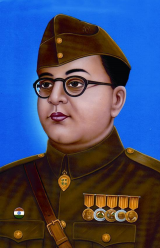
(a) Identify the leader given in the picture. Name the Political party and the Military Organisation that he formed. 

(b) State any three objectives of the Political party that he founded. 

(c) Mention any four objectives of the Military Organisation that he formed.


Q.9 With reference to the Two Major World Wars in the 20th century, answer the following  questions: 

(a) Explain briefly the causes of World War I with reference to Nationalism and Imperialism. 

(b) Explain briefly the territorial rearrangements as a result of World War I.

(c) State any four causes that led to the Second World War. 


Q.10 With reference to the United Nations and its Specialized Agencies, answer the  following: 

(a) Mention any three functions of the International Court of Justice. 

(b) State the composition of the General Assembly.  

(c) State any two functions of the UNICEF and any two functions of WHO. 

(c) State any two functions of the UNICEF and any two functions of WHO.
ENGLISH LITERATURE CLASS 10TH QUESTION PAPER 2018 (ICSE)

LITERATURE IN ENGLISH 

ENGLISH Paper – 2 

SECTION A – DRAMA 

The Merchant of Venice : Shakespeare 

Q.1. Read the extract given below and answer the questions that follow: 


Portia: Go draw aside the curtains, and discover  

              The several caskets to this noble prince —  

              Now make your choice. 

Morocco: The first, of gold, who this inscription bears, 

                 “Who chooseth me shall gain what many men desire”; 

(i) Who is Morocco? How did he introduce himself to Portia when they first met in an earlier scene? 


(ii) How would Morocco know that he had made the right choice? What would his reward be? 


(iii) Which casket did Morocco finally choose? What reasons did he give for  

(iv) What two objects does Morocco find in the casket of his choice? What reason  does he give to Portia for leaving in haste? 


(v) How does Portia respond to Morocco’s parting words? What does this reveal of her nature? 


Q.2 Read the extract given below and answer the questions that follow: 


Bassanio : Were you the doctor, and I knew you not? 

Gratiano : Were you the clerk? 

Antonio : Sweet lady, you have given me life and living;  

                 For here I read for certain that my ships  

                 Are safely come to road. 

Portia :  How now, Lorenzo! 

                 My clerk hath some good comforts too for you. 

(i) Where does this scene take place? What had Portia directed Antonio to give to Bassanio just moments before the above words were spoken? 


(ii) Portia had just given Antonio, Bassanio and Gratiano a letter to read. Who had written this letter? What does Bassanio learn about Portia from this letter?  


(iii) What good news does Portia have for Antonio? How does he respond to it? (iv) To whom does Portia refer as ‘My clerk’? What ‘good comforts’ does the ‘clerk’ have for Lorenzo? 


(v) How was Bassanio persuaded to give away the ring that Portia had given him at the time of their marriage? What does this reveal of Bassanio’s relationship with Antonio? 


OR 

Loyalties : John Galsworthy 

Q.3 Read the extract given below and answer the questions that follow: 


Margaret : Here’s the wind! 

Winsor : What’s the move now, General? 

Canynge : You and I had better see the Inspector in De Levis’s room,  Winsor.   

                   [To the others] If you’ll all be handy, in case he wants to put questions for himself. 


Margaret : I hope he’ll want me; it’s just too thrilling. 

Dancy : I hope he won’t want me; I am dog-tired. Come on Mabel. [He puts his arm in his wife’s] 


Canynge : Just a minute, Charles. 

(i) Who is Margaret? Why does she say ‘Here’s the wind!’?

(ii) Why does Canynge suggest that they see the Inspector in De Levis’ room? What does Margaret find ‘thrilling’? 


(iii) Who enters soon after? What had this person been asked to do earlier? 

(iv) How does De Levis happen to have such a large sum of money on that particular day? What steps does he take to keep the money safe? 


(v) Whom does De Levis suspect of having stolen his money? What leads Canynge to suspect the same person? What is Canynge’s opinion of this person? 


Q.4 Read the extract given below and answer the questions that follow: 


Mabel : A prosecution? Prison? Oh, go! Don’t wait a minute! Go! 

Dancy : Blast them! 

Mabel : Oh, Ronny! Please! Please! Think what you’ll want. I’ll pack.  

               Quick! No! Don’t wait to take things. Have you got money? 

(i) Where is this scene set? What had Dancy just confessed to Mabel? 

(ii) What had Dancy’s lawyer suggested he should do? Why had he made this suggestion? 


(iii) How does Mabel express her loyalty to Dancy soon after he had made the confession? Who knocks at the door at this point? 


(iv) Who else enters the house? What sound do they all hear? Why does Mabel faint? 


(v) What message did Dancy’s letter contain? What is your opinion of Dancy at the end of the play? 


SECTION B – POETRY 

A Collection of Poems 

Q.5 Read the extract given below and answer the questions that follow: 


       “I’m grateful, Sir”, he whispered, as I handed my canteen  

        And smiled a smile that was, I think, the brightest that I’ve seen. 

       “Seems silly a man my size so full of vim and zest  

         Could find himself defeated by a small pain in his chest.” 

                                                          (Small Pain in My Chest – Michael Mack)

(i) Where is ‘he’ when the narrator encounters him? Describe the scene around him. 


(ii) What does ‘he’ ask the narrator for? What reasons does he give for his request? 


(iii) What does the narrator see when he looks at him? How do we know that ‘he’ is very young and completely unaware of the seriousness of his injury? 


(iv) How does ‘he’ describe the battle that had been fought the night before and his role in it? 


(v) What feelings do you think the narrator must have experienced when he ‘put his arms around him’?  


     What is the central theme of this poem? 


Q.6 Read the extract given below and answer the questions that follow: 


        I am going out rarely, now and then 

       Only, this is price of old age 

       But my health is O.K. 

                                            (The Professor – Nissim Ezekiel) 

(i) Who is the speaker? What relationship did he share with the listener?

(ii) How many sons does the speaker have? What does he say about them? 

(iii) What are the names of the speaker’s daughters? Why does the speaker believe that his daughters are ‘well settled in life’? 


(iv) How old is the speaker? Why does he say that his health is ‘OK’? What reason does he give to explain his state of health? 


(v) What characteristics typical of Indian speech and thought does the poet make fun of through this poem?  


SECTION C – PROSE 

A Collection of Short Stories 

Q.7 Read the extract given below and answer the questions that follow: 


      Sher Singh could feel immediately the heat of the boy’s body burning through the cotton cloth. 


      He felt the weight too, and he wondered how he was going to manage. 

      ‘He is too big for you’ said the mother. She spoke in the whisper of despair.    

      ‘You will never get there.’ 

       Sher Singh said nothing. 

       He set off. 

(i) Who was the ‘boy’? Why was Sher Singh sure that the little boy would die? 

(ii) What did Sher Singh’s father do for a living? Mention any two acts of courage he had performed that had earned him the title ‘Bahadur’. 


(iii) How does his mother use her skill as a hill woman to prepare Sher Singh for his long and dangerous journey? 


(iv) Mention any three challenges that Sher Singh encountered on his way to the hospital.  


(v) How does the doctor at the hospital address Sher Singh at the end of the story?  


      Why do you think he refers to him in this way? 


Q.8 With close reference to the text, show how Stephen Leacock makes effective use of  humour and exaggeration to describe his attempts to get back his ‘Lost Dollar’.  


OR 

Animal Farm : George Orwell 

Q.9 Read the extract given below and answer the questions that follow: 


         It was just after the sheep had returned, on a pleasant evening when the

         animals had finished work and were making their way back to the farm  

         buildings, that the terrified neighing of a horse sounded from the yard.  

         Startled, the animals stopped in their tracks. 

(i) From where did the sheep return? Under whose supervision were they? What were they taught while they were in this place? 


(ii) Whose voice was it that startled the animals? What did the horse see that caused it to neigh in terror? 


(iii) How did the animals react to this sight at first? Why were they not able to protest? 


(iv) Why did Clover lead Benjamin gently to the end of the barn immediately after this? What did they find written on the wall? 


(v) What strange and disturbing change did the animals observe in the pigs when they peered in at the dining room window later that evening?  Comment on the irony of the situation. 


Q.10 Give a brief account of the Battle of the Cowshed and Snowball’s role in it. 


OR 

To Sir With Love : E.R. Braithwaite 

Q.11 Read the extract given below and answer the questions that follow: 


     As the bus moved slowly on, a bright-eyed little boy in school cap and blazer  

     paused momentarily beside the vacant seat and then quickly moved a little way on …. 


    The conductor approached with his cheery ‘Any more fares, please, free ride only after midnight.’ 


(i) Why did the schoolboy not occupy the vacant seat? What was he puzzled by?

(ii) Who was preparing to take the seat? What did the person do instead? Why?

(iii) What efforts did the conductor make to get this person to sit in the vacant seat? 


(iv) What does the author do to help ease the situation? How does the conductor view the author’s action? 


(v) What was the author’s intended destination? What is his state of mind as he approaches this place? 


Q.12 Give a brief description of Brathwaite’s encounter with a stranger at St. James Park.  How did this meeting change the course of his life? 


ENGLISH LANGUAGE CLASS 10TH QUESTION PAPER 2018 (ICSE)

ENGLISH LANGUAGE 

ENGLISH Paper – 1  

Q.1 (Do not spend more than 35 minutes on this question.)  

Write a composition (350 – 400 words) on any one of the following: 

(a) Write an original short story entitled ‘The Gift’. 

(b) “Money is important for happiness.” Express your views either for or  against this statement. 

(c) Narrate an incident from your own experience when you helped to prepare a  meal. Explain what you did and what you gained from the experience. 

(d) You had been waiting outside the examination hall. Describe what you saw  and the sounds you heard when you arrived at the place. What were your  feelings? Describe how the scene changed once you entered the hall and the  examination started.

(e) Study the picture given below. Write a story or a description or an account of  what it suggests to you. Your composition may be about the subject of the  picture or you may take suggestions from it; however, there must be a clear  connection between the picture and your composition.  

Q.2 (Do not spend more than 20 minutes on this question.)  

Select any one of the following:  

(a) Your uncle has offered to get you a pet for your birthday. Write a letter to him telling him what you would like, give reasons for your choice and tell him  how you would take care of your pet. 

(b) The traffic outside your school is very heavy and chaotic.  

Write a letter to the Deputy Commissioner of Police (Traffic) pointing out the  danger of such heavy and chaotic traffic in a school zone. Suggest possible  solutions for the problem.


Q.3 Read the following passage carefully and answer the questions that follow: 

Granny knew I’d been in the train for two nights, and she had a huge breakfast  ready for me.  

Later she told me there’d been a letter from Uncle Ken. 

‘He says he’s the manager in Firpo’s hotel in Simla,’ she said. ‘The salary is  very good. It’s a steady job and I hope he keeps it.’ 

Three days later Uncle Ken was on the veranda steps with his bedding roll and  battered suitcase. 

‘Have you given up the hotel job?’ asked Granny. 

‘No,’ said Uncle Ken. ‘They have closed down.’ 

‘I hope it wasn’t because of you.’ 

‘No, Aunt Ellen. The bigger hotels in the hill stations are closing down.’ ‘Well, never mind. Come along and have your lunch.’ 

Over lunch, Uncle Ken talked very seriously about ways and means of earning  a living. 

‘There is only one taxi in the whole of Dehra,’ he mused. ‘Surely there is  business for another?’ 

‘I’m sure there is,’ said Granny. ‘But where does it get you? In the first place,  you don’t have a taxi. And in the second place, you can’t drive.’ 

‘I can soon learn. There’s a driving school in town. And I can use Uncle’s old  20 car.’ 

‘I don’t think it will run now,’ said Granny. 

‘Of course, it will. It just needs some oiling and greasing and a spot of paint.’ ‘All right, learn to drive.’ 

So, Uncle Ken joined the driving school. 

After a month Uncle Ken announced that he could drive and that he was taking  the car out for a trial run. 

‘You haven’t got your license yet,’ said Granny. 

‘Oh, I won’t take it far,’ said Uncle Ken. ‘Just down the road and back again.’ 

He spent all morning cleaning up the car. Granny gave him money for a can  30 of petrol. 

After tea, Uncle Ken said, ‘Come along, Ruskin, hop in and I will give you a  ride. Bring Mohan along too.’ Mohan and I needed no urging. We got into the  car beside Uncle Ken. 

‘Now don’t go too fast, Ken,’ said Granny anxiously. ‘You are not used to the  car as yet.’ 

Uncle Ken nodded and smiled and gave two sharp toots on the horn. He was  feeling pleased with himself. 

Driving through the gate, he nearly ran over a cat. 

Miss Kellner, coming out for her evening rickshaw ride, saw Uncle Ken at the  40

wheel of the car and ran indoors again. 

Uncle Ken drove straight and fast, tootling the horn without a break. At the end of the road there was a roundabout. 

‘We’ll turn here,’ said Uncle Ken, ‘and then drive back again.’ 

He turned the steering wheel, we began going round the roundabout, but the  steering wheel wouldn’t turn all the way, not as much as Uncle Ken would  have liked it to… So, instead he went on – and straight through the Maharaja  of Jetpur’s garden wall. 

It was a single-brick wall, and the car knocked it down and emerged on the  other side without any damage to the car or any of its occupants. Uncle Ken brought it to a halt in the middle of the Maharaja’s lawn. 

Running across the grass came the Maharaja himself. When he saw that it was  Uncle Ken at the wheel, the Maharaja beamed with pleasure. 

‘Delighted to see you, old chap!’ he exclaimed. ‘Jolly decent of you to drop in  again. How about a game of tennis?’ 

(a) Give the meaning of the following words as used in the passage: 

One word answers or short phrases will be accepted. 

(i) battered (line 7)  

(ii) mused (line 15)  

(iii) emerged (line 48)  

(b) Answer the following questions briefly in your own words. 

(i) Why did Granny hope Uncle Ken would keep his job at Firpo’s hotel? 

(ii) When Uncle Ken arrived with his luggage, Granny remarked that she  

hoped the hotel had not closed down because of him. What does this  remark tell you about Uncle Ken? 

(iii) Why did Uncle Ken think that driving a taxi in Dehra would be profitable? 

(iv) Which sentence tells you that the narrator and his friend were waiting to be invited for a drive in a car? 

(v) Why did Miss Kellner run indoors when she saw Uncle Ken at the wheel of the car? 

(vi) What was Uncle Ken’s intention at the roundabout? 

(c) (i) In not more than 60 words, describe what happened after the car went through the wall. 

(ii) Give a title to your summary in 3(c)(i). Give a reason to justify your choice of the title.  


Q.4 (a) Fill in each of the numbered blanks with the correct form of the word given in  [4] 

brackets. Do not copy the passage, but write in correct serial order the word  or phrase appropriate to the blank space. 

Example: 

(0) beginning 

Alice was (0) ____________ (begin) to get very tired of (1)____________(sit)  by her sister on the bank and of having nothing to do: once or twice she had  (2) ____________ (peep) into the book her sister was reading, but it  (3) ____________ (have) no pictures or conversations in it, “and what is the  use of a book,” (4) ____________ (think) Alice, “without pictures or  conversations?” 

Alice wondered whether the pleasure of (5)___________(make) a daisy-chain  would be worth the trouble of getting up and picking the daisies, when  suddenly a White Rabbit with pink eyes (6) ____________ (run) close by her.  Alice did not think this was very remarkable, until the Rabbit actually  (7) ____________ (take) a watch out of its waistcoat-pocket, and  (8)____________ (look) at it, and then hurried on. 

(b) Fill in each blank with an appropriate word: [4] (i) The poet’s mother was stung ____________ a scorpion. 

(ii) “Please write ____________ what I tell you otherwise you will forget,”  the teacher said.  

(iii) The dog was hiding ____________ the bed, barking at the stranger. 

(iv) Sheila’s grandmother found it difficult to climb ____________ the steep  staircase.  

(v) The soldier fought bravely ____________ his country. 

(vi) There is no use crying ____________ spilt milk.

(vii) I don’t know what they were arguing ____________ but I could hear  angry voices. 

(viii) The school playground is out ____________ bounds for the pupils of the  primary school.  

(c) Join the following sentences to make one complete sentence without using  and, but or so

(i) They have to go to bed early every night. They are allowed to stay up late  on Saturdays. 

(ii) The children were delighted. The exams had been cancelled. 

(iii) We are not allowed to play in the sun. We are not allowed to play in the  rain. 

(iv) This is the place. The dog was rescued from its cruel owner. 

(d) Re-write the following sentences according to the instructions given after  [8] 

each. Make other changes that may be necessary, but do not change the  meaning of each sentence. 

(i) She laid the table after she had finished the cooking. 

(Begin: When…………………) 

(ii) He is old but still he works hard. 

 (Begin: Despite…………………) 

(iii) The delivery boy was requested to bring the parcel the next day.  

(Rewrite using direct speech) 

(iv) I prefer playing a game to watching television. 

 (Begin: I would rather…………………) 

(v) Every family has a black sheep. 

 (Begin: There is no…………………) 

(vi) I have never worn a more ill-fitting suit. 

(End: ………………… ever worn.)

(vii)Anil is too fast a runner not to come first in the race.   (Begin: Anil is so…………………) 

(viii) As soon as the sports meet ended, the children ran on the field. (Begin: Hardly…………………)

HOME SCIENCE CLASS 10TH QUESTION PAPER 2019 (ICSE)

SECTION A (40 Marks) 

Attempt all questions from this Section 

Q.1 (a) What is the difference between related and contrasting colour schemes? 

(b) State the utility of local lighting. 

(c) Mention two sources of light commonly used in the house. 

(d) Which kind of materials should be used for kitchen counters? 

(e) What is meant by ‘crossing of a cheque’? 

Q.2 (a) State any two differences between growth and development. 

(b) Define ‘cognitive development’. 

(c) Name the male and female sex hormones secreted during adolescence. 

(d) What do we mean by ‘binge eating disorder’? 

(e) State any two characteristics of a balanced diet.

Q.3 (a) Explain the term ‘shelf life’ of food products. 

(b) Name the sweat glands present in the human body. 

(c) State the difference between perishable and non-perishable food. 

(d) Why should cotton clothes be starched? 

(e) Define Optical brighteners. 

Q.4 (a) Define the term ‘Food adulteration’. 

(b) State two advantages of consumer education. 

(c) State any two primary functions of a bank. 

(d) What do you mean by a current account? 

(e) Name any two standardization marks. 

SECTION B (60 Marks) 

Attempt any four questions from this Section 

Q.5 Interior decoration expresses the personality of a home maker.  

In the above context discuss the following: 

(a) Five types of kitchens. 

(b) Light and colour used in decorating a living room. 

(c) Factors affecting the selection of carpets for a room.

Q.6  ‘Budgeting helps in efficient management of money.’ In this context explain: 

(a) Steps in making a budget. 

(b) Importance of a saving account. 

(c) Operating a savings bank account. 

Q.7  ‘Changes occurring during adolescent years are dramatic.’ In this context discuss: 

(a) The pubertal changes seen during adolescence. 

(b) Impact of early maturation in girls. 

(c) Emotional concerns of the adolescent. 

Q.8 ‘Meal planning helps to achieve nutritional adequacy.’ In this context explain: 

(a)Classification of fruits and vegetables into their subgroups and their nutritional contribution. 

(b) Importance of a balanced diet. 

(c) Advantages and disadvantages of using convenient foods. 

Q.9 ‘Proper information about the purchase, storage and preservation of food is essential.’ In the above context discuss: 

(a) Storage of milk to maintain its quality. 

(b) Use of salt in food preservation. 

(c) Need for consumer education to make wise purchases. 

Q.10 Explain the following: 

(a) Steps and precautions involved in the household method of laundering coloured cotton. 

(b) Importance of labels on a packed product. 

(c) Fixed Deposit Account and its features.

Latest Current Affairs 17 March 2021

CURRENT AFFAIRS
17 March 2021

NATIONAL NEWS:


A) Parliamentary panel flags slow pace of vaccinations. 

A parliamentary panel on home affairs observed that till now, less than 1% of the Indian population has been vaccinated and at this rate it will take many years to vaccinate the whole population.  The parliamentary standing committee on home affairs, headed by Congress leader Anand Sharma, tabled the report in Rajya Sabha on Monday. The Committee also expresses its concern that a large number of people are missing the second dose of the vaccine. The Committee believes that it is a very serious issue as the virus is mutating and new variants of Covid-19 are being reported in different parts of the world, the report said. The committee recommended that all frontline health workers and corona warriors, including central armed police force (CAPF) personnel and State police receive the recommended doses of vaccine. An attempt should be made to cover maximum people as early as possible, the report said. It added that that vaccination in Lakshadweep can be done for everyone as the population is very small (around 70,000) and the medical facilities are limited. Officials from the Ministry of Home Affairs also told the panel that a special campaign against vaccine hesitancy has been launched. Further, regular reviews are being undertaken with States and UTs for increasing the pace of vaccination drive and advisories have been issued to them on various operational aspects of Covid-19 vaccination, the Ministry said.

B) Census, NPR data to be ready before 2024 polls: MHA. 

The provisional data for the latest Census and National Population Register (NPR) will be available before the next general elections in 2024, according to information provided by the Ministry of Home Affairs (MHA) to a parliamentary committee. The MHA informed the committee that Census, updation of NPR, will be among the major thrust areas for the financial year 2021-22. The last Census was conducted in 2011 and NPR, which has a database of 119 crore residents, was last updated in 2015. The first phase of Census-House listing and Housing Census that was to be conducted along with NPR from April 1, 2020, was indefinitely postponed due to the Covid-19 pandemic. The MHA shared a tentative time line with the parliamentary panel, saying that provisional Census results will be released in financial year 2023-24 and the primary Census abstracts (PCA) will provide village-level data on important indicators. A mobile application has been developed for collecting the Census details and NPR and residents can also self-enumerate. The fieldwork for the first phase of Census 2021 that will provide data on housing conditions, household amenities and assets possessed by the households is expected in 2021-22. The fieldwork for population enumeration phase to provide data on demography, religion, SC/ST, language, literacy and education, economic activity, migration and fertility will be done in 2023-24. The committee was informed that the mobile app through which Census will be conducted will be available in 16 languages. MHA said the NPR database has been created by collecting family-wise data and it can be strengthened by linking Aadhaar to each member.

C) P.C. Chacko to formally join NCP.

Former Congress leader P.C. Chacko, who quit the party last week, on Tuesday announced that he will formally join the Nationalist Congress Party (NCP) headed by Sharad Pawar. Chacko, who quit the Congress over his differences with the party leaders in Kerala, said NCP is a partner of the CPI (M)-led LDF in the southern state and he would work for the victory of the Left candidates in the April 6 Assembly polls. Announcing his resignation from the Congress last week, Chacko had alleged group interest in deciding party candidates for the coming assembly elections.

D) Swapan Dasgupta resigns from Rajya Sabha. 

Rajya Sabha member Swapan Dasgupta on Tuesday resigned from Upper House after questions were raised about him contesting the West Bengal Assembly polls on a BJP ticket despite being a nominated MP. Dasgupta found himself in a tight spot after Trinamool Congress MP Mahua Moitra pointed out that he, a nominated MP, should be disqualified from the Upper House of Parliament. Swapan Dasgupta is BJP candidate for WB polls. 10th Schedule of Constitution says nominated RS member to be disqualified if he joins any political party AFTER expiry of 6 months from oath. He was sworn in April 2016, remains unallied. Must be disqualified NOW for joining BJP, Moitra tweeted on Monday, sharing the specific clause of the 10th Schedule of the Constitution. Dasgupta was nominated to the Rajya Sabha in April 2016 and his term expires in April 2022. Congress chief whip Jairam Ramesh has reportedly written to Rajya Sabha Chairman M. Venkaiah Naidu seeking clarification about the nominated MP contesting Assembly polls in Bengal on a party ticket.

E) Cabinet approves Bill to set up a Development Finance Institution. 

The Union Cabinet on Tuesday approved a Bill to set up a Development Finance Institution (DFI) to generate funds for investment in the infrastructure sector. The proposed legislation will give effect to the Budget announcement made by Finance Minister Nirmala Sitharaman on February 1. The government has proposed ₹20,000 crore to capitalise the institution. The Cabinet has cleared this Bill, through which we will have an institution and institutional arrangement, which will help in increasing long term funds, she said after the meeting of the Cabinet. The proposed DFI will have 50% non-official directors, Sitharaman added. In her Budget 2019-20 speech, Sitharaman had proposed a study for setting up DFIs for promoting infrastructure funding. About 7,000 projects have been identified under the National Infrastructure Pipeline (NIP) with a projected investment of a whopping ₹111 lakh crore during 2020-25.

F) Covid Watch: Numbers and Developments.

The number of reported coronavirus cases from India stood at 1,14,10,302 with the death toll at 1,61,464. The Health Ministry has cautioned Maharashtra to plan for a worst-case scenario with sufficient lead time as the State continues to report the maximum number of new daily Covid-19 cases and deaths across India. It has also directed the resumption of death audits to support public health action and minimise mortality. In its communication to the State earlier this week, Health Secretary Rajesh Bhushan said that while the available health infrastructure was adequate, Maharashtra needed to look into vaccine hesitancy among front-line workers, as their services would be required if the trajectory follows the upward swing as is being witnessed now. The State should also expedite vaccinating those with co-morbidities and elderlies. After its visit, the Central team has recommended that treating physicians should be re-sensitised on clinical management protocols. The report was submitted after the Central team visited Mumbai, Thane, Nashik, Dhule, Jalgaon and Aurangabad. Previously, the team had covered the Vidarbha region.

INTERNATIONAL NEWS 

A) China to allow Indian travellers only if they take Chinese vaccines.

A number of China’s overseas missions, including its embassy in New Delhi, have announced they will begin facilitating travellers provided they have taken Chinese-made Covid-19 vaccines. Indians have been barred from travelling to China since November last year, when China suspended valid visas and residents permits not just for travellers from India but for most countries, citing Covid-19 concerns. The ban has been a particular concern for many Indian students enrolled in Chinese universities, who have been unable to return to China. There are at least 23,000 Indians studying in China, most in medical colleges. The March 15 announcement will bring little relief for them as Chinese-made vaccines are not available in India. The Chinese Foreign Ministry said on Monday China stands ready to advance mutual recognition of vaccines with other countries, but that process is expected to take time. For now, the limited easing of the travel ban will only apply to travellers who have taken Chinese vaccines. Indian students, who account for the fourth-largest segment of international students in China, have faced particular obstacles, the South China Morning Post reported last month, with many of the Chinese apps used for online teaching banned last year, when India restricted more than 200 Chinese apps in the wake of the June border clash in the Galwan Valley. After WeChat was banned and students complained to their colleges, one university, the newspaper reported, began to use the Alibaba-owned DingTalk and Tencent’s Meeting for online classes. Eventually, those apps were banned as well. The larger concern for the students, who will have to pass challenging exams in India after graduation to be able to practice, is their inability to receive laboratory training as they remain unable to return.

B) U.K. turns to Indo-Pacific in post-Brexit foreign policy. 

Britain wants to expand its influence among countries in the Indo-Pacific region to try to moderate China’s global dominance, a document laying out post-Brexit foreign and defence policy priorities said on Tuesday. The document sets out a planned increase of Britain’s nuclear warhead stockpile by more than 40% to weigh against evolving global security threats, and underlines the importance of strong ties with the U.S. while naming Russia as the top regional threat. Britain’s biggest foreign and defence policy review since the end of the Cold War sets out how Prime Minister Boris Johnson wants to be at the forefront of a reinvigorated, rules-based international order based on cooperation and free trade. Calling the Indo-Pacific increasingly the geopolitical centre of the world, the government highlighted a planned British aircraft carrier deployment to the region. China and the U.K. both benefit from bilateral trade and investment, but China also presents the biggest state-based threat to the U.K.’s economic security, the report said.

ART CLASS 10TH QUESTION PAPER 2019 (ICSE)

ART

PAPER-1 

Drawing or Painting from Still Life 

Candidates may attempt either Theme A or Theme B. 

EITHER  

Theme A 

Objects required: A set of two kites of different colours and shapes / designs, one  large spool (wheel) of threads (manjha), a hat / cap and a water bottle. 

Arrangement: Create an attractive colourful arrangement by placing a spool  (wheel) of threads (manjha), a hat / cap and a water bottle in front of the kites. A suitable background must be included. 

OR 

Theme B 

Objects required: A plain white canvas stretcher or a board, a big paint bottle, a  bowl of water, 3 brushes and any one seasonal vegetable (like pumpkin, bottle gourd (dudhi / lauki) etc.) 

Arrangement: Place the vegetable in such a way that the canvas gets partially  covered. Paint bottle, brushes, and water bowl should be placed aesthetically. A suitable background must be included.


ART

PAPER-2 

Drawing or Painting from Nature 

Candidates may attempt the question either from Theme A or Theme B. 

EITHER  

Theme A 

Make a detailed study of two healthy stems of Tuberoses. An attempt should be  made to show the characteristics of the stem flowers, leaves and buds. In case this  plant is not available, a similar plant of the variegated kind can be used. 

OR 

Theme B 

Make a detailed study of 2 tomatoes (one cut, another uncut) and 2 whole bananas  (unpeeled). Special attention should be paid to its form, structure and character.


ART

PAPER-3 

Original Imaginative Composition in Colour 

Candidates must be instructed that ruling by any means whatsoever is forbidden. 

You are required to make an original composition based on one of the subjects given  below. Bear in mind that the quality of the composition, feeling, and originality are the  main objects of this Paper. 

Before starting work, take note of the following instructions: 

1. You must, on no account, base your composition on any picture you have seen. 

2. Except for the number of the question and your Index Number and Unique ID you  must not write anything on the front of the picture; however, you may write  anything you wish to explain about your subject on the reverse of the Art sheet. 

3. Your picture should fill, or approximately fill, your sheet of paper. The intended marks for questions or parts of questions are given in brackets [ ]. 

Attempt any one of the following topics: 

1. A Walk in the Woods. 

2. A group of children trying to pluck mangoes from a tree. Out of excitement, some have climbed up the tree. One of them is plucking a bunch of mangoes  while some others are eagerly waiting on the ground.

3. A few students are working on their preferred skills (e.g. sculpting, weaving,  painting, etc.) in the art studio. A teacher is inspecting and guiding them. 4. It’s morning time and birds are chirping with flowers in full bloom.  

A grandmother is putting very colorful Rangoli in her courtyard.  Grandchildren are watching with curiosity.


ART

PAPER-4 

Applied Art 

Attempt any one of the following questions: 

Q.1  Make a repeat pattern for a table mat of size 20 cm x 25 cm. Special  attention should be given to simple and creative design with good colour  scheme, tone and execution. 

OR 

Q.2 Design a cover page of a book titled ‘MY FANTASY WORLD’. Make it  attractive with colours and writing. The cover page must be 20 cm x 25 cm 

Note: 

• Cutting and pasting of extra material is strictly prohibited. 

• Sequins, thread or magazine images must not be used. 

• Candidates should not use acrylic colours for making the poster. 

×

Hello!

Click one of our representatives below to chat on WhatsApp or send us an email to info@vidhyarthidarpan.com

×